In a self-contained classroom, special education paraprofessionals are more than extra hands—they’re vital team members. But too often, they’re expected to just “jump in and help” without real training or guidance. That’s a recipe for frustration—for the para, the students, and the teacher.
Here’s how I approach paraprofessional education training so paras understand the structure, routines, and goals of a self-contained classroom—and how you can adapt these ideas to your own setting.
Many paras start without a clear understanding of what a self-contained classroom is or why students are placed there. I always begin by explaining that:
I share this philosophy from day one because I want paras to feel like part of the team—not just visitors. When they understand the why, they’re more likely to engage meaningfully and support our shared goals.
In your room: When orienting new paras, start with a clear walkthrough of the classroom setup, schedule, and instructional purpose. For example, explain how your room might have multiple activity zones—small-group table, sensory area, and quiet work stations—and how students rotate between them. Point out posted schedules, visual supports, and behavior systems so paras see how all pieces connect. On day one, give them a “student flow” scenario: “In the morning, students check in at their cubbies, pick up their point sheets, and start morning work. Let’s practice walking through that with the actual materials.” Even in resource or inclusion settings, giving paras a concrete mental map of the learning environment helps them anticipate transitions and support independence.
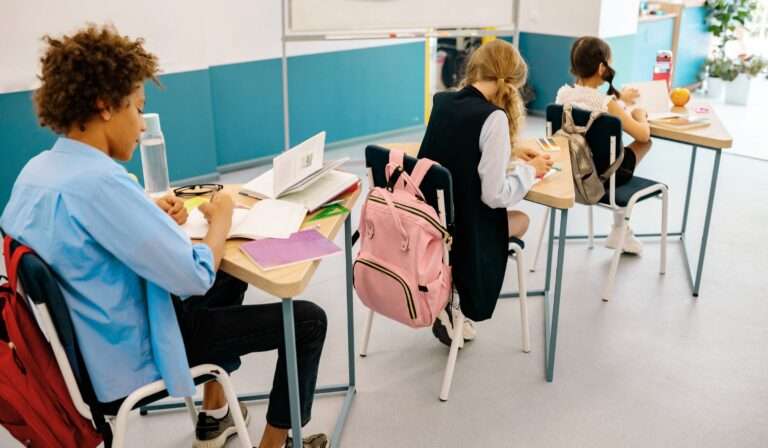
In a self-contained classroom, clear systems keep the day running smoothly and help both students and staff know exactly what to expect. When training special education paraprofessionals, I start by walking them through the routines we’ll use every day. The earlier they learn these systems, the more consistent and confident they’ll be when supporting students.
One of the most important systems in my room was our Daily Point Sheet, which tracked five clearly defined target behaviors:
Following directions
Staying on-task
Cooperating with others
Participating in class
Using respectful/appropriate language
Each behavior was scored based on prompts needed, and paras were trained on exactly how to prompt, score, and review the sheet with students. On the back, we’d jot anecdotal notes. Students took the sheet home each evening for a parent signature and earned points for returning it signed the next day. This was part of our behavior level system—not tied to academics—and it worked alongside a separate classroom “paycheck” system for completed work. Keeping behavior and academics distinct made it easier for students to understand their goals in each area.
Reviewing point sheets with students at the end of the day—and again in the morning—was powerful. It gave students a concrete way to connect their choices with their level, privileges, and daily success. Paras played a big role by helping students reflect and reset, and by reminding them what could be earned by meeting expectations.
Our systems went beyond behavior management. The daily schedule and individual pull-out times were posted on the board, and students were taught to check the schedule rather than ask an adult. Assignments were listed on individual sheets so students could track their own work. For math, we used visual aids like number lines, charts, and sentence starters. Paras were trained to prompt, “Check your tools,” before reteaching concepts, which encouraged independence and prevented learned helplessness. Of course, support was always there if a student truly needed it, but the goal was for students to use resources on their own.
In your room: Identify the core systems you want every para to know—schedules, point sheets, prompting strategies, visual supports—and train them early. Show paras exactly where to find materials and how to use them with students. Model how to review systems so paras can carry them out consistently, and explain why each one matters: to build student independence, reduce learned helplessness, and prepare students for less restrictive settings. When paras understand both the steps and the purpose, they become more confident, proactive, and effective in your self-contained classroom.

Some new special education paraprofessionals think their role is to stop a behavior immediately. I explain that our job isn’t to control—it’s to teach. Many behaviors worked for the student in the past, whether to get out of a task or get attention. Our goal is to make those old strategies less effective and replace them with healthier options.
One way we do this is by helping students think through their choices and outcomes. We might:
I avoid saying “You have to…” because a student can—and often will—think, No I don’t or You can’t make me. And they’d be right. We can’t, and shouldn’t, try to force compliance. Instead, I focus on explaining what I will do based on their choices. For example:
This keeps the focus on my response—what I can control—rather than trying to control the student’s behavior. It also makes the outcomes clear without turning the interaction into a power struggle.
It’s equally important not to tell a student they’ll be suspended, sent home, or punished in ways you can’t actually decide. These kinds of statements often come across as threats, which damage trust and rarely improve behavior. Worse, if the consequence doesn’t happen, you lose credibility. Paras especially need to avoid making these statements, since those decisions aren’t theirs to make.
These shifts in questioning, language, and boundaries help students feel respected while also holding them accountable—creating the kind of relationship that makes behavior change possible.
In your room: Model how to shift from “stop doing that” to “try this instead” so paras see how to redirect without shutting down engagement. For instance, if a student is tapping their pencil loudly during a lesson, instead of “Stop tapping,” try, “Let’s put your pencil down for now and use your hands to track the words on the page.” During training, role-play a few common situations and coach paras on language that encourages skill-building. In a self-contained classroom, where students often have specific behavior or learning goals, keeping the focus on growth rather than punishment reinforces your classroom culture. These same strategies apply in resource rooms and inclusion settings, especially for students with behavior plans.

Reading student cues is an essential skill for any para. I once had a student who’d never been aggressive in my classroom—until one day, when he asked a para for space and she didn’t give it. She thought staying close would help him feel supported, but instead, he felt trapped and lashed out. Afterward, she was surprised and didn’t understand what she had done wrong. It was an opportunity for me to explain that sometimes the most supportive action is taking a step back and waiting. She felt like she wasn’t doing anything if she could see he was upset and she was just sitting there—but being available without pressuring him would actually earn his trust.
To help her see this, I shared a story from a different job I once had, working in a group home with kids I didn’t know. One teen boy was sitting outside looking unhappy. I went out and asked if he was okay. He didn’t really speak, so I asked if it was okay if I sat with him. He nodded. I sat quietly for 10–15 minutes before he started talking—sharing what was going on with him and telling me how other staff would push him to open up right away, asking personal questions and giving advice like he was a problem to be fixed. He chose to speak to me because he felt respected, not pushed or threatened, and because he had a choice.
Sometimes, sitting and waiting quietly until a student is ready is the most helpful and respectful thing you can do. It communicates safety, respect, and patience—three things that help build lasting trust.
In your room: Teach paras how to recognize and respect each student’s comfort zone. Show them visual boundary markers like floor tape around workspaces, or how you cue students verbally: “I’ll stand here so you have room to work.” Practice scenarios where paras might unintentionally invade space—like leaning over a student to adjust their paper—and rehearse more respectful alternatives. In self-contained classrooms, physical boundaries are especially important for students with sensory sensitivities or trauma histories. In other settings, the same skills help paras build trust and prevent escalation.
Sometimes, sitting and waiting quietly until a student is ready is the most helpful and respectful thing you can do. It communicates safety, respect, and patience - three things that help build lasting trust.
Confidentiality isn’t optional—it’s part of every special education para job description. In a self-contained classroom, paras may learn sensitive details about students—such as home life, diagnoses, medications, living situations, DCF involvement, or parental history—that are important for supporting the student but not for casual discussion. Other staff may be curious and ask, but unless they have a legitimate need to know (which the teacher should clarify), this information should not be shared.
Professionalism also extends to interactions with parents. While a para may speak briefly with parents in passing, in-depth conversations about a student’s progress, behavior, or needs are the teacher’s responsibility. Under no circumstances should a para speak about one student to the parent of another student.
This comes up often when an issue occurs between students. Parents will sometimes push for details about what happened to the other student or what consequences they received. A para should respond by letting the parent know they cannot share information about other students, that the matter is being handled by the teacher and administration, and, if needed, refer the parent directly to the teacher. Handling that kind of pressure is the teacher’s job, not the para’s.
Equally important is maintaining appropriate personal boundaries with students. We don’t overshare personal stories to build rapport. Even if meant kindly, inappropriate personal sharing can cross lines, create confusion about professional roles, and harm the relationship. When these boundaries are crossed, I address it privately with the para. In rare situations, I’ve had to request a para be reassigned due to ongoing disruptive or inappropriate conduct. Our students deserve consistency, professionalism, and a safe environment where personal and private information is respected.
In your room: Review your district’s confidentiality and professionalism guidelines with paras, giving concrete examples of both appropriate and inappropriate interactions. Make it clear that protecting student privacy is as much about building trust as it is about following the rules.
Additionally, prepare paras for situations where parents push for details about another student’s behavior or consequences. Give them the exact language you want used—something like, “I can’t share information about other students, but I can tell you the issue is being handled by the teacher/administration.” Explain that it’s the teacher’s role, not the para’s, to manage ongoing pressure from parents. Role-play these conversations so paras are comfortable deflecting respectfully and redirecting parents back to you. This protects student confidentiality, maintains professional boundaries, and keeps paras from being caught in difficult conversations they’re not responsible for handling.

Refusal happens in every self-contained classroom, and how it’s handled can make the difference between a quick recovery and a full-blown power struggle. I train paras to view refusal not as defiance to be “shut down,” but as communication—often a sign that the student is overwhelmed, anxious, unsure of the task, or testing boundaries.
When refusal happens, we focus on responding calmly, consistently, and without escalating the situation. I train paras to:
One student I worked with consistently acted out during math so he could be removed from the classroom. To break the pattern, we made math his “next task” no matter what—whether he did it now or later in the day. He still received support, but avoiding the work was no longer an option. Over time, his resistance decreased because the avoidance strategy stopped working.
It’s also important to remember that refusal is rarely about “winning” or “losing.” We’re not looking to force compliance—we’re aiming to help students make a better choice next time. That means staying calm, avoiding arguments, and keeping our language respectful. Paras need to know that they can offer breaks, chunk assignments, or adjust the setting if it helps the student re-engage, but they should never remove expectations completely unless it’s part of a specific plan.
In your room: Show paras exactly how you handle refusal, step-by-step. Model the specific language you use—especially phrases like “It’s your choice” that help students understand natural consequences without turning the moment into a power struggle. Demonstrate how long to wait between prompts and when to adjust the approach based on whether the behavior is an isolated incident or part of a pattern. If you have strategies that make refusal less effective for students—like moving the work to another time in the day but never removing it altogether—walk paras through why it works. Consistency across staff is critical, because when students get the same calm, predictable response from every adult, the refusal behavior loses its payoff.

Safety in a self-contained classroom starts with knowing your students—their triggers, warning signs, and individual crisis plans—but it also requires knowing yourself. I teach paras to pay close attention to early signs of escalation in students, such as changes in tone, posture, or activity level. Recognizing these cues allows staff to step in with prevention strategies before a situation becomes unsafe.
Just as important is recognizing your own limits. Working in a high-needs setting can be intense, and paras need to be aware of when they’re feeling frustrated, overwhelmed, or too emotionally involved to respond effectively. Ignoring those feelings often leads to mistakes, tense interactions, or an escalation that could have been avoided.
I once worked with a different team who used a simple code phrase—“I need a Coke”—to signal that a para needed a break or for another staff member to tag in. This kind of discreet system allowed for a smooth transition without drawing student attention or disrupting the class. It kept the focus off the staff member, modeled professional self-regulation, and ensured that students continued to receive support from an adult who was calm and ready to engage.
I’ve seen situations where this kind of quick, judgment-free switch prevented a major escalation because the para who stepped in had a calmer rapport with the student in that moment. I’ve also had times where stepping away for just a few minutes gave a para enough space to return with a clearer head and a more effective approach. Knowing when to trade off isn’t a weakness—it’s a sign of professionalism and respect for the student.
In your room: Establish a clear, nonjudgmental system for swapping out when a staff member is reaching their limit. Whether it’s a phrase like “I need a Coke” or another agreed-upon signal, make sure all adults know it means someone needs a quick break or a switch in supervision. Explain to paras why this matters—not only for their own well-being, but for maintaining student safety and avoiding escalation. Train your team to watch for early signs of both student and adult stress so they can act before things peak. A calm, proactive staff keeps your self-contained classroom running more smoothly and models healthy self-regulation for students.

Collaboration keeps a self-contained classroom running smoothly, and some of the best ideas come from paraprofessionals who are invested in the same vision for students. One of the best “teachers” I ever worked with didn’t have a teaching certificate, but she had a wealth of experience, shared my belief in building capacity in students, and was constantly problem solving and thinking outside the box—not just waiting to be told what to do. She was a very valuable team member.
One year, we had a student who kept sliding his desk across the floor during lessons. Our room was set up with students seated in groups of four. This para suggested that we zip-tie each group of desks together so they couldn’t be moved individually. It was simple, inexpensive, and effective. When the student tried to move the desks anyway, we didn’t make it a big production. The adults quietly moved over and sat in the other desks in his group, continuing their work in that location. By giving the behavior as little attention as possible, we removed the reaction he was hoping for. Before long, he stopped because the behavior didn’t get the expected result.
Problem-solving works best when every voice is valued. Paras often see things the teacher doesn’t because they’re working with students in different contexts or settings. When paras feel empowered to share their ideas, the entire team benefits—and so do the students.
In your room: Set the tone for collaboration early. Hold a quick morning huddle where you outline the day, then a two-minute afternoon check-in to troubleshoot any issues. For example, if a student’s refusal to transition caused a delay, invite paras to brainstorm strategies for next time. You might say, “Let’s all share one idea for making that move to PE smoother tomorrow.” In self-contained settings, where staff work closely with the same students all day, consistent problem-solving routines keep everyone aligned. In inclusion or resource settings, these habits also strengthen communication between classroom teams.

One of the most powerful ways to influence paras is to show that you’re still learning, too. I make a habit of reading articles, research, and resources related to our students’ needs and interests. When I find something relevant, I share it—often pointing out a strategy I might try or something that reinforced what we’re already doing. Over time, sharing resources creates a culture where paras also bring ideas to the table. It’s no longer just me handing out information—we’re all contributing to our shared growth. That collaborative learning benefits students because our strategies stay fresh, informed, and adaptable.
In your room: Demonstrate that professional growth is ongoing. Share a quick takeaway from a webinar, or show paras a new visual support you created after reading about it in a teaching group. Invite them to bring in ideas, too—maybe a social story they’ve used elsewhere or a calming technique they’ve seen work. For example, you might say, “I read about using sand timers to help with turn-taking. Let’s try it with the game center today.” In self-contained classrooms, modeling lifelong learning reinforces that staff and students are all learners. This mindset benefits any setting, encouraging paras to adapt and grow alongside their students.
Training special education paraprofessionals isn’t optional—it’s essential. When paras understand your systems, your students, and your philosophy—and when they see how to adapt strategies to any classroom—they become empowered team members. The result? Less stress, better outcomes, and a classroom where everyone can succeed.


Support your classroom paraprofessionals with this simple, ready-to-use First-Day Essentials handout designed to help them feel confident and prepared from the start. Inside, you’ll find clear guidance on their role, what to watch for, and how they can effectively support students on Day One.
This printable resource includes quick dos and don’ts, a customizable teacher note, and an editable version so you can personalize it for your team.
Sign up now for instant access and start building stronger, more confident classroom support from the very first day.
Don’t miss out—join our community today!

Set your classroom paraprofessionals up for success with this quick-start guide for Day One.
Clarify expectations in areas like:
supporting student participation
observing routines and behavior strategies
understanding the role of a para in your classroom
…so they feel confident, prepared, and ready to support your students.
Sign up now for instant access to this printable (and editable!) resource—perfect for building strong team collaboration from the very beginning.

When a student is struggling, it can be difficult to know what information matters or what to look at next. The free Classroom Concerns Checklist can help you organize what you are seeing, identify patterns, and decide what information your team may need.