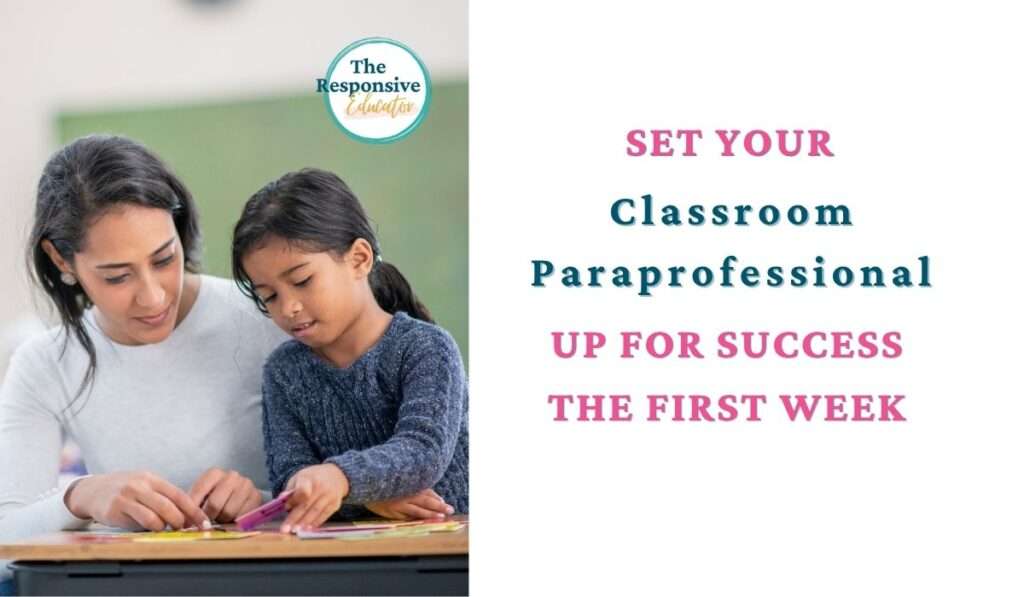
Classroom paraprofessional supporting student with class assignment

Get Your Classroom Paraprofessional Ready for Success With This Practical First-Day Guide and Expectations

Table of Contents

Introduction

Building a strong classroom team starts on day one—even if you only have five minutes. Your classroom paraprofessional plays a key role in supporting students, managing behavior, and helping everything run smoothly. Yet too often, paras are expected to jump in with little direction or preparation.


If you’ve ever wondered how to get started with a paraprofessional who’s brand-new to your classroom—or brand-new to schools in general—you’re not alone. Here’s how to set your classroom paraprofessional up for success, whether you have hours to prepare or just a few minutes before the bell rings.


This post kicks off a new series focused on helping teachers work effectively with classroom paraprofessionals. Each post will offer practical tips for training, collaboration, and support throughout the year.


What Is a Paraprofessional in Education?

A classroom paraprofessional—also called a paraeducator or instructional aide—is there to help students access the education provided by a certified teacher. While some teachers ask paraprofessionals to design or deliver instruction independently, this generally falls outside the scope of their role. Students have a right to teacher-designed instruction, and paraprofessionals are there to support that instruction, not replace it.


Paras provide essential support by working with individuals or small groups, assisting with classroom routines, managing behavior, and helping with data collection. A simple classroom paraprofessional job description often includes duties like:


  • Helping students stay on task

  • Supporting behavior plans and routines

  • Providing accommodations from IEPs

  • Assisting with data collection

  • Noticing and reporting concerns


This support helps students engage more successfully in the classroom and allows teachers to focus on instruction.

Top 3 Things to Cover—Even If You Only Have 10 Minutes

If it’s right before the first bell and you have just a few minutes with your paraprofessional, focus on three things:

1. Share the Plan—and the Philosophy

Let your paraprofessional know that you’ll be reviewing classroom expectations in depth with students throughout the week, and that they should actively observe and learn these strategies alongside the class. This is a great opportunity for them to understand not just what the expectations are, but how you teach and reinforce them. Encourage them to take notes and ask questions whenever there’s an appropriate time.


Take time to share your classroom philosophy as well. I often tell my paras, “We’re always working to help students become more independent. Our goal is to work ourselves out of a job.” I also make it clear that “Students are expected to follow directions from all adults in this room—you included—and I’ll always back you up in front of them.” Establishing this shared understanding early helps promote respect, teamwork, and consistency.

2. Clarify Behavior Expectations and Responsibilities

Be clear about what you expect your paraprofessional to do if a behavior issue arises while you’re teaching. Should they step in and address it, or would you prefer to handle it yourself? Some behaviors require an immediate response, while others can wait until instruction is finished and there’s time to reflect and decide on the best approach. Let them know you’ll model how you typically respond in different situations and that you’ll support them as they learn these routines. Setting this expectation early helps avoid confusion and ensures that behavior is managed consistently and calmly.

3. Explain Data Collection and Invite Questions

If you use point sheets or daily behavior logs, take a moment to show your paraprofessional how they work and reassure them that you’ll provide support and walk through the process together. Emphasize the importance of following IEPs and BIPs closely, since these are legal documents that guide the student’s support plan. Collecting data—especially in real time—not only helps ensure compliance but also gives valuable insight into whether student needs are truly being met.


Encourage your paraprofessional to ask questions and stay curious. Every question is an opportunity to learn, and since many paras work in multiple classrooms over time, the knowledge they gain with you will make them even more effective in future roles. Investing time in their learning helps your classroom now and builds their confidence and skills for the long term.

teacher and student talking

You’re a Teacher in This Room, Too

Make it clear to your paraprofessional that they are a respected member of the classroom team. I like to tell them, “You’re a teacher in this room, too.” That doesn’t mean they’ll be expected to take on teacher-level responsibilities, but students are expected to follow their directions just as they would follow yours. Reinforce that you will support them in front of the class and handle any concerns privately. This united front helps students understand that all adults in the room deserve equal respect and that consistent expectations apply, no matter who is giving the direction.

Teamwork and Communication Reduce Stress

Communicate your classroom schedule and routines clearly so your paraprofessional knows what to expect and how to support transitions throughout the day. It helps to have a posted schedule that shows not only the main classroom routine but also when individual students leave for specials, general education classes, or therapies. This visual support benefits both students and staff.


You can also offer small tips about individual students to help your para build rapport. For example, sharing something like, “He opens up more when you ask about his favorite cartoon,” gives them a starting point for connection and trust.


Finally, be clear about expectations for breaks and asking for help. Let your paraprofessional know it’s okay to take a moment when needed or to reach out if they feel unsure about how to handle a situation. Some students are skilled at testing boundaries, and supporting your team—just like you support your students—is key to creating a positive, functional classroom.

Don’t Assume Anything

Be cautious about making assumptions. Some paraprofessionals will ask plenty of questions right away, while others may hesitate out of uncertainty or fear of looking unprepared. To offer guidance without putting anyone on the spot, I often use phrases like, “I’m sure you already know this, but…” This creates a safe space for learning and makes it easier to offer support without causing embarrassment.


Helping your paraprofessional understand their role and responsibilities builds confidence for both of you. The more clarity you provide about expectations and classroom routines, the stronger your team will be from the start.

two women talking

Get Your Free First Day Para Guide!

Support your classroom paraprofessionals with this simple, ready-to-use First-Day Essentials handout designed to help them feel confident and prepared from the start. Inside, you’ll find clear guidance on their role, what to watch for, and how they can effectively support students on Day One.


This printable resource includes quick dos and don’ts, a customizable teacher note, and an editable version so you can personalize it for your team.


Sign up now for instant access and start building stronger, more confident classroom support from the very first day.


Don’t miss out—join our community today!

Get Your FREE First Day Para Guide!

Set your classroom paraprofessionals up for success with this quick-start guide for Day One.


Clarify expectations in areas like:


  • supporting student participation

  • observing routines and behavior strategies

  • understanding the role of a para in your classroom


…so they feel confident, prepared, and ready to support your students.


Sign up now for instant access to this printable (and editable!) resource—perfect for building strong team collaboration from the very beginning.

two women talking
Share This Post
Facebook
Pinterest
Email
Print