Paras play a huge role in implementing IEPs. You’re often the one sitting beside students, supporting them in class, and making quick decisions about how to help. But one of the most common areas of confusion is the difference between accommodations and modifications.
Understanding this difference matters—because giving too much or too little support can seriously impact a student’s learning, independence, and confidence. It can also affect how parents view the school, and in some cases, whether the student’s legal rights are being upheld.
Here’s why getting it right is critical:

Accommodations are changes to how a student learns or shows what they know, without changing the content or learning expectations. The student is still working on the same grade-level standards as their peers.
Examples include:
👉 Important note on reduced assignments: If the student is still learning the same skills and curriculum but just needs less practice to show mastery (for example, doing 15 math problems instead of 30), this is an accommodation.

Modifications change what the student is expected to learn. This means altering the standards, curriculum, or grading expectations.
Examples include:
👉 Key difference from reduced assignments: If reducing the work also reduces the learning expectations (for example, covering fewer concepts, or grading differently), then it’s a modification, not an accommodation.

Paras don’t decide whether a student gets accommodations or modifications—that’s written in the IEP. But paras do need to understand the difference because small choices can have big impacts.
That’s why paras should:

One of the biggest challenges for both teachers and paras is simply remembering who gets which accommodations, especially in busy classrooms or on testing days. Even with the best intentions, accommodations sometimes get skipped—and as we’ve discussed, that can lead to students struggling unnecessarily or parents losing trust in the school.
That’s why having a clear system for tracking accommodations is so important. My Teachers Accommodations Checklist was designed for exactly this purpose.
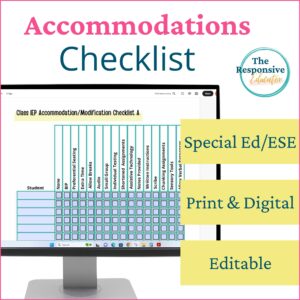
This tool makes it easy to:
Available as a fillable PDF, it comes preloaded with common accommodations (like extended time, preferential seating, or small-group testing), while also allowing you to customize for your specific students.
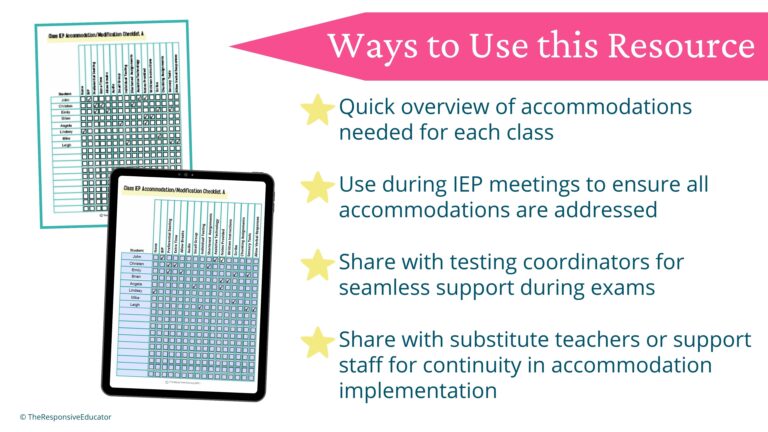
👉 Check out the Teachers Accommodations Checklist here.
This simple system helps ensure students consistently receive the support they’re entitled to, so nothing gets overlooked on a busy school day or during high-stakes testing.
Paras don’t have to be experts in writing IEPs—but you do need to know the difference between accommodations and modifications, and why it matters. The right support helps students access grade-level learning without being held back unnecessarily.
When in doubt, remember this: follow the IEP, check with the teacher, and never assume that “helping” is harmless. Sometimes, the smallest choices make the biggest difference in whether students feel successful, challenged, and prepared for the future.


Set your classroom paraprofessionals up for success with this quick-start guide for Day One.
Clarify expectations in areas like:
supporting student participation
observing routines and behavior strategies
understanding the role of a para in your classroom
…so they feel confident, prepared, and ready to support your students.
Sign up now for instant access to this printable (and editable!) resource—perfect for building strong team collaboration from the very beginning.

When a student is struggling, it can be difficult to know what information matters or what to look at next. The free Classroom Concerns Checklist can help you organize what you are seeing, identify patterns, and decide what information your team may need.