Behavior progress monitoring is one of the most important parts of supporting meaningful change—but it’s also one of the areas where teachers often feel stuck.
You might already be using a behavior chart or a daily report, but still feel like you don’t have clear answers. You may have systems in place, but still aren’t sure if they’re actually helping. This usually means the system you’re using isn’t giving you the right kind of information.
In this post, we’ll walk through the most common ways to track student behavior in the classroom, what they actually look like in practice, and how to choose the approach that gives you useful, meaningful information.

Behavior progress monitoring is simply the process of tracking behavior over time so you can make better decisions.
Instead of relying on memory or general impressions, you’re looking for patterns:
When is the behavior happening?
How often is it happening?
Is it improving, staying the same, or getting worse?
When you have the right system in place, your data starts to answer those questions for you. And that’s when behavior tracking becomes useful—not just something you’re required to do.
For many classrooms, especially in early elementary or general education settings, daily behavior charts are a practical starting point for behavior progress monitoring because they are simple, visual, and easy to maintain.
These work well when you’re focusing on broad expectations like:
following directions
staying on task
participating appropriately
In the classroom, this might look like checking in at set times throughout the day, such as after centers, before lunch, or at dismissal, and giving quick feedback using a smiley face, color, or rating.
The biggest advantage is that you can give immediate feedback without interrupting instruction.
However, if you find yourself thinking,
“This student had a rough day, but I can’t explain exactly when or why,”
that’s usually a sign that a simple chart isn’t giving you enough information.
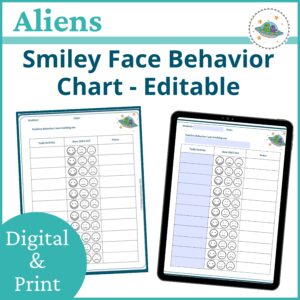
If you need something already set up so you don’t have to create it from scratch, you can explore different smiley face behavior charts and themed options.
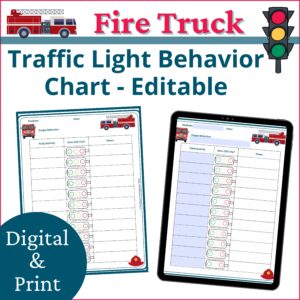
If you prefer a more structured visual system, you can also use traffic light behavior charts (red, yellow, green) here.
When you need more detail and consistency in your behavior progress monitoring, daily behavior reports are usually the next step. These systems break the day into smaller parts, which helps you see patterns more clearly.
In practice, this might look like rating behavior by subject, activity, or time block, which often helps teachers notice that behaviors occur more during specific parts of the day, like transitions or independent work.
These are especially helpful when:
You are targeting specific behaviors
You need documentation across the day
Communication with home is part of the plan
Compared to simple charts, daily reports give you a clearer picture of when and where behaviors are happening, not just how the overall day went.
If you need something already set up to support both tracking and home communication, you can explore daily behavior report options here.
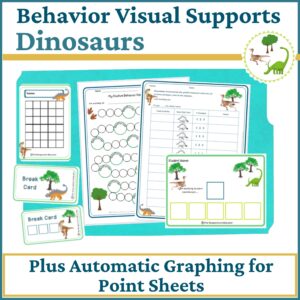
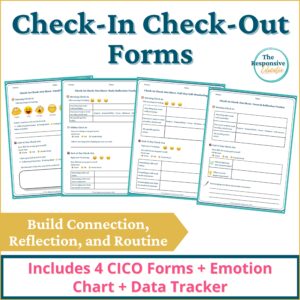
For students who need more targeted support, Check-In Check-Out (CICO) systems add structure and consistency throughout the entire day.
This system typically includes:
A morning check-in to review expectations
Feedback throughout the day
An end-of-day check-out
In the classroom, this might look like starting the day with a quick check-in and goal setting, providing feedback at scheduled times, and reviewing progress before dismissal.
CICO works well when:
A student needs frequent feedback
Multiple adults are involved
Consistency is important
It helps create a predictable routine, which often reduces behavior issues on its own.
If you need something already set up so you can implement this quickly, you can use this Check-In Check-Out behavior sheet.
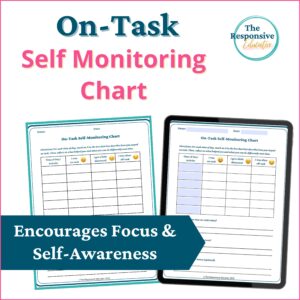
As students build awareness, you can begin shifting some responsibility for behavior progress monitoring to them through self-monitoring.
Instead of only receiving feedback, students begin:
Reflecting on their own behavior
Tracking their progress
Taking ownership of their choices
In practice, this might look like students rating themselves at set times during the day and comparing their ratings with the teacher’s, which often helps build awareness and accountability.
This works best when:
Students understand expectations
They are ready for guided reflection
The goal is to build independence over time
Self-monitoring is often a transition from teacher-managed systems to student responsibility.
If you need something already set up to guide that process, you can explore self-monitoring behavior checklists here.
This is where many teachers get stuck.
You may have a behavior progress monitoring system in place, but it’s not giving you enough detail to actually understand what’s happening.
You might notice:
The behavior is inconsistent
The behavior varies in intensity or duration
You still can’t clearly explain patterns
This is usually the point where you need to shift from general tracking to more precise data collection.
Instead of broad ratings, you begin tracking:
how often a behavior happens
how long it lasts
when it occurs
If you’ve ever thought,
“I know something is off, but I don’t have the data to explain it,”
this is the missing piece.
If you want a clear breakdown of different data collection methods, you can explore them here.
You can also see how rate data works in practice here. Rate is one of the most misunderstood methods of data collection, but it is really important for progress monitoring behavior over time.
The most effective behavior progress monitoring system depends on the behavior you are trying to track.
Here’s a simple way to think about it:
Use daily behavior charts for general expectations and quick feedback
Use daily reports or CICO for more structure and consistent monitoring
Use self-monitoring to build independence and reflection
Use data collection methods when you need precise, measurable information
It’s normal to adjust your approach over time. What works for one student—or even one phase of behavior—may not work in another.
Behavior tracking should make your job easier—not more complicated.
When you use a system that matches the behavior and the student, you’ll start to notice:
clearer patterns
more confident decisions
more effective support
If your current system isn’t giving you clear answers, that’s usually a sign it’s time to adjust your approach. The goal isn’t just to track behavior—it’s to understand it well enough to make effective decisions.