Some children hit when they feel angry, frustrated, overwhelmed, or unable to express what they need in the moment. For some children, hitting happens very quickly before they fully stop to think. Others struggle with impulse control, emotional regulation, body control, or calming down once strong emotions begin building.
What this often looks like is:
Many adults naturally respond with reminders like:
But for many children, reminders alone are not enough because the missing skill has not yet been explicitly taught and practiced.
Many children do not naturally know:
What adults often see is the hitting itself. What is happening underneath is frequently a combination of frustration tolerance difficulties, emotional regulation struggles, impulse control challenges, and limited replacement strategies.
That does not mean the behavior is okay, but it does mean many children need direct instruction, modeling, repetition, and practice in order to build safer responses.
When I Feel Angry: No Hitting was created to help break these situations down in a visual, concrete, and supportive way. Rather than simply telling children to stop hitting, the story focuses heavily on helping children understand what is happening in their bodies, why safe hands matter socially, and what they can realistically do instead.
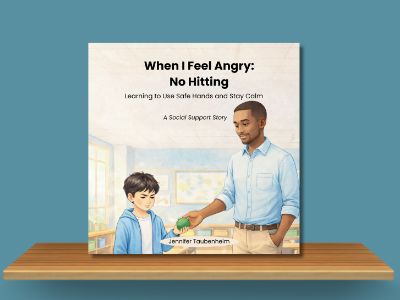
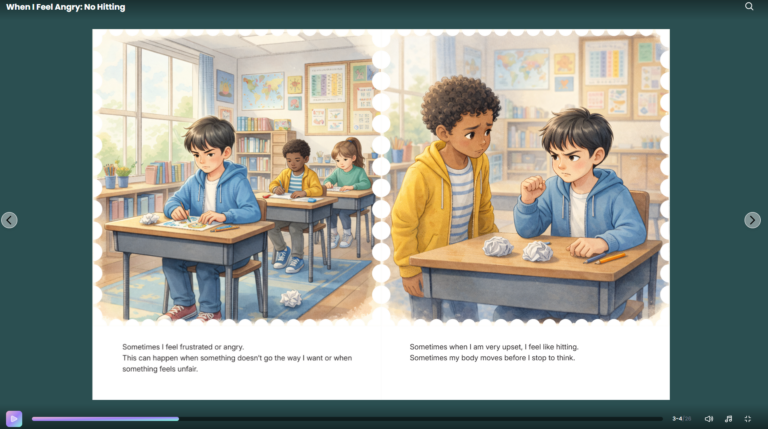
In When I Feel Angry: No Hitting, a young boy becomes frustrated and reacts physically when his emotions feel too big to manage calmly.
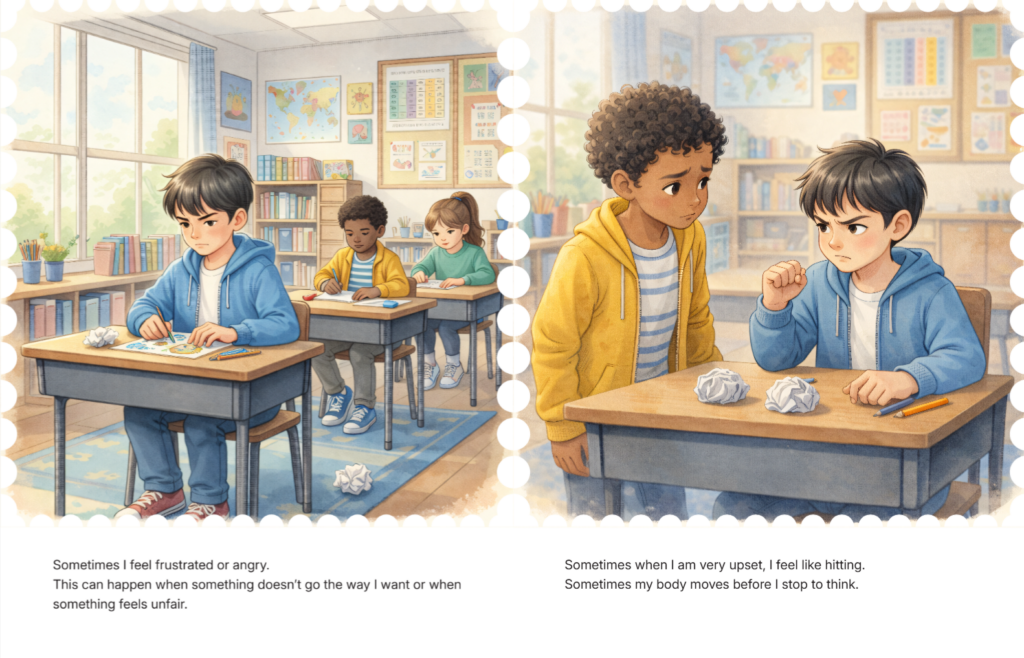
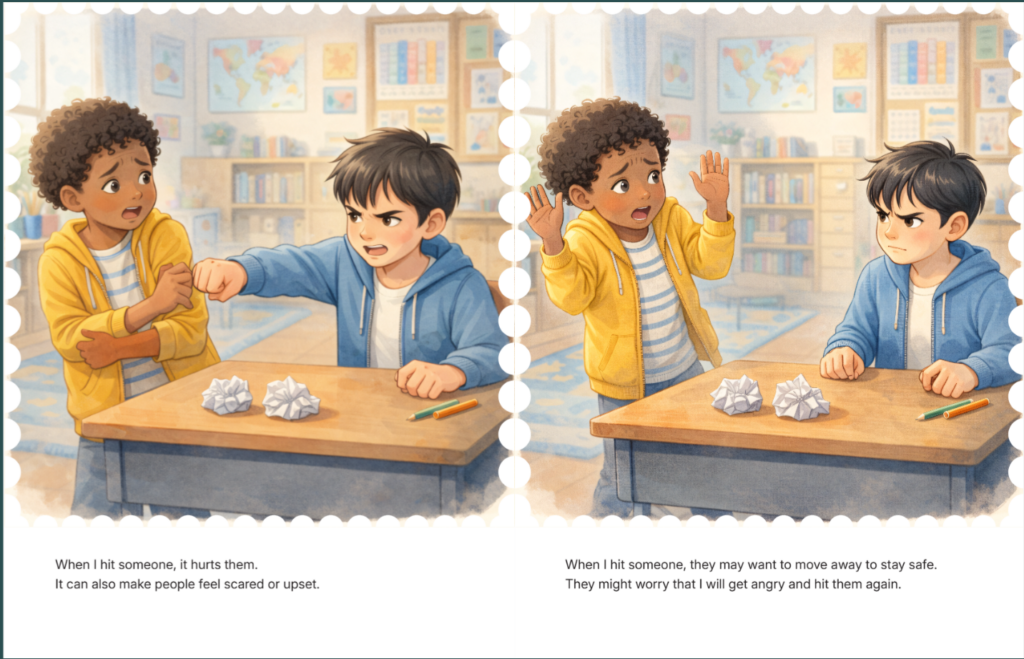
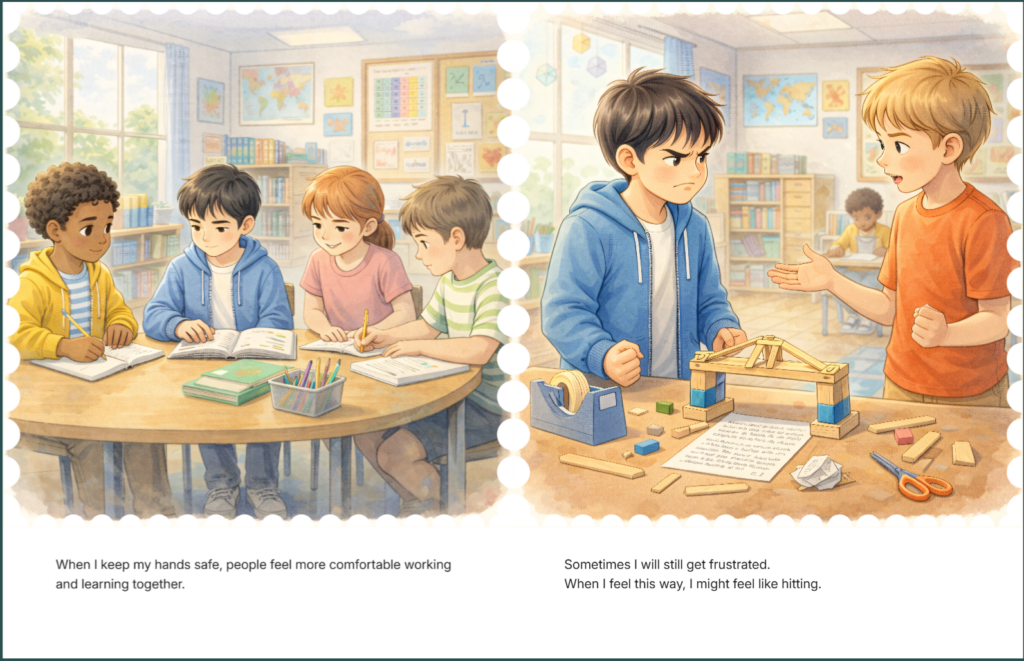
At first, he mainly focuses on his own anger and frustration. Like many children, he is not fully thinking about how his actions affect the people around him. As the story continues, he begins noticing other people’s reactions, facial expressions, and body language.
He starts realizing that hitting affects:
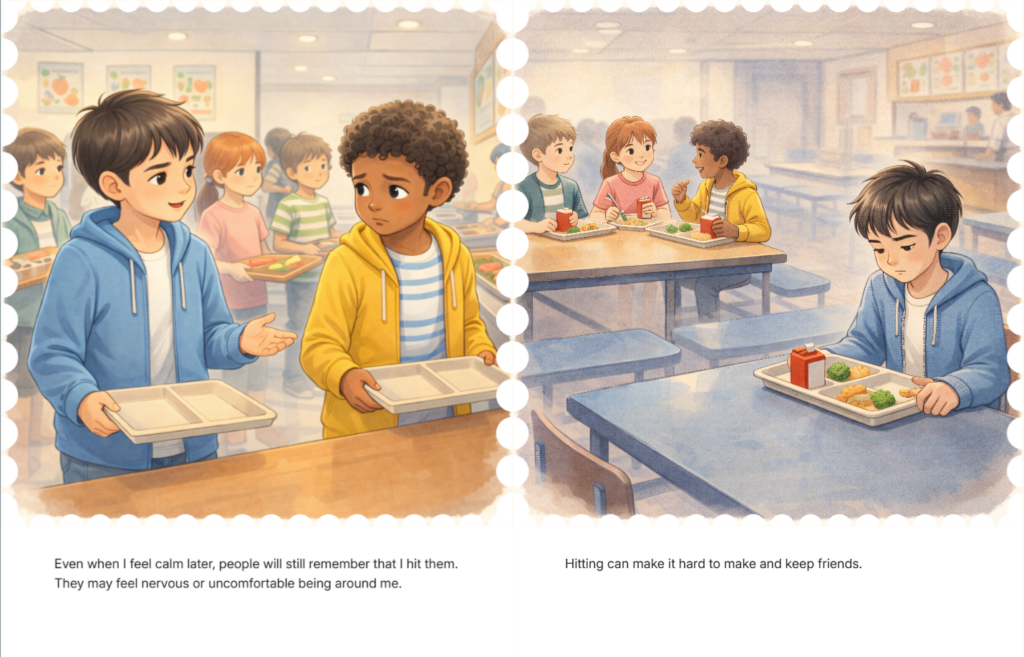
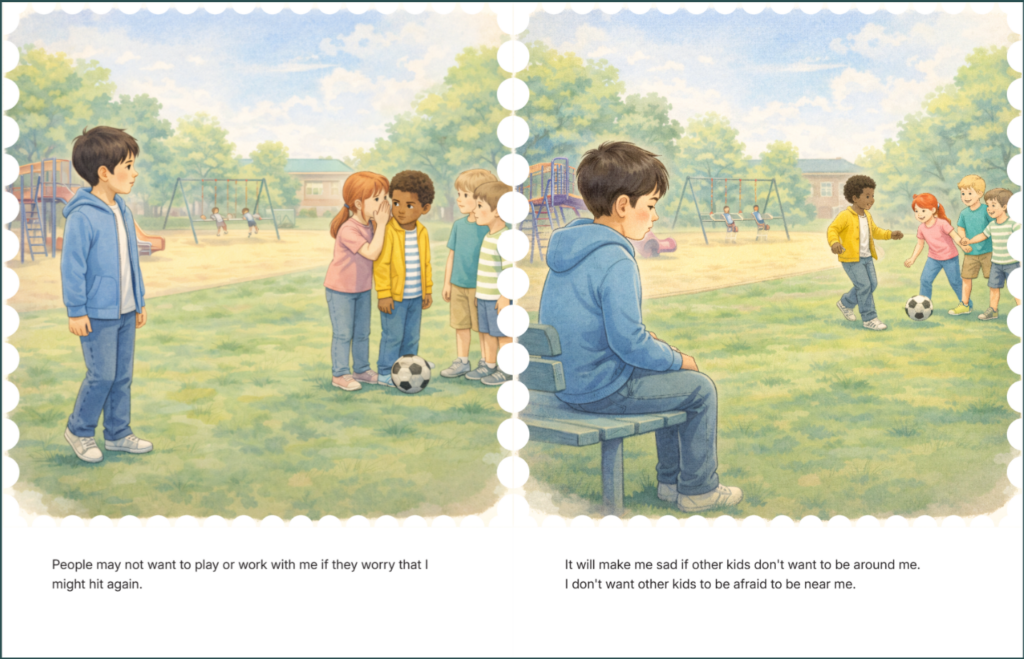
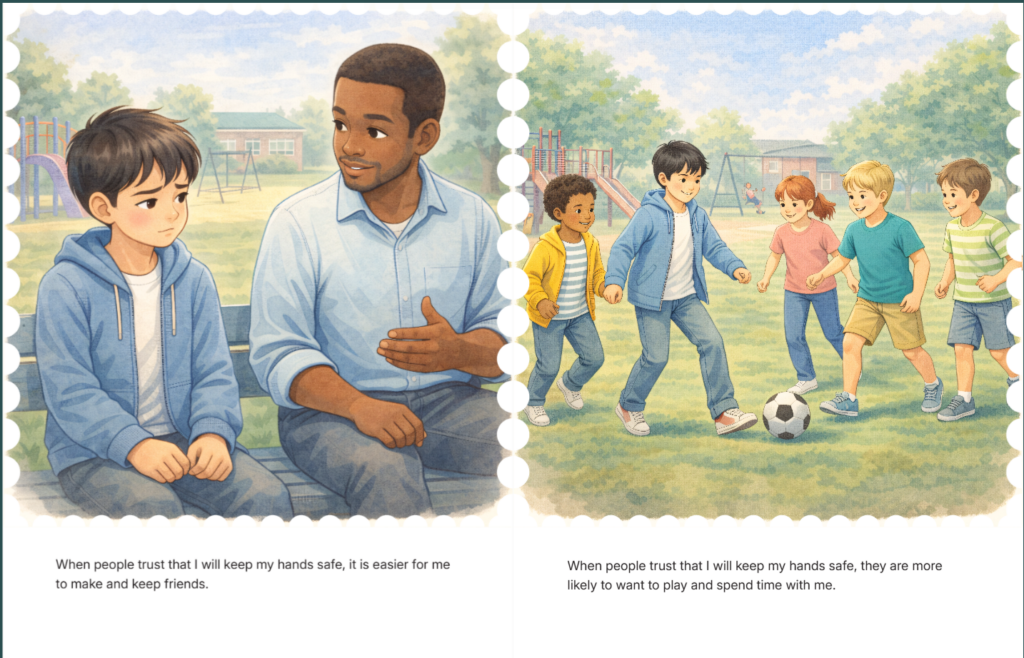
Many children do not automatically connect their behavior to these kinds of social consequences. What this may look like in real life is peers backing away, avoiding the child, becoming nervous around them, or not wanting to play with them anymore without the child fully understanding why those relationship changes are happening.
Throughout the story, children are guided through emotional awareness, body control, and replacement behaviors in a supportive and concrete way. The book teaches children how to:
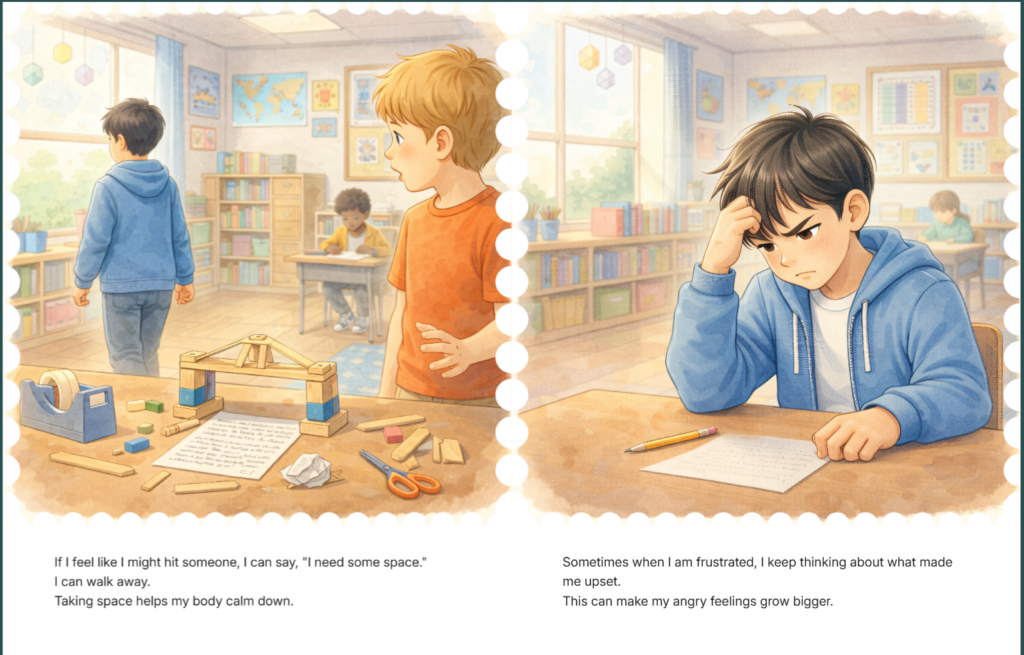
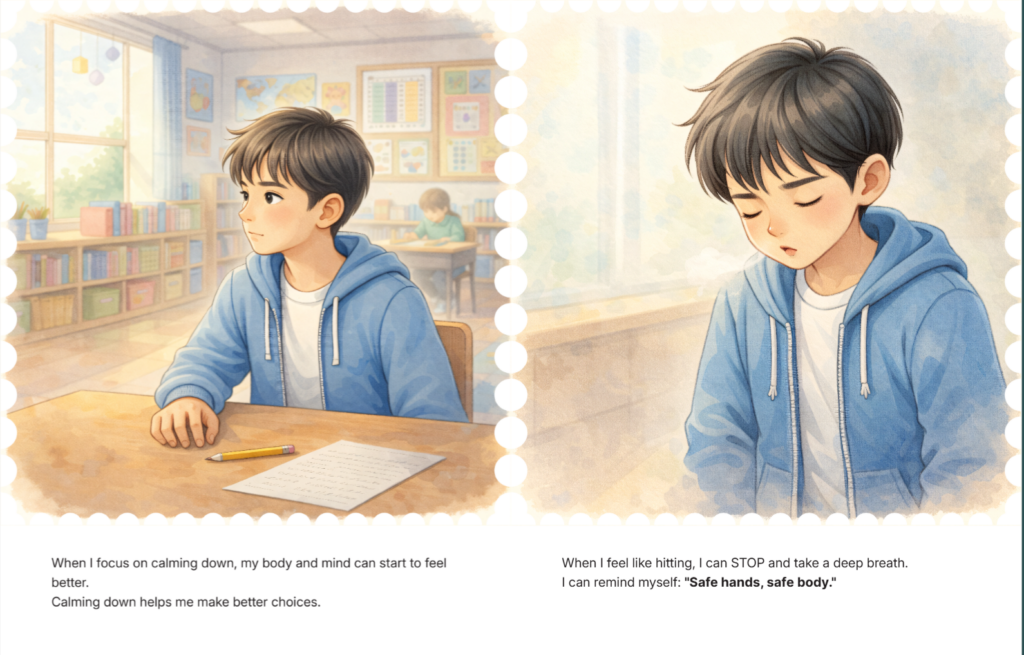
The story also introduces calming and replacement strategies children can realistically use when upset, including:
One of the biggest messages throughout the story is that feeling angry itself is not wrong. Many children need help understanding that all emotions are normal, but not all behaviors are safe. The story repeatedly reinforces that children can feel angry, frustrated, disappointed, or overwhelmed without hurting others physically.
This book was designed for children who struggle with:
While the recommended age range is approximately 3–10, the visual supports and respectful language may also be helpful for older students who benefit from more explicit social-emotional teaching.
One thing that makes this story different is its strong focus on replacement behaviors and direct instruction. Many children are repeatedly told what not to do, but they are not always explicitly taught what to do instead.
What this often looks like is a child being told:
…but without fully understanding:
Throughout the story, situations are broken down step-by-step so children can more clearly understand emotional escalation, body signals, social consequences, and safer coping strategies.
The story also strongly focuses on the concept of safe hands and safe body choices. Many children do not naturally recognize how physical behavior affects the emotional safety of others. What this may look like is peers becoming anxious, uncomfortable, or hesitant around the child even after the immediate situation has ended.
The book repeatedly reinforces that:
The illustrations throughout the story are intentionally designed to help children connect emotions, actions, and social outcomes more concretely. Many children struggle to naturally read facial expressions, body language, and peer reactions during emotional moments. The visuals help make those social and emotional connections easier to understand.
The book also includes supportive adult guidance pages with discussion prompts and teaching suggestions. Additionally, the QR code audio version allows children to independently listen and follow along with the story repeatedly. Many children benefit from revisiting calming strategies, safe hands concepts, and replacement behaviors multiple times during calm moments so those skills become easier to access during difficult situations later.
Parents, educators, therapists, and ABA professionals have especially appreciated that the story focuses heavily on replacement behaviors rather than simply telling children “don’t hit.”
Many adults have shared that children respond well to:
Several adults have also appreciated that the book does not shame children for having strong emotions. Instead, the story helps children understand that anger itself is normal while also reinforcing that hurting others is not safe.
The repeated focus on friendships and emotional safety has also been especially meaningful for many families and educators. The story helps children more clearly understand how hitting affects:
Adults have also responded positively to the strong visual support throughout the book. Facial expressions, body language, peer reactions, emotional escalation, and calming strategies are visually modeled in ways that help children better understand situations that are often socially abstract or difficult for them to process in the moment.
The QR audio version has been especially helpful for children who benefit from repeated review and independent access to calming and self-regulation concepts.
This social support story is especially helpful for children who:
It may also be helpful for children who have difficulty understanding the social impact of their behavior on friendships, peer trust, classroom comfort, and emotional safety.
Because the story uses visual supports, direct instruction, and concrete examples, it can work well in:
Learning not to hit is about much more than simply following rules. It is connected to emotional regulation, body control, frustration tolerance, calming strategies, friendship skills, social safety, and understanding how actions affect other people emotionally and physically.
Many children benefit from these skills being explicitly taught, modeled, and revisited repeatedly over time. When I Feel Angry: No Hitting was designed to provide that support in a way that feels visual, supportive, practical, and emotionally meaningful for real-world situations.
You can view the book on Amazon here.
If you are looking for a printable classroom pdf, you can find the TPT version here.
Managing anger safely and without hitting is just one of many social skills children benefit from learning explicitly. The Social Support Stories Collection includes additional books that help children understand emotions, social cues, behavior expectations, and how their actions affect others. Browse the collection here.


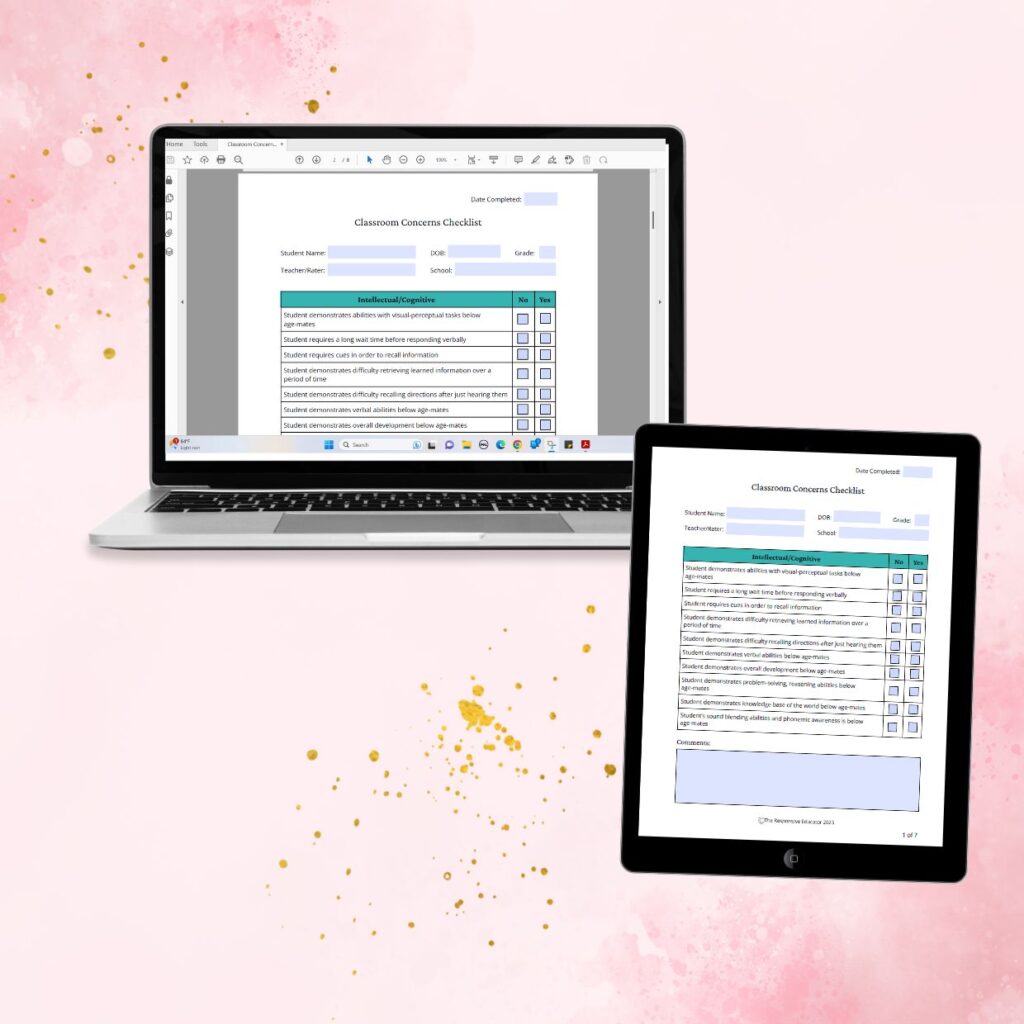
Support your students’ individual needs with our exclusive Classroom Concerns Checklist. Identify patterns in areas like cognitive skills, communication, social/emotional behavior, and more.
Sign up now to receive instant access and valuable insights on addressing classroom concerns.

Support your students’ individual needs with our exclusive Classroom Concerns Checklist.
Identify key concerns in areas like:
…and more to help drive collaboration and problem-solving.
Sign up now to receive instant access and valuable insights on addressing classroom concerns.