Some children hear the word “no” and are able to accept it without incident.
Others become overwhelmed almost immediately.
They may yell, argue, cry, shut down, repeat the same question over and over, or have emotional outbursts that seem much bigger than the situation itself.
For many children, this is not simply defiance. They may genuinely struggle with various aspects of accepting no, including:
When I Don’t Get My Way: Accepting No was created to help children learn these skills in a clear, visual, and supportive way.
Written in first-person language, this Social Support Story helps children understand:
Unlike many books that simply explain rules or expected behavior, this story walks children through the social and emotional side of the situation. It helps them recognize facial expressions, body language, and the impact their reactions can have on the people around them.
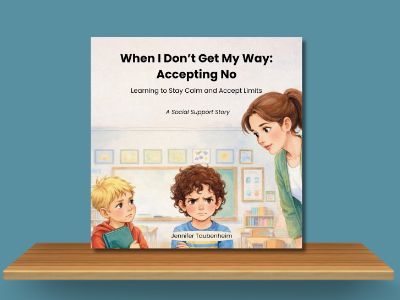
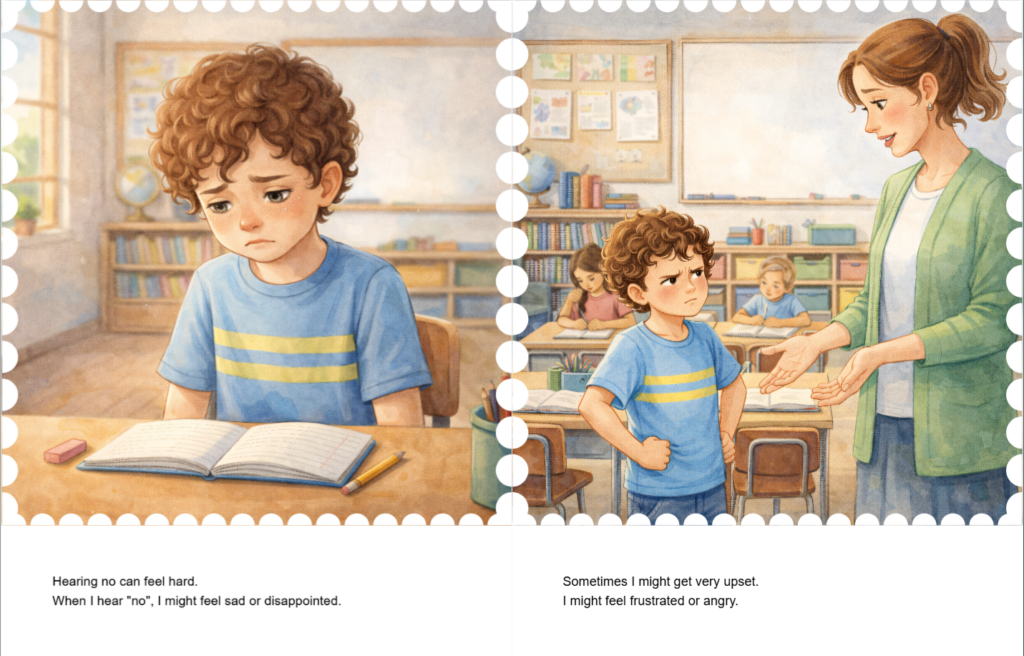
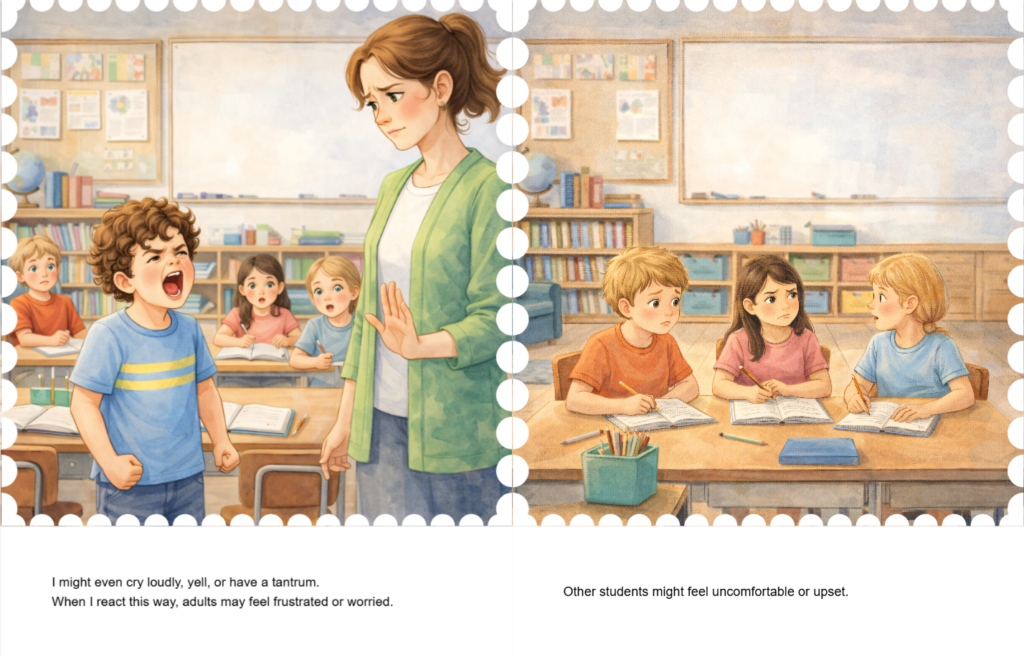
In When I Don’t Get My Way: Accepting No, a young boy struggles with hearing the word “no.” When things do not go the way he wants, he reacts with frustration and emotional outbursts that affect both adults and peers around him.
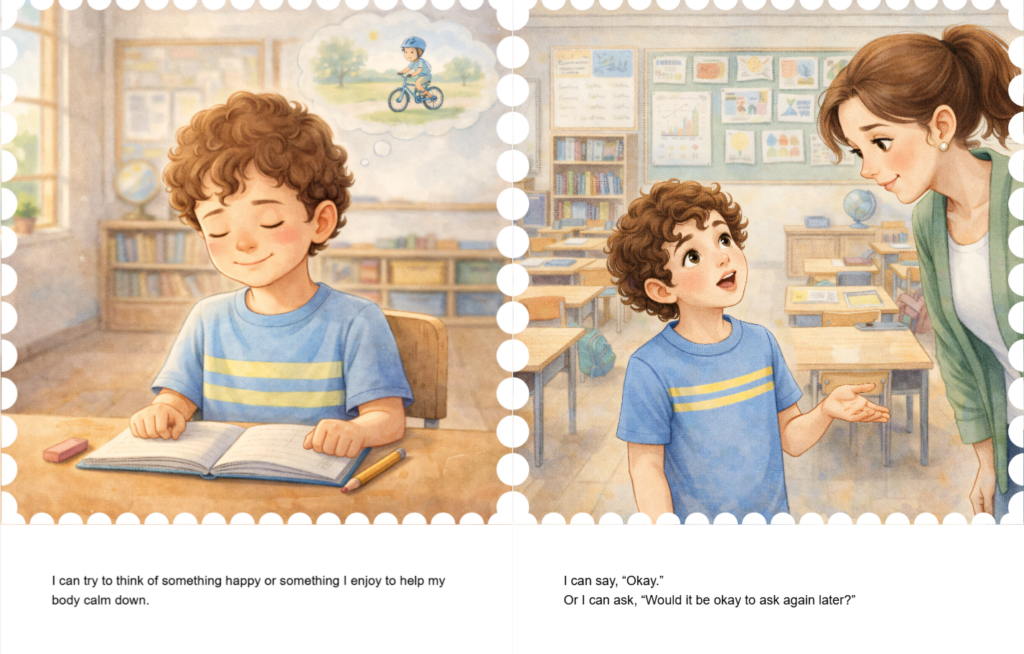
Throughout the story, he begins learning why adults sometimes say no, why limits and boundaries matter, and how to calm himself when he feels disappointed or upset. Children are guided step-by-step through more appropriate ways to respond when they do not get what they want.
The story also helps children notice how others may feel when they have a visbly hard time appropriately accepting no by using clear facial expressions, body language, and relatable social situations.
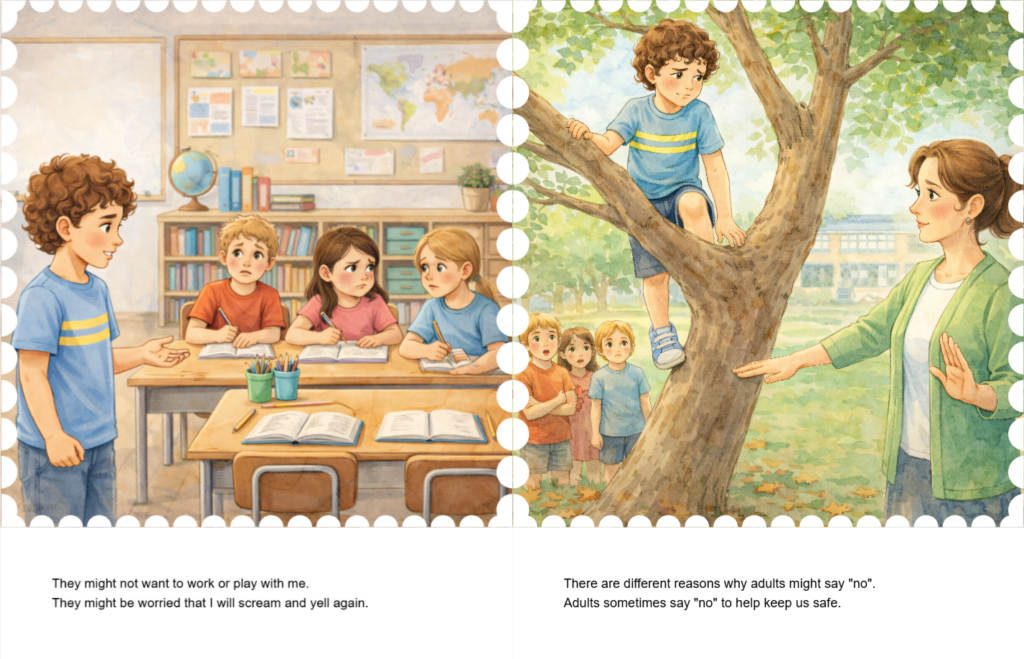
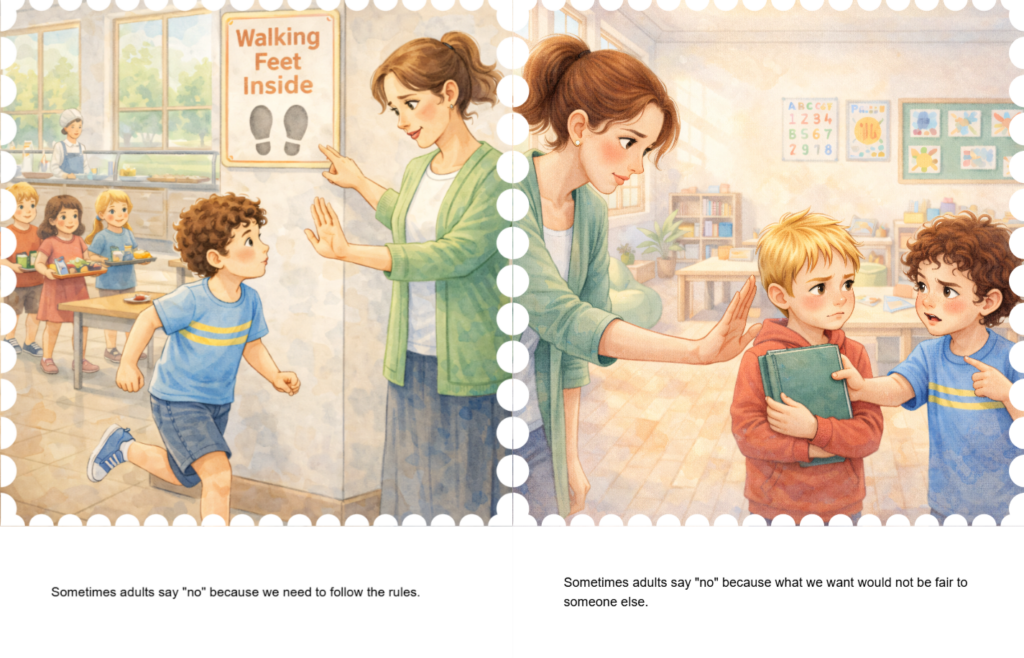
This book was designed for children who struggle with accepting limits, handling disappointment, or managing big emotional reactions when they hear “no.”
The story uses simple but respectful language that works well for a wide age range. While the recommended age range is approximately 3–10, the book has also been useful for older students who benefit from explicit teaching around emotional regulation, frustration tolerance, and social understanding.
One thing that makes this story different is the strong focus on helping children understand the social impact of their behavior. Instead of only telling children what not to do, the story helps them understand:
The book also explains that adults may say no for many different reasons, including safety, fairness, timing, or responsibilities. It addresses an important concept many children struggle with: sometimes we may not fully understand why the answer is no, but we still need to respond appropriately.
The story includes supportive adult guidance pages that help parents, teachers, therapists, and support staff use the book as a teaching tool. These pages include discussion ideas, prompts, and suggestions for helping children connect the story to real-life situations.
A QR code inside the book also allows children to listen to the story read aloud while following along with the pictures. Many adults have found this especially helpful for repeated practice and independent review.
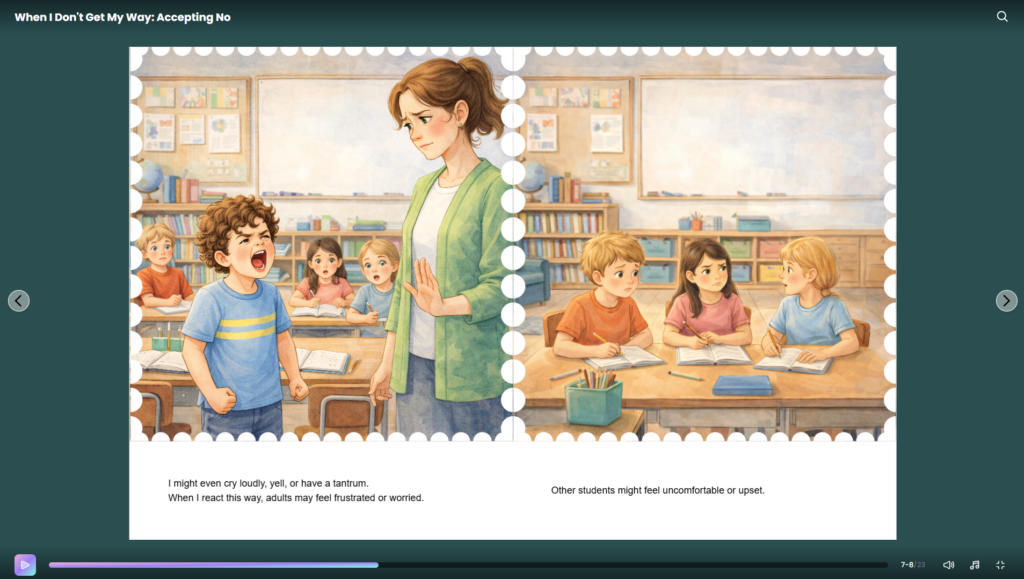
Parents, educators, and ABA professionals have especially appreciated how explicitly the story teaches emotional regulation and social understanding rather than simply focusing on compliance.
Many adults have commented that children quickly connect with the visual supports throughout the book, especially the facial expressions and body language shown during social situations. Even young children are often able to recognize how peers are feeling and explain why those reactions may be happening.
Adults have also appreciated that the story explains different reasons adults may say “no,” while reinforcing that children will not always fully understand every decision in the moment.
Several professionals have noted that the story works well with older students who still need direct and concrete teaching around frustration tolerance, emotional regulation, and respectful responses to limits. The QR code for the audio read-aloud option has also been especially helpful for children who benefit from hearing the story multiple times independently.
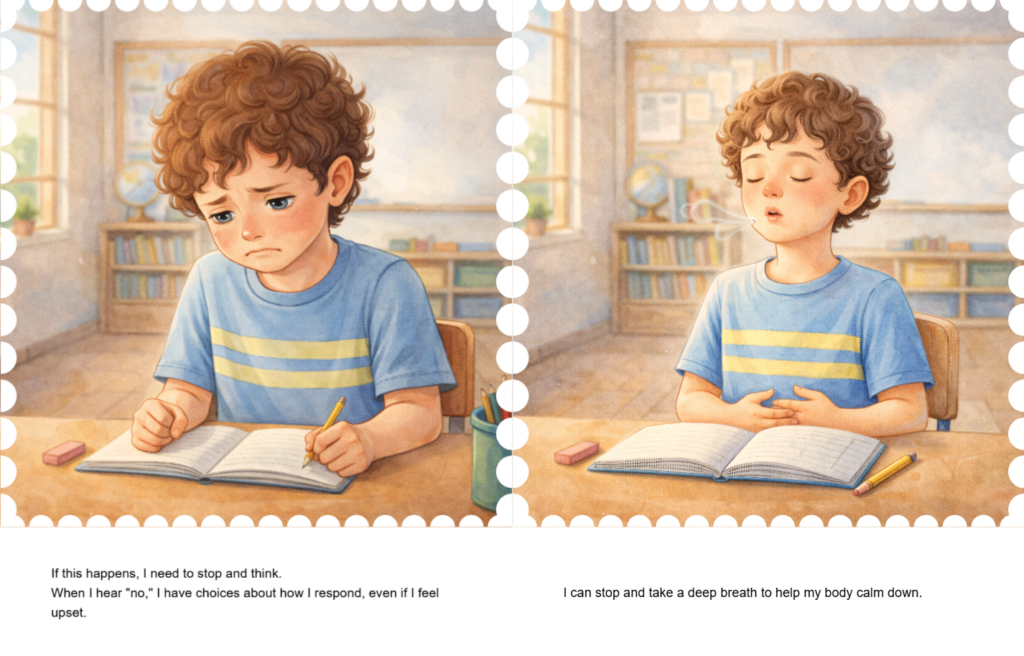
This social support story is especially helpful for children who:
It is a great addition to:
Learning to accept “no” is not simply about compliance. It is a skill connected to emotional regulation, resilience, frustration tolerance, social understanding, and healthy relationships.
Many children need these skills taught directly and repeatedly over time. They often benefit from explicit support that helps them recognize emotions, understand social reactions, and practice more appropriate responses when disappointment feels overwhelming.
When I Don’t Get My Way: Accepting No was designed to provide that support in a way that feels visual, supportive, practical, and easy for children to revisit as needed.
You can view the book on Amazon here,
If you are looking for a printable classroom pdf, you can find it on TPT here.
Accepting no is just one of many social skills children benefit from learning explicitly. The Social Support Stories Collection includes additional books that help children understand emotions, social cues, behavior expectations, and how their actions affect others. Browse the collection here.


Support your students’ individual needs with our exclusive Classroom Concerns Checklist. Identify patterns in areas like cognitive skills, communication, social/emotional behavior, and more.
Sign up now to receive instant access and valuable insights on addressing classroom concerns.

Support your students’ individual needs with our exclusive Classroom Concerns Checklist.
Identify key concerns in areas like:
…and more to help drive collaboration and problem-solving.
Sign up now to receive instant access and valuable insights on addressing classroom concerns.

When a student is struggling, it can be difficult to know what information matters or what to look at next. The free Classroom Concerns Checklist can help you organize what you are seeing, identify patterns, and decide what information your team may need.