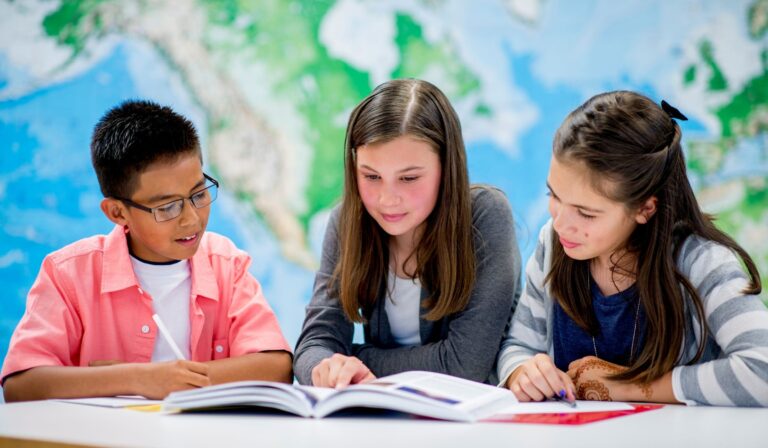
When students argue over small things—who goes first, what to play, whose idea to follow—it can quickly turn into a bigger problem. The challenge isn’t just the disagreement. It’s that many students don’t yet know how to solve conflicts on their own.
If you’ve spent any amount of time in a classroom, you’ve seen how quickly small disagreements can escalate.
It might start with something simple:
But for many students, it doesn’t stay simple. Some students have a very clear idea of what they want and how things should go. They may struggle to understand that other students also have preferences, ideas, and expectations. When things don’t go their way, you might see arguing, raised voices, complaining, refusal to participate, or even complete shutdown.
Other times, students may agree to go along with someone else’s idea—but make sure everyone knows they’re unhappy about it the entire time.
And in some cases, these patterns don’t start at school. Some students have not had many opportunities to hear “no,” take turns, or work through disagreements without an adult stepping in.
I saw this firsthand growing up. My younger sister was used to getting her way, and I was often told to play whatever she wanted. If I didn’t, she would get upset, and I was expected to adjust. When she started school, she struggled with friendships because she didn’t yet understand that other kids wouldn’t always go along with her plans. That same pattern shows up in the classroom all the time.
Which is why we should be doing more than just stopping arguments. Teaching conflict resolution strategies is not just about stopping arguments—it’s about helping students learn how to:
Conflict resolution is the ability to work through disagreements in a way that maintains relationships and leads to a solution. It’s not about avoiding conflict or making sure everyone is always happy.
Teaching conflict resolution strategies is about helping students learn that:
It is also about helping students understand that they have options beyond arguing, shutting down, or expecting an adult to fix it.
For many students, conflict feels very personal.
They are focused on:
What they often struggle with is:
Some students believe that if someone doesn’t agree with them, that person is being mean. Others feel like if they don’t get their way, the situation is unfair. And in group settings—especially when the outcome matters—this can escalate quickly.
I once supported a student who was academically advanced but struggled socially. He was very rigid in his thinking, and during a group engineering project, he was convinced his idea would work better than the others. The problem was, he couldn’t tolerate the group choosing a different approach.
He wanted to work alone, but that wasn’t an option. The classroom teacher was firm that the project had to be completed in a group. Not surprisingly, it didn’t go well. He became overwhelmed and ended up knocking over what they were building.
Afterward, we debriefed with him and talked through what happened—what he was thinking in the moment, how the group experienced it, and what he could have done differently. We continued working with him on collaboration skills, conflict resolution strategies, and helping him tolerate situations where things didn’t go his way.
At the same time, we also recognized that the situation itself mattered. For future projects, he was given the option to work independently for higher-stakes tasks, while continuing to practice teamwork in more supported, lower-stakes situations.
It’s very tempting to step in and fix the problem. In the moment, it often feels faster to decide who goes first or tell students what to do so the activity can continue. But when that happens repeatedly, students start to rely on adults to solve every disagreement.
When we step in too often, students learn:
Many students already believe they need an adult to handle every disagreement. Giving them space—while still supporting them—helps build independence.
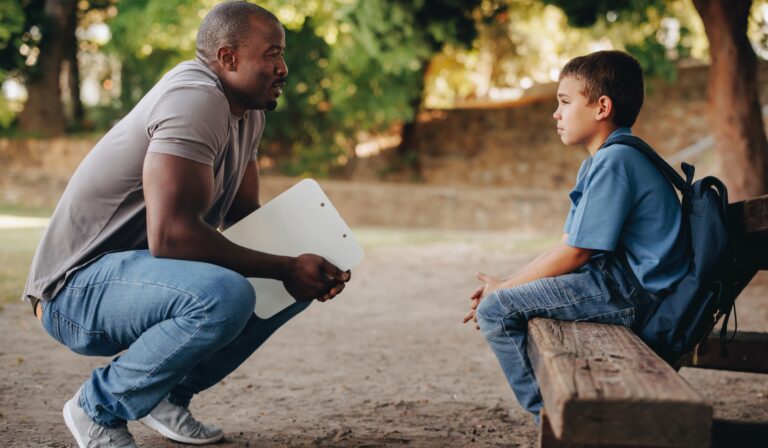
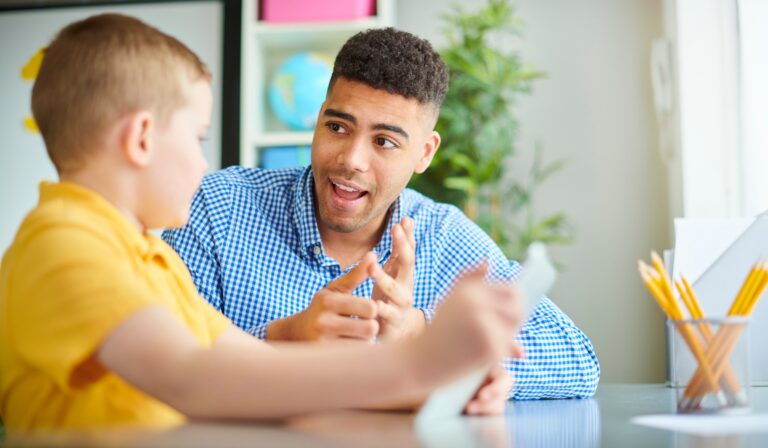
Instead of giving answers, guide students to think through the situation. For example, if two students are arguing over who gets to go first, it’s easy to step in and decide. But instead, you might pause and ask a few questions that help them think it through on their own.
You might ask:
You can also bring in the relationship piece:
This helps students come to their own conclusions instead of being told what to do.
This is one of the hardest skills for many students. They are often focused on their own wants and have difficulty stepping outside of that. You’ll often see this when a student insists something is “not fair” without recognizing that another student feels the same way about the situation.
You can support this by asking:
This builds awareness of others, which is essential for resolving conflict.
Students often need explicit instruction in how to express themselves. Many students don’t naturally have the language to explain what they’re feeling. Instead, it comes out as arguing, complaining, or shutting down.
You can model and practice:
This helps move them away from blaming and toward communicating.
Many conflicts come down to wanting to be in charge or have things go their way Being flexible can be really tough for some students.
Students may want:
You might see this during group work when one student insists their idea is the only one that should be used, while others start to disengage or argue. This is where compromise comes in.
You can guide students to think through:
Strategies like taking turns or using a timer can be especially helpful. Timers, in particular, can make the process feel more fair and predictable.
Students need to understand that how they handle conflict affects their friendships. This often becomes clear when students start avoiding peers who are difficult to work with or always want to be in charge.
You can ask:
This helps connect behavior to long-term outcomes.
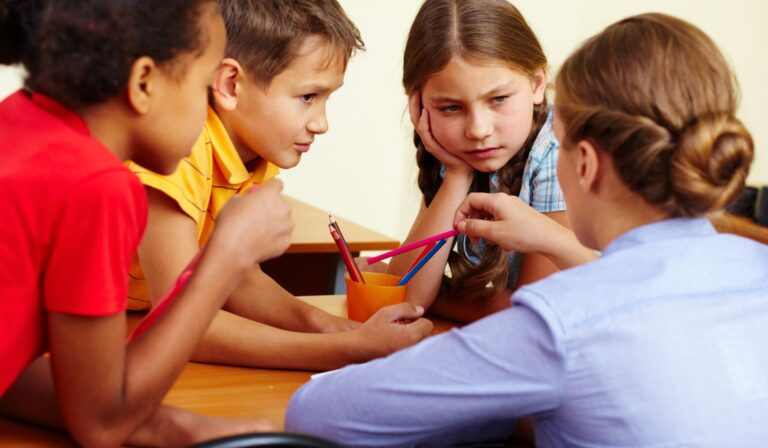
One of the most effective ways to teach conflict resolution skills is through guided discussion using real classroom situations.
Instead of jumping in to fix problems, you can walk students through how to think about them.
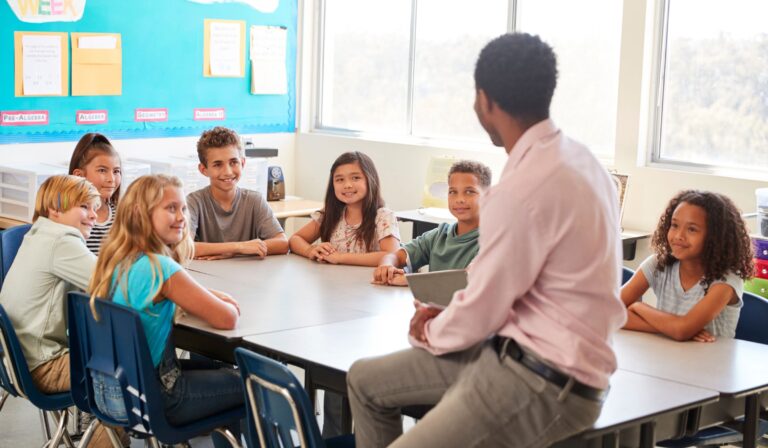
Present a familiar situation, such as two students wanting to do different things at recess or disagreeing during a group project. You might describe a scenario or use something that recently happened in your classroom.
Have students identify:
This helps students recognize that both sides have a perspective, even if they don’t agree.
Guide students to clearly name:
You can ask:
This helps students see when a situation is unbalanced.
Now guide students to think through possible outcomes.
Ask:
This is where students begin to connect their behavior to longer-term outcomes.
Help students generate possible solutions.
You might hear ideas like:
You can guide them further by asking:
This is the most important step.
Have students describe:
This helps students understand that compromise is not about losing—it’s about working together.
It’s important to go beyond simple, equal situations.
Include examples where:
These are the situations students actually struggle with, and they give you opportunities to guide deeper thinking.
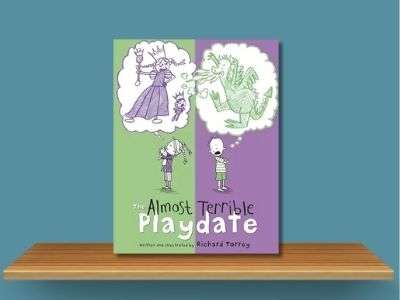
A great read-aloud to support this skill is The Almost Terrible Playdate by Richard Torrey. In the story, both characters want their own way and insist on it to the point where no one is having fun.
This makes it a strong example of what happens when:
As you read, you can pause to ask:
This naturally leads into discussions about compromise, perspective-taking, and repairing relationships.
You can explore this and other conflict resolution books for kids here.
This link is an affiliate link, which means I may earn a small commission if you choose to purchase, at no additional cost to you.
Conflict is a normal part of being in a classroom. Students will disagree, want different things, and struggle to share control. The goal is not to eliminate conflict.
It’s to help students learn how to handle it in a way that:
When students practice these skills consistently, they begin to carry them beyond the classroom.
Conflict resolution isn’t just a school skill—it’s a life skill. Many adults struggle with it because they were never taught how to navigate conflict in a healthy way. Giving students that foundation early sets them up for stronger relationships and better outcomes long term.
Picture books allow students to examine a conflict without the pressure of discussing their own disagreement right away. These conflict-resolution books for kids can help you explore what went wrong, what each character needed, and how the problem could be handled differently.


Support your students’ individual needs with our exclusive Classroom Concerns Checklist. Identify patterns in areas like cognitive skills, communication, social/emotional behavior, and more.
Sign up now to receive instant access and valuable insights on addressing classroom concerns.
Support your students’ individual needs with our exclusive Classroom Concerns Checklist.
Identify key concerns in areas like:
…and more to help drive collaboration and problem-solving.
Sign up now to receive instant access and valuable insights on addressing classroom concerns.
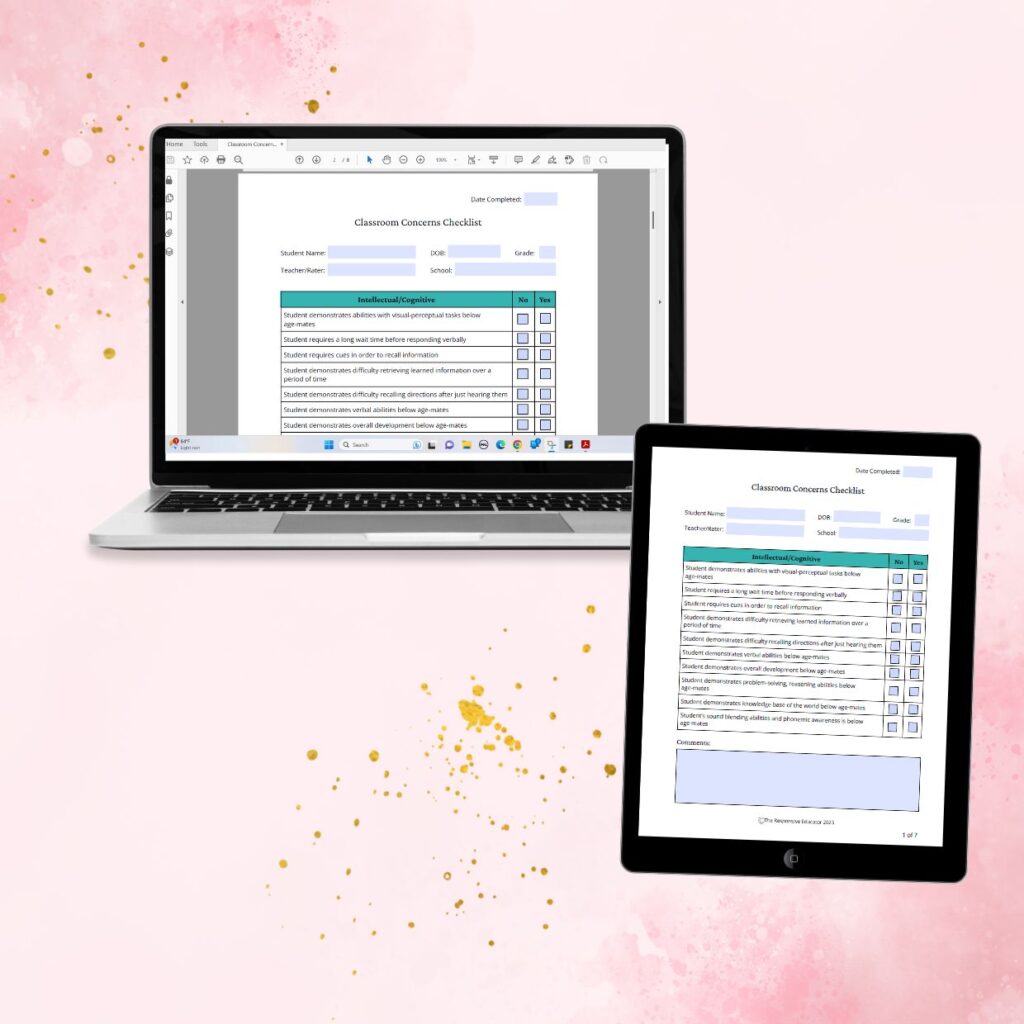
When a student is struggling, it can be difficult to know what information matters or what to look at next. The free Classroom Concerns Checklist can help you organize what you are seeing, identify patterns, and decide what information your team may need.