By the end of the school year, patience is just… lower.
You’ve already taught expectations. You’ve modeled them, practiced them, and reminded students of them more times than you can count. So when students start arguing over something small—who goes first, what to do, whose idea to follow—it can feel especially frustrating.
A lot of the thinking in that moment sounds like, “We’ve already gone over this.” Or “They should know this by now.” Sometimes it even turns into, “I don’t have time for this again.” Even if we don’t always say it out loud, it’s there.
And the reality is, both teachers and students are a little stretched thin by this point in the year.
So what often ends up happening is that we step in and solve the problem just to keep things moving. We make the decision, redirect quickly, and move on. It works in the moment—but it also means students aren’t really building the skills they need to handle those situations on their own.
At the same time, many teachers are looking for end of the year activities for the classroom that keep students engaged without turning into busywork. The challenge is finding something that supports behavior and social-emotional skills while still being manageable during a hectic time of year.

A lot of these situations feel frustrating because they seem so small. Students are upset about things that don’t feel like a big deal, and it’s easy to think, “They should know this by now.”
But what’s really happening is that students don’t consistently apply what they know when they’re in the moment. When they’re frustrated or focused on what they want, those skills don’t show up the way we expect them to. That’s why the same issues keep coming up, even when you’ve already taught the expectations.
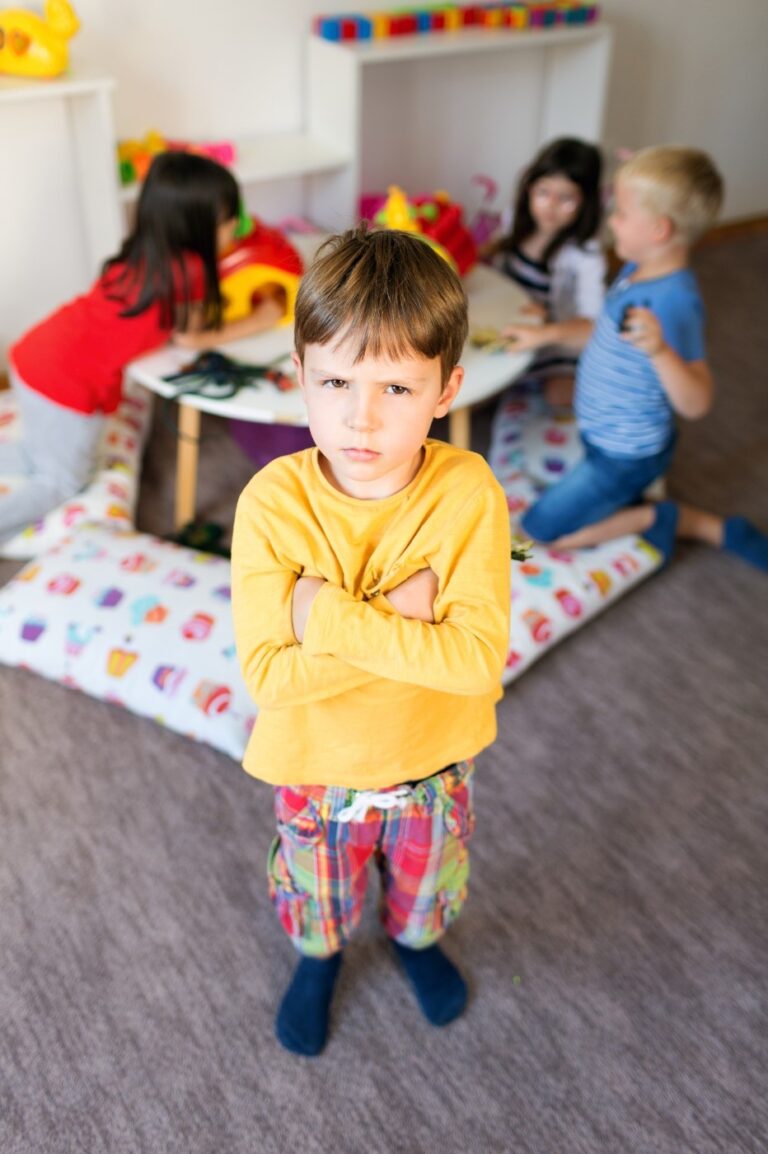
When this keeps happening, most teachers shift into “just get through it” mode.
You step in, make a quick decision, and move things along so the lesson doesn’t fall apart. You might say something like, “We’ve already talked about this,” or “We don’t have time for this right now.” This may work in the moment, but it also means students aren’t actually practicing how to handle those situations on their own—so you end up dealing with the same issues again later.
Instead of stopping to reteach everything, it helps to build in short opportunities for students to think through the kinds of situations they’re already struggling with. The goal isn’t to explain expectations again. It’s to give students a chance to apply them. When you do that, you create something you can refer back to later. Instead of repeating directions, you can say, “Remember when we talked about this? What would be a better choice here?”
That shift matters, especially at the end of the school year when time is limited and patience is lower. It gives both you and your students a shared reference point instead of starting over every time something comes up.
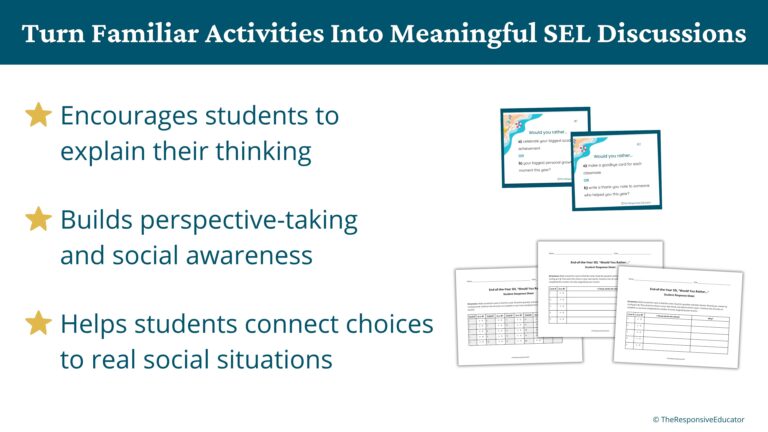
Most students are used to “Would You Rather” as something fun and light. That’s exactly why it can be so effective when you shift the focus slightly and use it as part of your end of the year activities to get students thinking about real situations.
For example, you might ask something like:
Would you rather let someone else go first even if you really wanted to, or insist on going first because you had the idea?
or
Would you rather include someone you don’t usually work with, or stay with your same group even if someone else is left out?
You can run this as a movement-based classroom activity by posting prompts around the room and having students move and choose. That alone helps with engagement during the end of the school year, but the real value comes in what you do after they’ve made their choice.
Bring students back together and ask them to explain their thinking. Why did they choose that option? What might happen if they made the other choice? How might the other person feel in each situation?
These conversations build skills like perspective-taking, relationship skills, and responsible decision-making. Just as importantly, they give you something to come back to later. When a similar issue comes up, you can say, “Remember when we talked about this? What would be a better choice here?”
Creating prompts that connect to real social situations and guiding those discussions can be more work than it sounds, especially this time of year.
That’s where having something already structured can help. My End of the Year SEL Would You Rather Write the Room Activity keeps the format students enjoy, but adds the structure and discussion pieces that turn it into a meaningful lesson instead of just a quick activity.
Another challenge at the end of the school year is that students know expectations, but they don’t consistently follow them. You see it in how quickly situations escalate and in how often students react without thinking about the impact of their behavior.
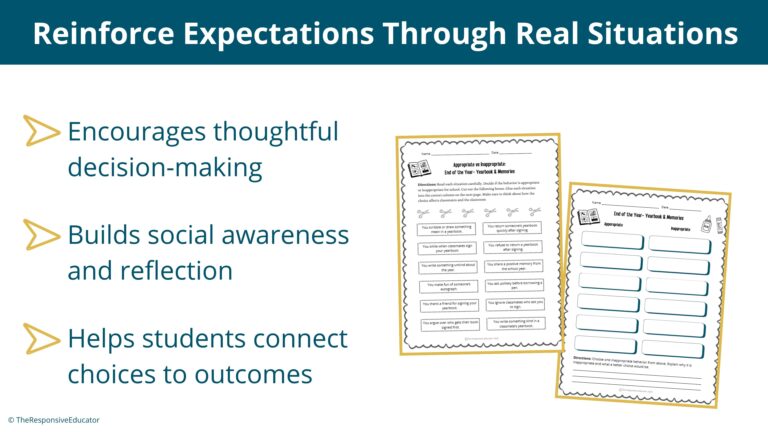
Instead of going back over rules again, it can be more effective to walk students through real situations and have them think about what’s happening. For example, you might present something like:
A student receives an end-of-the-year reward or small gift and immediately says they don’t like it.
or
During end-of-the-year classroom cleanup, one student refuses to help and tells others they shouldn’t have to do it either.
Start by asking students what is happening in the situation and how the person is responding. Then guide them to think about whether that response is expected or unexpected, and more importantly, why it might cause a problem. From there, shift the conversation to what a better choice might look like and how that would affect other people.
This kind of classroom activity helps students move beyond just identifying behavior. They begin to understand the impact of their choices and why certain responses lead to better outcomes. That understanding is what helps them apply expectations more consistently.
Having ready-to-use scenarios makes this much easier to do consistently, especially when you don’t have time to come up with examples on your own. My End-of-the-Year Expected vs. Unexpected Behavior Sorts are designed for this kind of work, giving students clear situations to analyze while also building in a reflection piece so they can explain their thinking.
One of the biggest challenges at the end of the year is how often students come to you to solve problems.
At first, it might not seem like a big deal, but over time it adds up. You’re answering the same types of questions, stepping into the same types of conflicts, and getting pulled away from instruction more often than you would like. If students don’t get practice working through those situations, that pattern continues. They rely on you because they’ve learned that you will step in.
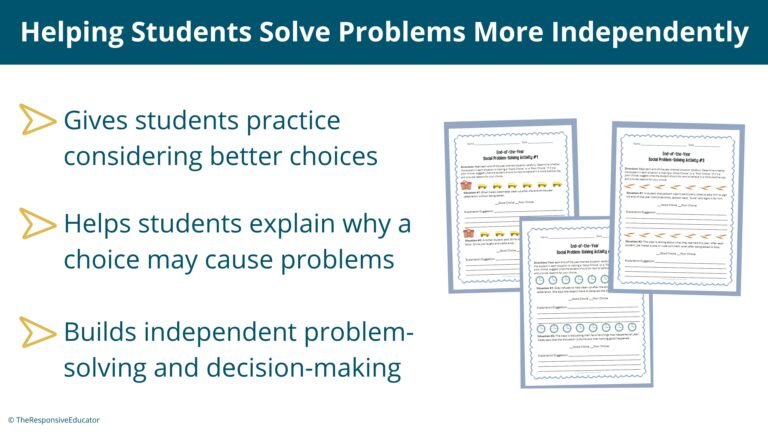
That’s why it helps to give them structured opportunities to reason through situations ahead of time. For example, you might present a situation like two students who can’t agree during a group activity or a student who reacts immediately when something feels unfair.
Have students decide whether the choice being made is helpful or not, and then guide them to explain why. If it is not helpful, ask them to think through what they could do instead and what might happen if they made that choice. This kind of discussion builds problem-solving and decision-making skills while also giving you a shared language to refer back to when similar situations come up in your classroom.
Activities like my End-of-the-Year Social Problem Solving Scenarios provide ready-to-use examples so you can run these discussions without having to create everything yourself.
It’s easy to think of this time of year as something to get through, but the skills students are using right now don’t stay in the classroom. How they handle frustration, disagreement, and decision-making carries into the next grade, into their relationships, and eventually into adulthood. A lot of the challenges we see later come back to these same skills that were never fully developed or practiced.
That’s why it still matters, even now. Students don’t automatically pick up these skills just because they’ve heard expectations before. They need opportunities to reason through situations, talk about them, and understand how their choices affect others.
You don’t need to add anything complicated to your day right now. What makes the biggest difference is giving students opportunities to stay engaged while practicing the skills that tend to break down this time of year. When students have a chance to think, reflect, and respond in a more intentional way, you start to see a shift—not just in behavior, but in independence.
Whether you create those opportunities yourself or use end of the year activities that are already structured for you, the goal is the same. Help students leave your classroom with a better understanding of how to handle situations on their own—so you’re not the one solving every problem for them.
A well-chosen read-aloud can also help students reflect on the year, recognize their growth, and prepare for upcoming changes. Visit my collection of children’s books for teaching social-emotional skills to find a book that fits the conversation you want to have with your class.


Support your students’ individual needs with our exclusive Classroom Concerns Checklist. Identify patterns in areas like cognitive skills, communication, social/emotional behavior, and more.
Sign up now to receive instant access and valuable insights on addressing classroom concerns.

Support your students’ individual needs with our exclusive Classroom Concerns Checklist.
Identify key concerns in areas like:
…and more to help drive collaboration and problem-solving.
Sign up now to receive instant access and valuable insights on addressing classroom concerns.
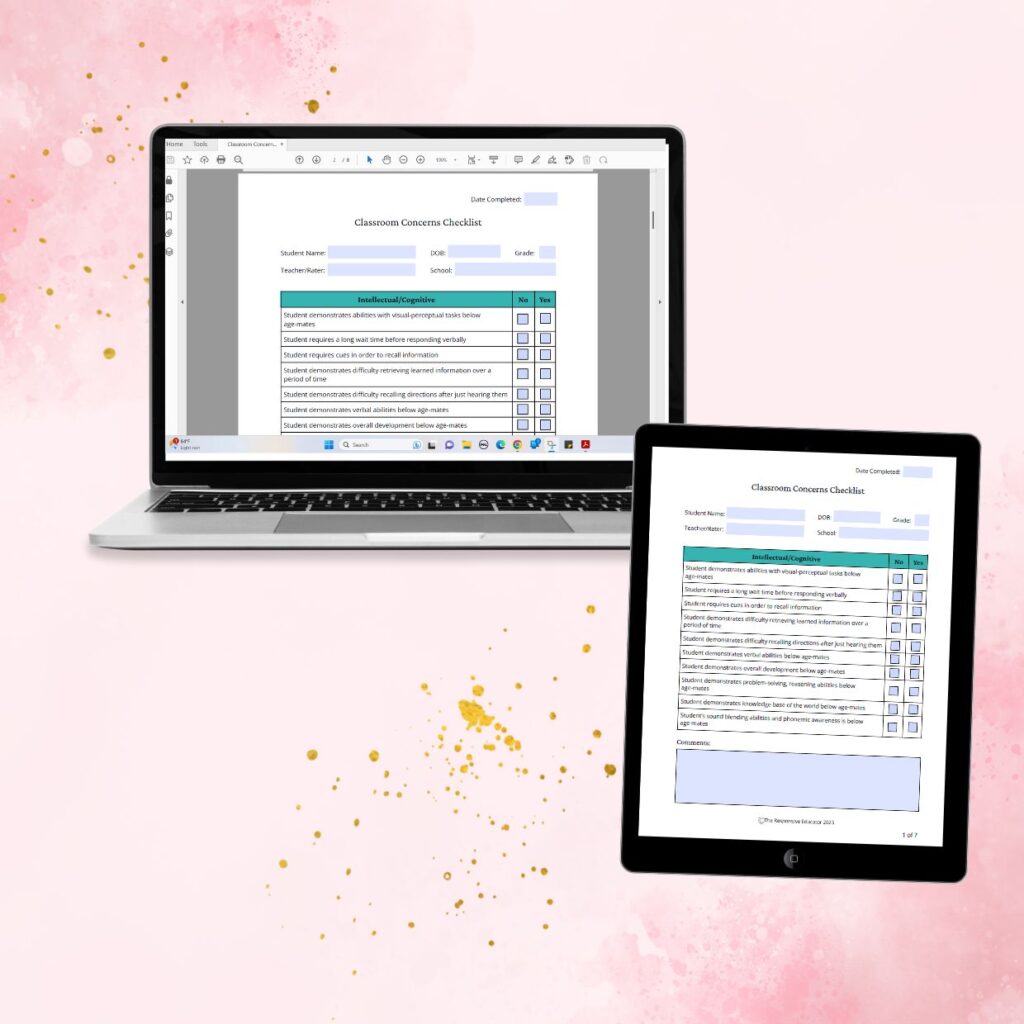
When a student is struggling, it can be difficult to know what information matters or what to look at next. The free Classroom Concerns Checklist can help you organize what you are seeing, identify patterns, and decide what information your team may need.