Most teachers want their students to try, persist, and keep learning—even when things feel hard. In real classrooms, growth mindset doesn’t show up as a catchy phrase on a poster. It shows up when a student shuts down during writing, gives up halfway through a math problem, or insists they are “just bad” at something.
Teaching growth mindset means creating a classroom where students feel safe enough to try without needing to be perfect. It means holding high expectations and recognizing when students need clearer instruction, scaffolding, or reassurance. Growth mindset is not about pushing students endlessly—it is about helping them build confidence and capacity over time.

A growth mindset is the belief that skills and abilities can improve with practice, effort, and learning. In the classroom, this belief helps students understand that struggle does not mean failure—it means learning is happening.
I often tell students that if they never get anything wrong, they probably aren’t trying anything new. And if they already knew how to do everything, there would be no point in being at school. We are here to grow, learn, and improve—not to prove that we are already good at things.
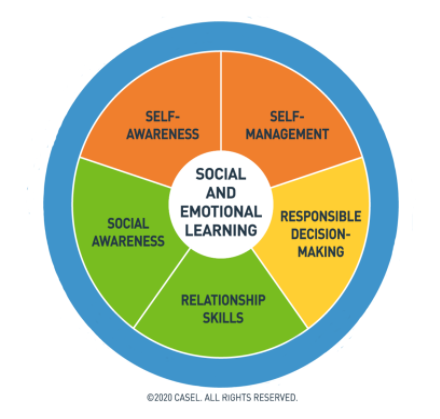
Struggling with growth mindset is rarely about motivation alone. Trying something new and sticking with it requires several social-emotional skills to work together at the same time.
Students need self-awareness to recognize feelings like frustration, worry, or fear of failure. Self-management is needed to regulate those feelings enough to stay with the task instead of escaping. Social awareness plays a role when students worry about peer reactions or embarrassment. Relationship skills are involved when asking for help or working with others. Responsible decision-making comes into play when students choose whether to try or avoid something that feels uncomfortable.
When students show fixed-mindset behaviors, it often means one or more of these underlying skills still needs support. Viewing avoidance through this lens helps teachers respond with instruction rather than labels.
To learn more about the CASEL 5 Social-Emotional Competencies, read this blog post. You can also visit their site here.
Students who believe ability is fixed are more likely to avoid challenges, shut down when they make mistakes, and give up quickly. Over time, this limits both academic growth and confidence.
At the same time, many students already know how to persist. I have seen students practice skateboard tricks or replay video game levels repeatedly without giving up—because those things matter to them. Teaching growth mindset helps students understand why effort matters in learning and how practice builds skill, even when a task is not their favorite.
Some skills students practice will not be used forever, but learning how to persist, problem-solve, and recover from mistakes makes future learning easier. Helping students understand this “learning to learn” piece often increases buy-in.
One common misunderstanding is that growth mindset means students should persist endlessly without support. Persistence without instruction does not build resilience—it builds frustration.
Teaching growth mindset requires teachers to notice when effort alone is no longer enough. If a student is trying and still struggling, the next step is not more pressure. It is identifying where understanding is breaking down and offering scaffolding, modeling, or visual supports that can later be reduced.
Growth mindset is about supported challenge, not struggle without guidance.

Students do not truly believe mistakes are acceptable until they see adults make and own them. This might include solving a problem incorrectly and fixing it aloud, admitting when you forgot something, or sharing a time you struggled and improved. Modeling mistakes calmly shows students that learning is a process, not a performance.
Teacher language matters. Phrases like “I don’t expect you to be perfect, but I do expect you to try,” or “This feels hard because you’re learning something new” help create a classroom culture where effort is valued more than speed or perfection.
Breaking work into smaller pieces is not about letting students do less forever. It is about creating a path toward independence. Teachers might ask a student to complete two problems before checking in, work independently for a short time, or try the first step alone. As confidence grows, supports are intentionally reduced and progress is acknowledged.
Some students need help but are embarrassed to ask. Teaching growth mindset includes providing ways to request support, such as visual help cards, sentence stems, or break cards with a clear plan to return to the task. These supports reinforce that needing help is part of learning, not a failure.
Fear of embarrassment can block persistence. Allowing students to practice privately—reading to a stuffed animal, rehearsing quietly, or practicing without an audience—can help build confidence before public participation.

Picture books provide a low-pressure way to discuss effort and mistakes. The Most Magnificent Thing by Ashley Spires shows a character who becomes frustrated when her project does not turn out as planned, then learns to persist through trial and error. This book works well as a discussion starter about frustration, perseverance, and learning from mistakes.
Next week’s post will explore additional picture books that support growth mindset and persistence.
Purpose: Help students recognize improvement through practice.
How to Use: Ask students to write or draw about something that used to be hard but is easier now. Guide discussion around what helped them improve.
Scaffolding: Younger students can draw; older students can write reflections.
Revisit: Repeat throughout the year to reinforce growth over time.
Purpose: Build growth-mindset language and perspective-taking.
How to Use: After reading The Most Magnificent Thing, ask students to give advice to the character about handling frustration.
Extension: Connect advice back to classroom challenges students face.
Purpose: Break challenges into manageable steps.
How to Use: Students identify a task that feels hard and list small steps toward it.
Scaffolding: Teachers help identify where support is needed.
Revisit: Update the ladder as confidence and independence increase.
Purpose: Normalize mistakes through adult modeling.
How to Use: Share a small mistake you made and how you corrected it. Students reflect on what they noticed.
Discussion: Emphasize that mistakes are expected and useful.
Purpose: Reinforce persistence with scaffolding.
How to Use: At the end of a challenging task, students reflect briefly on what they tried and what support helped.
Revisit: Use weekly during difficult academic tasks.
Purpose: Help students identify fixed vs growth mindset statements.
How to Use: Students sort statements and discuss how to rephrase fixed mindset language.
Scaffolding: Do this orally for students who struggle with writing.
Purpose: Reinforce growth mindset concepts using visual examples.
How to Use: Show a short ClassDojo Big Ideas video (such as “The Magic of Mistakes” or “Your Brain Is Like a Muscle”), then use guided discussion questions to connect the message to classroom learning.
Extension: Pair the video with a reflection or drawing activity.
Revisit: Use videos periodically as refreshers when students struggle with persistence.
Growth mindset is not forcing students to persist without support. It is not praising effort without teaching strategies. It is not ignoring anxiety or frustration. Growth mindset works best when teachers challenge students thoughtfully, adjust instruction, and create a classroom where trying feels safe.
Teaching growth mindset in the classroom is about helping students believe that learning is possible—even when it feels uncomfortable. Persistence grows through supported success, not pressure. When students feel safe to try, make mistakes, and ask for help, growth mindset becomes a lived experience rather than a slogan.
Picture books can make growth-mindset language more meaningful by showing what it looks like when a character makes a mistake, changes strategies, or continues learning. These growth-mindset books for kids can help you build those conversations into your read-aloud time.

Supporting students with diverse needs can feel overwhelming, especially when you’re trying to pinpoint where challenges are really coming from. The Classroom Concerns Checklist helps you organize your observations and identify patterns across areas like cognition, communication, and social-emotional behavior.
By walking through key skill areas in a structured way, this checklist makes it easier to clarify concerns, guide next steps, and have more productive conversations with your team.
Sign up to get instant access and start using the checklist right away.

Support your students’ individual needs with our exclusive Classroom Concerns Checklist.
Identify key concerns in areas like:
…and more to help drive collaboration and problem-solving.
Sign up now to receive instant access and valuable insights on addressing classroom concerns.

When a student is struggling, it can be difficult to know what information matters or what to look at next. The free Classroom Concerns Checklist can help you organize what you are seeing, identify patterns, and decide what information your team may need.