Some children say “sorry” easily when they know that they have hurt someone else. Others struggle to apologize at all. Some become defensive, continue arguing, shut down emotionally, blame other people, or become overwhelmed once they realize they hurt someone’s feelings. Other children may apologize, but still struggle to understand why the other person remains upset afterward.
What adults are often seeing in these moments is not simply “bad behavior” or disrespect. Many children genuinely struggle with emotional regulation, perspective-taking, empathy, and understanding how their actions affect other people emotionally and socially.
For many children, apologizing is not just about knowing the words “I’m sorry.” It also involves:
These are complex social-emotional skills that many children do not automatically develop without direct instruction and repeated support.
What this often looks like in real life is a child who becomes upset after hurting someone, but focuses mostly on their own frustration:
“But I didn’t mean to.”
“They’re overreacting.”
“I already said sorry.”
“I didn’t do it on purpose.”
Many children genuinely do not yet understand why the relationship still feels uncomfortable afterward or why another child may still need time, space, or reassurance before feeling emotionally safe again.
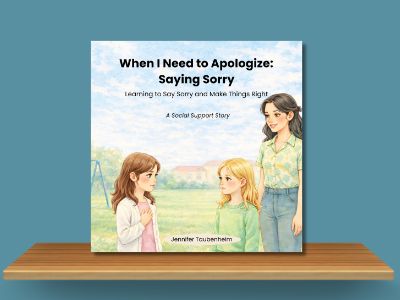
That is why When I Need to Apologize was created.
Rather than only teaching children to say “sorry,” this Social Support Story explicitly teaches:
Written in supportive first-person language, the story breaks these situations down in a concrete and visually understandable way for children who benefit from explicit social-emotional instruction.
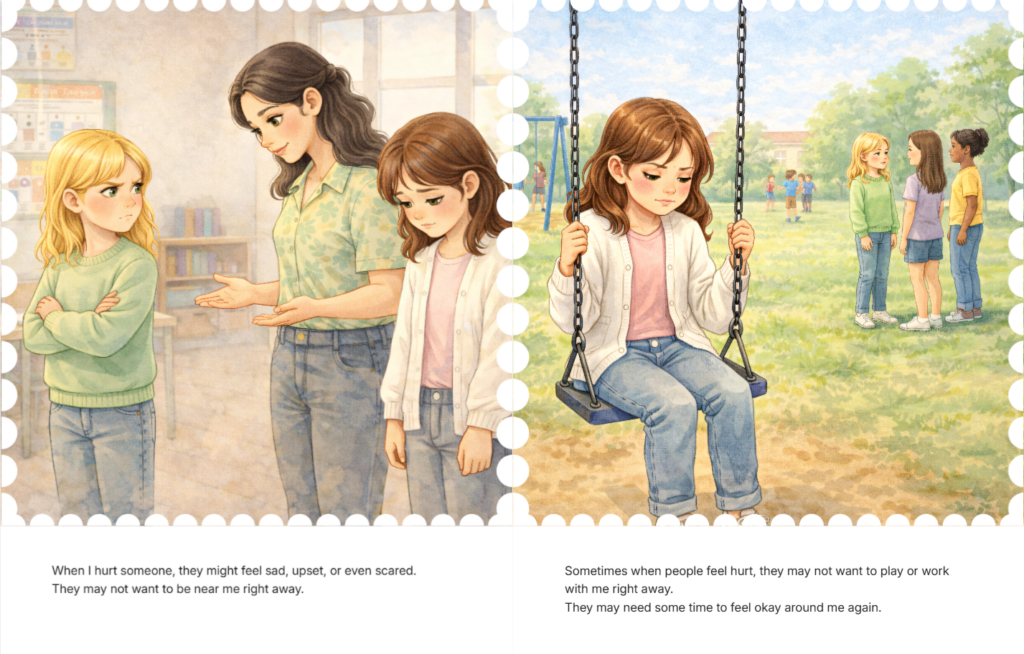
In the story, a young girl becomes upset and reacts by yelling at someone else. At first, she is focused mostly on her own emotions and frustration. What this looks like is a child who feels overwhelmed by her feelings and does not fully recognize the emotional impact her reaction has on the people around her.
As the story continues, she begins noticing:
The story carefully walks children through the emotional repair process step-by-step.
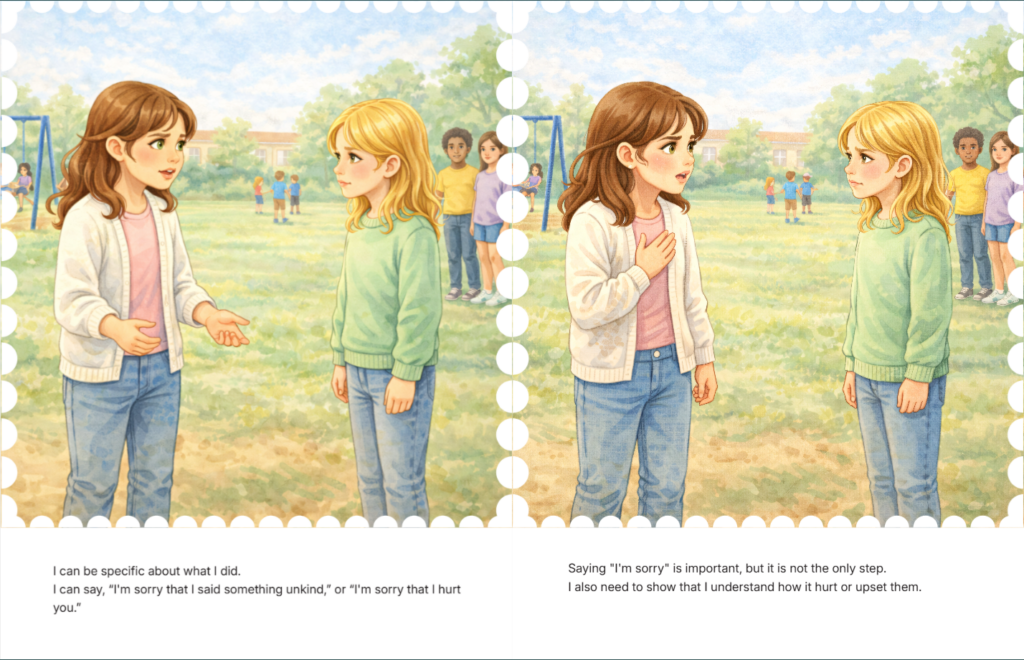
Instead of presenting apologizing as a quick fix, the book teaches that meaningful repair often includes:
A particularly important part of the story is that it teaches children an apology does not instantly erase hurt feelings. Many children struggle with this concept and the idea of making amends. Adults often see children become frustrated when someone remains upset after they apologize. What this means is that the child may still be thinking primarily from their own perspective: “I said sorry, so why are they still mad?”
The story helps children understand that rebuilding trust includes making amends and sometimes takes:
This idea of making amends after hurting someone else is an important social skill that many children need explicitly taught.

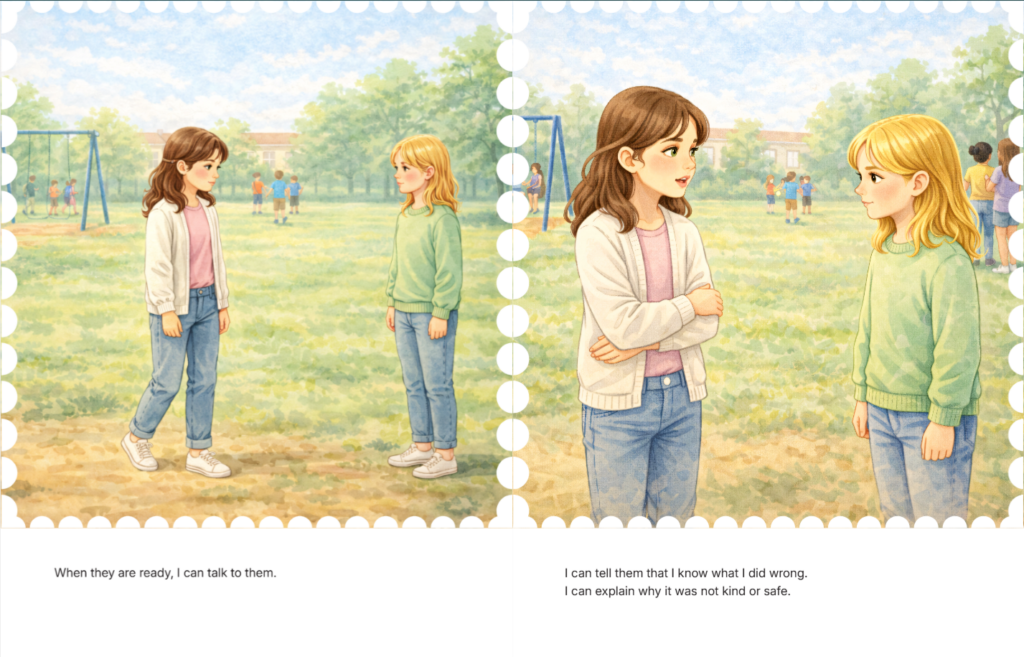
One thing that makes this story different from many apologizing books is its strong focus on emotional accountability and social understanding.
Rather than focusing only on behavior correction, the story repeatedly helps children connect:
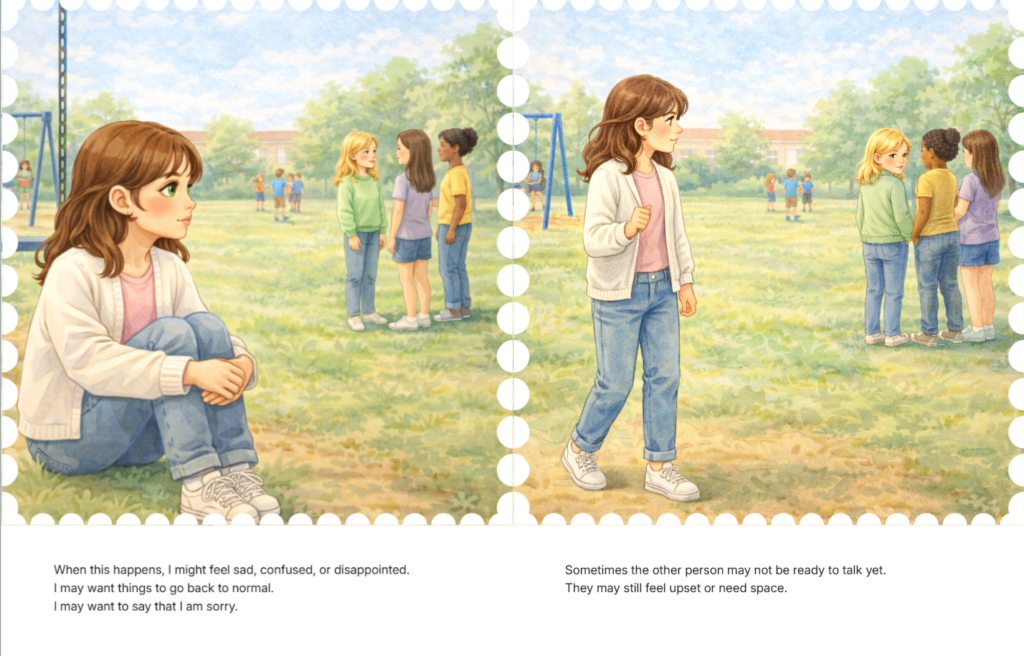
What this looks like for children is learning to notice things they may otherwise miss:
Many children do not naturally connect these social outcomes to their own behavior without direct teaching.
The book also places a strong emphasis on emotional regulation before apologizing. This matters because children often cannot engage in meaningful repair while still emotionally escalated.
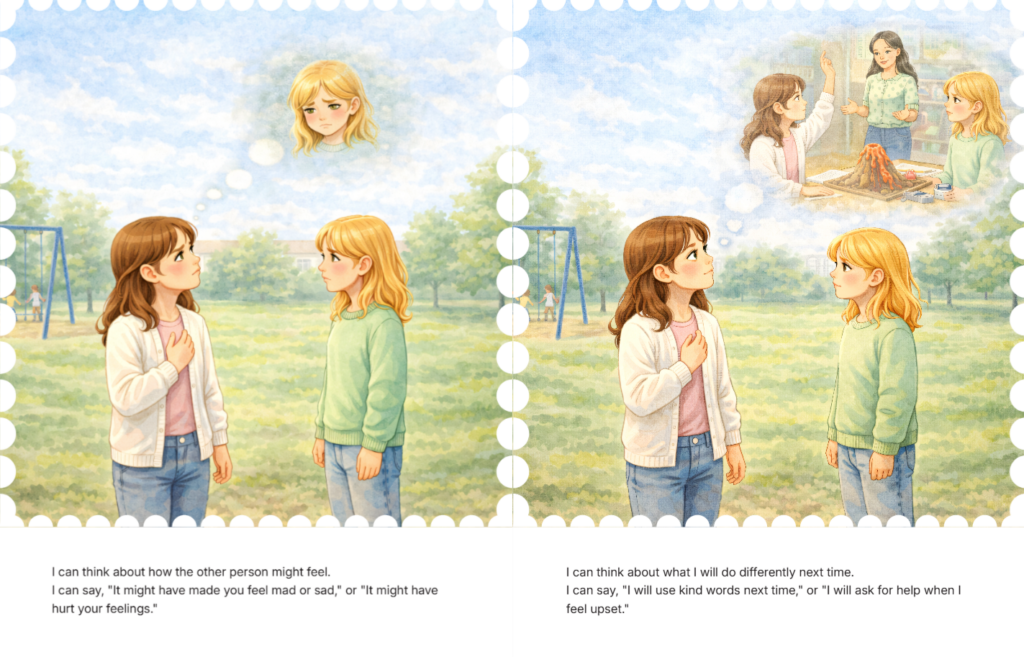
Instead of simply demanding an apology in the moment, the story teaches children to:
The illustrations throughout the story were intentionally designed to support this emotional understanding. Facial expressions, peer reactions, body language, and relationship changes are visually emphasized to help children more clearly connect behavior to emotional and social outcomes.
The book also includes:
This repeated exposure is especially important because social-emotional skills are typically strengthened through ongoing modeling, discussion, practice, and revisiting situations across many different real-life experiences.
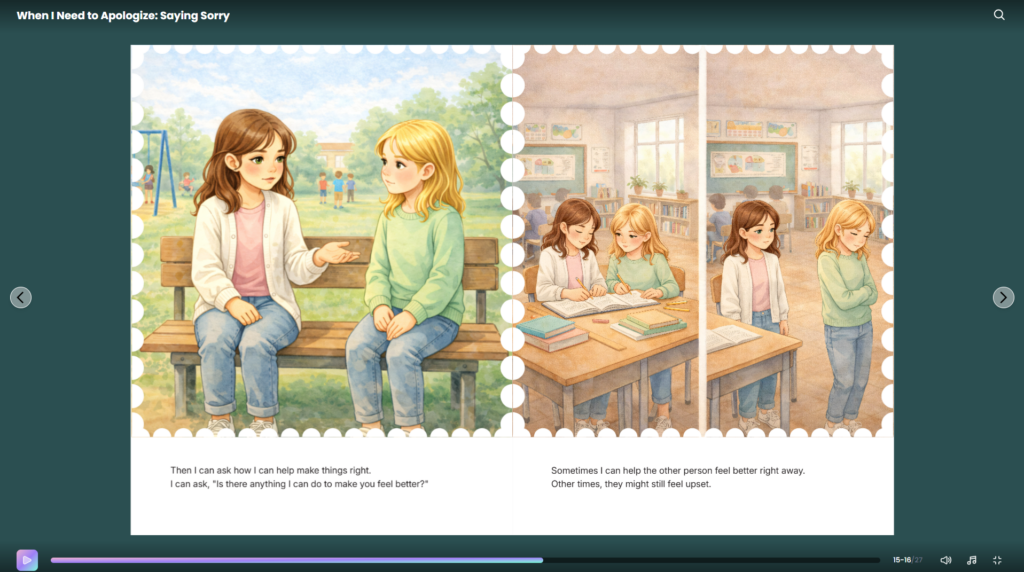
Parents, educators, therapists, and behavior professionals have especially appreciated that the story focuses on relationship repair and emotional understanding rather than simply forcing children to say “sorry.”
Many adults have shared that the book helped children better understand:
Several educators have also appreciated the story’s strong connection between emotional regulation and accountability. Rather than treating apologizing as a scripted response, the story helps children understand the emotional and social process behind meaningful repair.
The visual supports have also been especially helpful for children who benefit from concrete social learning. Many adults have shared that the illustrations helped children more clearly recognize:
This book is especially helpful for children who:
It may be particularly useful in:
Apologizing is a much more complex social-emotional skill than many adults realize.
What adults are often seeing is not simply a child refusing to say “sorry.” Many children are still learning:
These are skills that often need direct instruction, modeling, discussion, and repeated practice over time.
When I Need to Apologize was designed to provide that support in a way that feels concrete, visual, emotionally meaningful, and practical for real-world situations.
You can view the book on Amazon here.
If you are looking for a printable classroom version, you can find it on TPT here.
Apologizing and making amends is just one of many social skills children benefit from learning explicitly. The Social Support Stories Collection includes additional books that help children understand emotions, social cues, behavior expectations, and how their actions affect others. Browse the collection here.


Support your students’ individual needs with our exclusive Classroom Concerns Checklist. Identify patterns in areas like cognitive skills, communication, social/emotional behavior, and more.
Sign up now to receive instant access and valuable insights on addressing classroom concerns.

Support your students’ individual needs with our exclusive Classroom Concerns Checklist.
Identify key concerns in areas like:
…and more to help drive collaboration and problem-solving.
Sign up now to receive instant access and valuable insights on addressing classroom concerns.

When a student is struggling, it can be difficult to know what information matters or what to look at next. The free Classroom Concerns Checklist can help you organize what you are seeing, identify patterns, and decide what information your team may need.