Teach and rehearse these moves in paraprofessional training so placement, posture, and exit decisions are automatic when behavior escalates.
The hardest minutes in a school day usually aren’t about the lesson plan. They’re the moments when a student’s behavior begins to climb and the adults nearby have to decide what to do next. Paraprofessionals are often already there—assigned to students or settings where behavior escalation is more likely—not because anyone “sends them in,” but because they’re part of the everyday support system. Our job as teachers is to provide clear, practical paraprofessional training so classroom paraprofessionals can prevent and respond to behavior escalation with calm, skill, and respect when it counts.
We need to train classroom paraprofessionals before the situation demands it. That means teaching preventative strategies and de-escalation moves before anyone needs to use them. Start with general tools that help most escalated students—neutral language, time and space, short directions, and real choices—and pair those with the specific plans for the students your para supports.
Walk through what early warning signs look like for this learner, which phrases tend to help, where the student can move for privacy, who to contact, and what comes after. Then practice together during low-stress moments so the words, the body language, and the timing feel natural when stress rises.
In the same way we provide paraprofessional training when the pressure is low so they have skills to use when it’s high, we want them teaching and reinforcing regulation strategies with students in their calm moments. Co-create simple routines—how to ask for a pause, where to sit, what movement or breathing looks like for that student—and practice them when things are going well. The more these routines live in muscle memory, the more likely they are to show up during a hard moment.

A counselor once tried to bring a student back to small group. He was at his desk with his head down, refusing eye contact, shoulders tight—everything about his body said, not now. She spoke to him as she entered the room; he made it clear he wasn’t interested. She tried again. And again. By the third or fourth prompt—now calling to him across the room, with the class listening—he snapped. The desk flipped, he yelled, and the lesson was over. Later she told me how unsafe she felt.
I have used this moment in later paraprofessional training sessions, talking about the situation, how the counselor had no ill intent, but that the situation could have gone differently if she had read his body language, not called across the room in a potentially embarrassing manner, used the “when you are ready” and then left it alone. She could also have asked someone more familiar with him than she was about the right approach. Any of these might have prevented the behavior escalation.
From there, I walk classroom paraprofessionals through what we’d coach in the same moment: move in quietly and lower the demand; offer a single, calm cue—“When you’re ready, the next thing is your warm-up”—and then give time. Don’t stare or hover; stay outside hitting or kicking distance. If policy allows, sit a few feet away with a book or your phone so your attention isn’t a spotlight. Don’t narrate the student to the room. Skip “you have to.” Name the task and offer real choices: “Two more minutes or five?” “Do you want to talk, or write our plan for next time?”

Before anything else, remove the audience. Eyes on a dysregulated student add pressure, and public prompts can feel embarrassing. When we move peers or shift their attention to an independent task, we give the student time and privacy to save face and settle. That simple change also reduces the urge to force “right now,” which is where power struggles are born—and where adults often lose, either because we can’t enforce “right now” or because we shouldn’t. Pressing in the moment risks damaging the relationship; impatience plus embarrassment is a fast way to turn a small refusal into a bigger behavior escalation.
During paraprofessional training, I sometimes ask classroom paraprofessionals to flip the lens: how would you feel if your administrator called you out in a staff meeting, named what you were doing wrong, and demanded you fix it immediately in front of everyone? Most of us wouldn’t give our best response in that moment, and it wouldn’t make us eager to collaborate later.
Students feel the same social pressure. Lowering the audience isn’t leniency—you still hold standards and expectations. It’s a strategic move in paraprofessional training that protects dignity, keeps options open, and makes it more likely the student will choose back in once they’re calm.

Predictability prevents problems. During paraprofessional training, show your para how you make the day clear: a simple visual schedule, smooth transitions, and choice points that let students keep some control—and can lower anxiety. Many students struggle when they don’t know what to expect. Some are hypervigilant because of life events; they’re worried about what comes next and scanning for risk.
Think about how we’d feel if most of our day felt uncertain, we didn’t know what would be asked of us, and we also weren’t sure where dinner or sleep would happen. The more uncertainty, the higher the emotions—and the greater the likelihood of an emotional response. When we reduce that uncertainty, we reduce stress and uneasiness. The day runs smoother for students and for us.
Pre-corrections are a simple, high-yield example of prevention that pays off—led with questions, not lectures. I coach classroom paraprofessionals to prompt active recall so students name expectations for themselves. We ask, “What are our hallway expectations?” “What should our voices sound like in the library?” “Where do our hands go while we walk?” “How do we choose our books?” If students can answer, we affirm and refine. If they can’t, we teach it briefly and model.
This strategy of precorrection works with groups—a quick huddle before transitions—and with individual students—a quiet check-in at the door. Keep it concrete and invitational: “What are you grabbing—your book or your clipboard?” “What’s first-then for you—first sit, then choose where to work?” Twenty seconds of question-and-confirm settles nerves, preserves dignity, and keeps momentum without a lecture.
The same pattern holds all day: a short preview, a student-voiced expectation, and a small choice to keep control. Before the library we review what to bring, voice levels in the hall, how we listen when the media specialist reads, how we choose books, and how we line up to leave. The details change by setting, but the rhythm doesn’t. A light touch up front saves you from heavier lifts later.

A plan defines a student’s baseline—what “typical” looks and sounds like for that child. Once you know the baseline, you can spot the small shifts that signal change: a louder voice, pacing, pulling away from peers, drifting too close to others, jokes turning sharp, or “not yet” hardening into “no.” Those tells let you act early and prevent a bigger spike.
In all stages, keep directions minimal and one step, use a neutral tone, and avoid “why” questions.
What it looks like: small tells (voice edges up, mild refusal, fidgeting, scanning).
Your move: Keep an eye on it. Lower pressure without making it a big deal. Use a light cue or one short direction: “Start the first two; I’ll check back,” or a quiet gesture to seat/materials. A brief, simple choice is fine (“desk or side table”), then give real wait time.
What it looks like: bigger tells (sharper tone, quicker movements, arguing, leaving seat).
Your move: Be closer and ready to step in. Increase space around the student, and if needed remove the audience (shift peers or relocate briefly). Stick to one-step directions. This is where “When you’re ready…” belongs: “When you’re ready, the next step is…,” or “When you’re ready, pick seat A or seat B.”
What it looks like: unsafe movement, yelling, throwing, elopement risk.
Your move: Drop academic demands. Prioritize safety: move peers, create space, follow the plan, and use the support script (“I need some support in room ___”) as needed. Keep language minimal. Use a calm, angled stance so you’re ready to move without looking confrontational.
What it looks like: quieter, tired, still touchy; compliance may be fragile.
Your move: Go slow. Keep one-step directions and short options. Avoid long talks or post-game analyses now—save debrief for later. Offer a simple re-entry: “When you’re ready, start with these two,” then step back and monitor.
The aim in every stage is the same: lower pressure, protect dignity, and open a clear path back to learning.

Some trainings call this the supportive stance, but you don’t need the label to teach it well. Coach your para to angle their body slightly, keep hands visible and relaxed, soften the face and voice, and stand just outside hitting or kicking range. The message is, “You’re safe. I’m safe. We have time.” The reason for the angle is simple: it protects the adult if aggression happens while still looking calm and available to the student. Keep hands in view—some adults think placing hands behind the back looks nonthreatening, but for some students it reads as “you’re hiding something,” which raises anxiety.
Teach this before you need it so paras aren’t guessing during behavior escalation. “Never block exits” is a helpful general rule, but age, setting, and patterns matter—and you should coach what that looks like in your room. If the student has a behavior plan, follow it; when unsure, default to one-step directions and call for support.
If a student elopes to a known safe spot: Some students leave the group and settle in a predictable, safe place (doorway alcove, bench by the office, quiet corner). In training, teach paras how you structure this: agree on the safe place in advance, use a simple check-in (“I’ll be over there; we’ll talk in three minutes”), keep line of sight at a safe distance, and have another adult move peers away. The goal is space, privacy, and safety—not a chase.
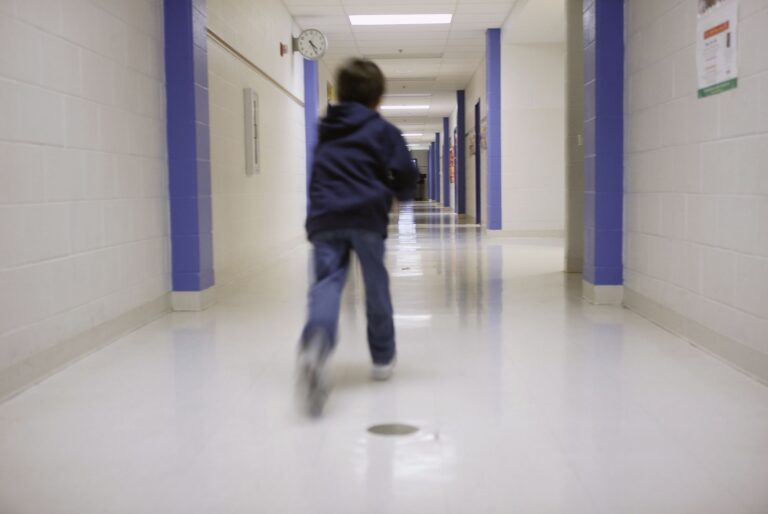
If running creates real danger: For students who may head toward a parking lot, street, or unfenced area, plan adult placement ahead of time and practice roles: who shadows the student, who relocates the class, and who calls for support using your script. Coach a calm, angled posture and position adults to shape the environment—not to “block and win,” but to make the safest route the easiest one.
Priority order: If unsure what to do first, move peers before you move the student. Reducing the audience often lowers pressure faster than anything else. Keep language minimal and one step while you follow the plan you’ve taught.
Teach and rehearse these moves in paraprofessional training so placement, posture, and exit decisions are automatic when behavior escalates.
Make this part of training from day one. Your para calls for help when they can’t manage safely, when risk is rising, or when they feel their own regulation slipping. Use a neutral code phrase that doesn’t broadcast distress to students; mine has been, “I need a Coke.” Adults know that means “please step in,” but students just hear an everyday sentence. Pair the code with a clean tag-out: the para says the phrase, you take over, and they step back to regulate. That’s not failure; it prevents a tense minute from becoming a crisis and protects everyone. When I step in, I often pair time and choice: “I’ll be right over there. When you’re ready, we’ll start with the first two problems. Two minutes or five?”
Safety and crisis plans work only if they live in the day-to-day. Instead of a set weekly review, we talk constantly—in passing, after class, at dismissal—about how the day is going, what’s working, how the student is responding, whether a different approach might help, and if any changes should be considered. We balance consistency with responsiveness: we don’t change for no reason, but we do change when the data and our professional judgment say it isn’t working.
In some situations—and depending on district policy—an official debrief is required and documented (for example, after a restraint or significant safety incident). Either way, the mindset stays the same: keep thinking, keep problem-solving, and update the plan when needed so the next adult has clearer guidance.
If your para walks into a situation with a student they don’t know, the first question is simple: “Does this student have a safety/crisis plan?” Get it, follow it, and circle back later to add what you learned.

Students don’t learn during escalation; they learn after it. As soon as everyone is calm, we start by reconnecting. Keep it brief and human: a quiet “I’m glad you’re back,” or “Thanks for coming back to the group,” paired with open body language. This isn’t the time to replay the event; it’s a signal that belonging is intact and the day can move forward.
Then we reassure and restore. If peers were affected, acknowledge it and make a plan to set things right without shame or an audience. That might mean putting chairs upright, picking up papers, resetting materials, or wiping a desk—only if it’s safe and the student is ready. If something was broken, decide what repair looks like: a private apology, helping fix or replace an item later, or a short act of service that contributes to the classroom. Keep it proportional and respectful. The aim is to restore safety and trust, not to punish in public.
Finally, we reflect and plan—short and private. Name what helped and what didn’t, then agree on one small move for next time: “When you felt it building, the hallway walk helped. Next time, do you want the quiet corner or the walk first?” Some students talk; others write, draw, or use a quick checklist. Capture any changes to the safety/crisis plan after class so the next adult has the update. When the student rejoins, notice it calmly—“Good to have you with us”—and get back to learning.
Over time, your paraprofessionals won’t just remember the steps—they’ll move and speak with calm on instinct. That’s the real aim of paraprofessional training for behavior escalation: clear, practiced responses that keep students safe, respected, and learning.


Support your classroom paraprofessionals with this simple, ready-to-use First-Day Essentials handout designed to help them feel confident and prepared from the start. Inside, you’ll find clear guidance on their role, what to watch for, and how they can effectively support students on Day One.
This printable resource includes quick dos and don’ts, a customizable teacher note, and an editable version so you can personalize it for your team.
Sign up now for instant access and start building stronger, more confident classroom support from the very first day.
Don’t miss out—join our community today!

Set your classroom paraprofessionals up for success with this quick-start guide for Day One.
Clarify expectations in areas like:
supporting student participation
observing routines and behavior strategies
understanding the role of a para in your classroom
…so they feel confident, prepared, and ready to support your students.
Sign up now for instant access to this printable (and editable!) resource—perfect for building strong team collaboration from the very beginning.