Sharing sounds simple—until you’re the one holding the favorite toy. For many young children, learning to share is one of the first big social-emotional challenges they face. Whether it’s taking turns, giving someone else a chance, or understanding the difference between “mine” and “ours,” it’s not always easy.
The good news? Picture books can help. The stories below offer relatable situations, clear language, and engaging characters to help kids understand what sharing really means. Some books focus on practical skills like turn-taking, while others explore fairness, compromise, or the idea that it’s okay to have special items you don’t want to share.
If you’re a teacher, caregiver, or parent looking for a way to guide these conversations without constant reminders or power struggles, these sharing books are a great place to start.
For some of the books on this site, I have created interactive read-alouds to enrich their use in the classroom. These interactive read-alouds include discussion questions, activities, and prompts that engage students and deepen their understanding of the book’s themes. More interactive read-alouds are on the way. If there are specific books for which you would like to see a read-aloud created, please contact me using the form at the bottom of the page.
To learn more about supporting social-emotional learning and using interactive read-alouds in the classroom, check out these posts:
(As an Amazon affiliate, I earn a small commission if you purchase products through the links on my posts. Thank you for your support!)
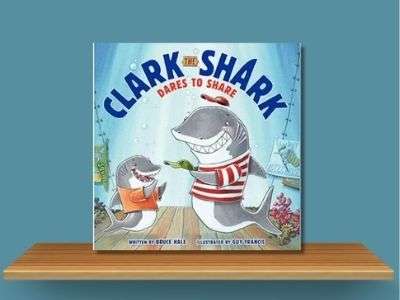
Summary: Join Clark the Shark as he discovers the true meaning of sharing and caring in this lively, colorful picture book. Clark is full of energy and enthusiasm, but he doesn’t always understand how to share appropriately. Whether he’s dancing, playing reef hockey, or helping in class, Clark often thinks he’s being generous—when really, he’s taking over. With gentle guidance from his teacher, friends, and family, Clark learns that true sharing isn’t just about giving things—it’s about giving others a turn and thinking about how they feel.
Description: This engaging read-aloud uses rhythm, rhyme, and vibrant illustrations to teach a social-emotional skill young children often struggle with: how to share in a way that shows care and respect for others. Clark’s character is bold and relatable, especially for students who are enthusiastic but still learning self-regulation. The story opens the door to conversations about fairness, empathy, and cooperation without sounding preachy. It’s an ideal resource for SEL lessons, conflict resolution activities, or supporting classroom rules in preschool through early elementary.
Reviews and Considerations: Readers consistently praise Clark the Shark Dares to Share for its humor, heart, and classroom relevance. Many parents and teachers say the book resonates with children who have big personalities and good intentions but need support understanding social cues. Educators appreciate that the lesson is clear without being heavy-handed, and that the illustrations match the tone of the story—bright, expressive, and full of movement. Multiple reviews highlight that students remember the message long after the book ends, with some even referencing Clark when reminded to share. This title works well for group read-alouds, social skills groups, or home reading with children who are still learning how to take turns and consider others.

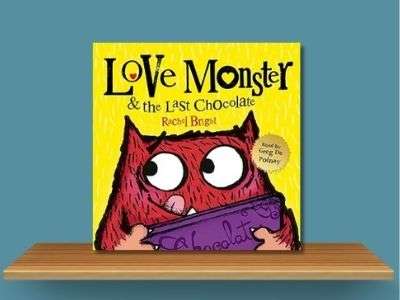
Summary: When Love Monster returns home from vacation, he finds a mysterious box of chocolates waiting on his doorstep. It’s tempting to keep them all to himself—after all, what if his friends take the best ones? What if only the dreaded coffee-flavored piece is left? But as Love Monster wrestles with his decision, he realizes that sharing the chocolates with the people he cares about may actually be sweeter than keeping them all to himself. In the end, he discovers that when you show kindness to others, they often surprise you with kindness in return.
Description: This charming story captures the all-too-familiar tug-of-war between selfishness and generosity in a way that’s both heartwarming and funny. Through Love Monster’s internal debate, children are invited to reflect on their own choices and feelings about sharing. The book’s gentle tone and endearing character make it perfect for young readers who are just learning about empathy and self-control. It’s especially effective for classroom conversations about community, friendship, and doing the right thing—even when it’s hard. Although often used around Valentine’s Day, the message is universal and works year-round.
Reviews and Considerations: Educators, parents, and therapists alike praise Love Monster and the Last Chocolate for blending humor with an important social-emotional lesson. Reviewers consistently mention how students of all ages connect with Love Monster’s relatable dilemma and enjoy the colorful, expressive illustrations. The book is often used in preschool and early elementary classrooms, especially during character education units. Readers appreciate that it opens the door to meaningful conversations about generosity, and many find it useful for writing prompts or follow-up activities. Whether you’re teaching about sharing, friendship, or self-awareness, this book is a go-to favorite that resonates with kids and adults alike.
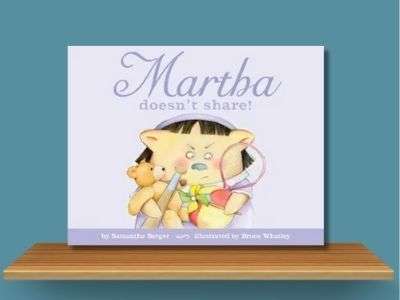
Summary: Martha the otter has a new favorite word: MINE! From her pancakes to her scooter to her dollhouse, she wants to keep it all to herself—especially when it comes to her baby brother, Edwin. Her parents gently encourage her to take turns, but Martha insists that everything belongs to her. That is, until she discovers that playing alone with all her toys isn’t much fun at all. Through a bit of natural consequence and self-reflection, Martha realizes that sharing might not be so bad—especially if it means having someone to “pong” with when she’s ready to “ping.”
Description: This humorous and relatable picture book is a realistic look at how young children wrestle with the idea of sharing. Unlike books where a character suddenly changes after a single lesson, Martha’s learning process feels authentic—she doesn’t become perfect overnight, and that’s exactly the point. The story shows that sharing is a skill that builds over time, and it often begins when kids recognize the natural benefits of including others. Martha’s journey gives children permission to start small, making it a helpful tool for SEL discussions in both homes and classrooms.
Reviews and Considerations: Educators, counselors, and parents consistently praise Martha Doesn’t Share! for its honest tone, expressive illustrations, and gentle storytelling. Readers appreciate that Martha learns the value of sharing through self-discovery rather than punishment or lectures. Many find that children relate to her reluctance—and her eventual shift—making it easier to open real conversations about what sharing looks and feels like. Some reviewers also point out that the final illustration (where Martha gives just a few blocks to her brother) makes for a great classroom discussion: Is that really sharing? That moment opens the door for deeper thinking about fairness, inclusion, and generosity. With humor and warmth, Martha helps kids take their first steps toward seeing sharing as something positive—not just something they’re told to do.
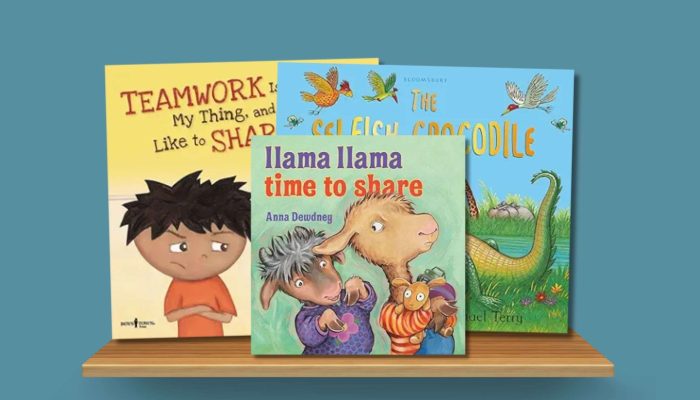
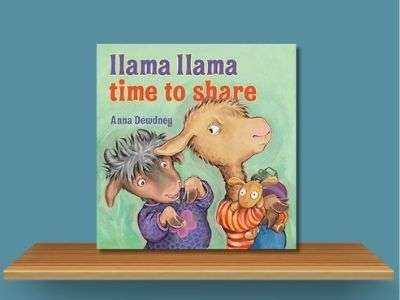
Summary: When Llama Llama’s new neighbors come over for a playdate, he isn’t quite ready to share his favorite things. He’s okay with building blocks—but not his precious Fuzzy Llama! Things take a turn when a tug-of-war ends in tears and a torn toy. With gentle guidance from Mama, Llama learns that sharing isn’t just about giving—it’s about connection, friendship, and trying again after a mistake. By the end, he’s not only repaired the toy, but also taken a big step toward becoming a more thoughtful friend.
Description: Anna Dewdney’s warm and rhythmic storytelling makes this a go-to choice for introducing the concept of sharing to preschool and early elementary children. The relatable situation and emotional arc are perfect for helping children understand both the challenges and rewards of learning to share. Rather than rushing to a resolution, the book honors the very real feelings that come up when young kids are asked to give up control over their belongings—especially with new friends. It’s an ideal read-aloud for playdate prep, classroom social skills lessons, or anytime sharing feels like a struggle.
Reviews and Considerations: Parents, teachers, and counselors consistently praise Llama Llama Time to Share for its honesty and emotional depth. Readers love that the book walks through the entire process—initial excitement, conflict, repair, and reconnection—making it feel realistic and relatable. The moment when Llama’s favorite toy gets torn is especially impactful for children, sparking strong reactions and opening the door for valuable discussion. Many reviewers mentioned reading this book over and over with children who were struggling to share, with positive changes over time. Like all in the Llama Llama series, this one delivers an important life skill with tenderness, humor, and heart.
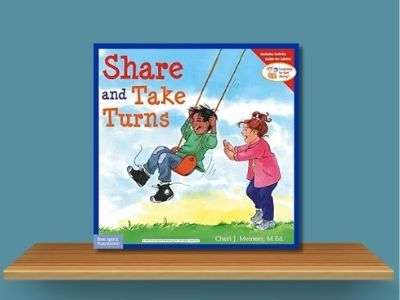
Summary: Share and Take Turns introduces young children to the social expectations around sharing and cooperative play in a calm, encouraging way. The book uses simple language and relatable examples to explain what it means to share, why it matters, and how it helps everyone enjoy their time together. Whether it’s passing a toy, waiting for a turn, or including someone else in a game, this book gives kids the tools and confidence to make kind choices—and shows them that sharing helps everyone feel good.
Description: Part of the Learning to Get Along series, this book is designed as a teaching tool rather than a storybook. It’s perfect for preschool classrooms, therapy sessions, or home reading when a child needs extra support with social skills. The text is direct and developmentally appropriate, with diverse illustrations that show children of different backgrounds and abilities navigating real-life situations. The back of the book includes notes for adults and additional activities, making it ideal for reinforcing the concepts through discussion and role-play.
Reviews and Considerations: Parents, teachers, and therapists widely praise Share and Take Turns for its clarity and practicality. Many note that the book not only helps children understand the concept of sharing but also gives adults better ways to explain it. Families with toddlers and children preparing for preschool or kindergarten find it especially helpful for managing sibling dynamics and group play. Some reviewers even reported their kids referencing “the sharing book” during real-life conflicts—a sign that the message is sticking. While not as story-driven as some picture books, it’s a reliable, go-to resource for building essential social-emotional skills.
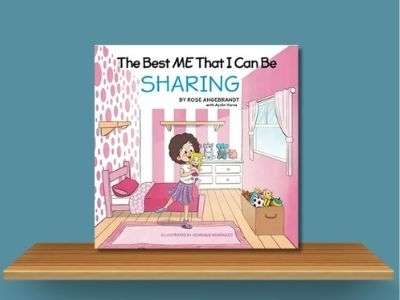
Summary: Ayzlin is excited to have her friends over to play—but she’s not ready to share everything. She knows some toys are for everyone, but others, like her favorite doll, are too special to hand over. With gentle guidance from her mom, Ayzlin learns it’s okay to set boundaries around the things that matter most to her, as long as she’s also being fair and kind. By thinking ahead and putting her most special things away, she sets herself up for a fun, conflict-free playdate.
Description: This book takes a slightly different approach to the topic of sharing by balancing fairness with personal boundaries. Rather than suggesting children must share all of their belongings, it validates that some toys or items might be special and off-limits—and that’s okay. The story supports a more nuanced understanding of sharing, encouraging kids to plan ahead and make thoughtful decisions. This is especially helpful for children who are overwhelmed by the idea of giving up control of favorite possessions, or for parents and teachers trying to avoid toy-related conflicts.
Reviews and Considerations: Many reviewers appreciate that Sharing: The Best Me That I Can Be offers a realistic and respectful way to teach sharing without ignoring a child’s emotional attachment to special items. It’s especially useful for preparing children for playdates or classroom situations where shared space is a challenge. Several parents noted that it helped open up conversations about setting healthy boundaries while still being a good friend. While a few readers wished for higher-quality printing or a stronger storyline, the message itself resonates: sharing is important—but so is honoring what feels truly special.
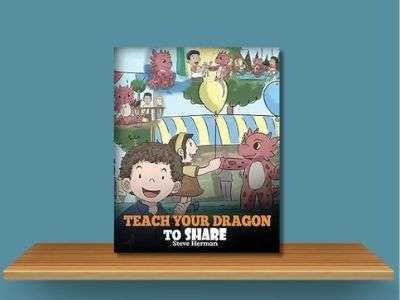
Summary: Diggory Doo is a playful dragon—but when it comes to sharing, he needs a lot of help. Whether it’s toys, games, or schoolwork, Diggory would rather keep everything to himself. Luckily, his young owner is up for the challenge of helping him learn why sharing matters. Through funny moments, mishaps, and gentle redirection, Diggory slowly begins to see that sharing isn’t just about giving things away—it’s about being a good friend and teammate.
Description: This story uses the imaginative hook of having a pet dragon to tackle a common early childhood challenge. The My Dragon Books series is known for using fantasy to model real-life behavior struggles, and this title does a solid job walking kids through the concept of sharing in a way that’s lighthearted and non-threatening. It’s well suited for preschool and early elementary-aged children who are still developing social skills and benefit from playful, concrete examples. The book also touches on the connection between sharing and forming friendships, making it a good resource for both SEL lessons and classroom management support.
Reviews and Considerations: Families and educators love that Teach Your Dragon to Share takes a silly concept and turns it into a teaching moment kids can understand. Many parents use it to help navigate sibling dynamics, especially when introducing younger brothers or sisters to a child who’s still learning to share. While some reviewers noted that the connection between sharing and friendship could be stronger, most felt the book opened valuable conversations and engaged even reluctant listeners. It’s especially appealing to dragon-loving kids, and many readers go on to explore other books in the series to address topics like anger, listening, or patience.
Summary: RJ is having a rough day. First, he’s stuck working on a school project with the worst possible team—Bossy Bernice, Messy Frankie, and Norma the Booger Picker. Then, after a frustrating day, he comes home to find only one cookie left—and his mom says he has to share it with his sister. RJ doesn’t see the point of teamwork or sharing until a wise coach helps him understand that cooperation and generosity are skills we need not just in sports, but in school, at home, and in life.
Description: This book blends humor, frustration, and growth in a way that’s highly relatable for elementary students. As part of the Best Me I Can Be series, it’s written to teach key social skills through realistic school and home scenarios. The story introduces four simple steps each for teamwork and sharing, using rhyme to support memory and recall. It’s especially effective when read before group projects or during class meetings focused on behavior and cooperation. Bonus materials for educators and caregivers at the end make this a strong fit for classroom SEL instruction or behavior intervention.
Reviews and Considerations: Educators often use this book at the start of the school year to set expectations for group work and social responsibility. Many note that even students who are “too cool” for picture books stay engaged with the story, and the character RJ helps normalize the emotional reactions kids often feel but don’t know how to manage. While some reviewers felt the connection between teamwork and sharing could be stronger, others found that the included strategies and realistic situations opened valuable conversations. It’s best suited for students in grades K–4, but it can also be used with older students as a discussion starter.

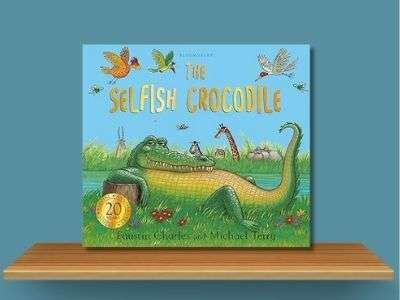
Summary: Every morning, a grumpy crocodile yells, “Stay away from my river!” He refuses to share the water with any of the other animals, no matter how thirsty or hot they are. But when the selfish crocodile wakes up one day in terrible pain, the other animals are too afraid to help—until a tiny mouse steps forward. That small act of kindness changes everything, and the crocodile learns an important lesson about friendship, compassion, and the power of community.
Description: This vibrant picture book is a classic tale of transformation. It takes a big idea—how selfishness can isolate us—and makes it relatable for young children through expressive animals and bold, colorful illustrations. While not directly about sharing toys or taking turns, the story encourages children to think about what it means to share space, kindness, and responsibility with others. It also gently models how empathy can lead to positive change, even in the most unlikely characters.
Reviews and Considerations: The Selfish Crocodile is widely loved by teachers, parents, and young readers alike. Many families say it’s a repeat request at bedtime, and teachers report that it’s a favorite for class discussions on kindness, cooperation, and how our actions affect others. Some readers note the story’s early tone is a bit intense (with the crocodile threatening to eat everyone), but that tension helps drive home the crocodile’s transformation. The book is especially impactful in PreK–2nd grade classrooms and makes a strong addition to units on friendship, behavior, and classroom community.
Sign up now to receive a Quick Start Guide to Children’s Books for Behavior and SEL Needs.
This practical guide will help you quickly match common classroom challenges with picture books that actually support behavior, social-emotional learning, and student growth.
By signing up, you’ll also join my newsletter, where you’ll receive:
Targeted strategies for addressing specific behavior and SEL concerns in your classroom
Weekly emails that pair a behavior/SEL skill with books — one week you’ll get strategies, the next week a curated list of picture books on the same topic.
Time-saving tools and ideas you can use right away to support students’ behavior, emotions, and peer relationships
This guide takes the guesswork out of finding the right book for the right moment.
Join our community of educators who are committed to using books, relationships, and evidence-based strategies to support students’ behavior and social-emotional growth in the classroom.