If you’ve ever had a student report,
“He’s looking at me,”
“She’s not doing her work,”
“He’s been in the bathroom too long,”
…then you already know how often tattling comes up.
Students will tattle about just about anything. They report when someone is touching their things, out of their seat, not working, saying something mean, or doing something they shouldn’t be doing. Sometimes they even report things that don’t directly involve them at all.
There are many reasons why a student might tattle. Some students are focused on fairness. If they got in trouble for something, they think everyone else should too. Some feel like it’s their job to monitor the class and “help” the teacher by pointing things out. Others are more rigid and have a hard time watching someone break a rule without correcting them. Some are more controlling or bossy and will tell others what to do, then report them when they don’t comply. And sometimes, if we’re being honest, students are also trying to get someone else in trouble or make themselves look better.
What makes this even more complicated is that they’re not always wrong. They’re often reporting behavior that we actually would correct, which is part of what makes this so confusing for them. That’s why teaching the difference between telling and tattling is not as simple as giving a definition. Before we can teach students the difference, we need to be clear on what we mean by tattling and telling in the first place.

Tattling is when a student reports something that is not a safety issue. That sounds simple, but in the classroom, it’s rarely that straightforward. Many of the things students report do involve rule-breaking. Someone might be off task, out of their seat, touching someone else’s things, or not following directions. These are all things we care about, which is part of what makes this tricky. The difference usually comes down to the student’s motivation.
Students may be tattling because they:
You’ll often hear it in comments like:
These situations may still need to be addressed, but they are not safety issues. They don’t require immediate adult involvement, and they are often things students can learn to handle in other ways.

Telling is when a student reports something because someone is hurt or could get hurt. These are situations where we want students to come to an adult right away. In the classroom, this typically includes situations where someone is physically hurt, someone is being unsafe, or something could lead to someone getting hurt. These are not problems we want students to handle on their own—they require adult support.
It’s important that students understand this clearly. We never want them to feel like they shouldn’t report these situations. The goal isn’t to stop students from coming to you—it’s to help them recognize when it really matters.

The simplest way to explain this to students is:
When students come to me, I usually start with one question: Is someone hurt or in danger of getting hurt?”
Most of the time, the answer is no. That’s when I follow up with, “So are you tattling or telling?”
This keeps the situation from becoming something I immediately take over. Instead, it puts the thinking back on the student. They begin to pause, reflect, and decide whether the situation actually requires adult help or if it’s something they can handle in another way.

Teaching telling vs tattling is really about helping students develop decision-making skills.
When students report everything, they’re often trying to figure out:
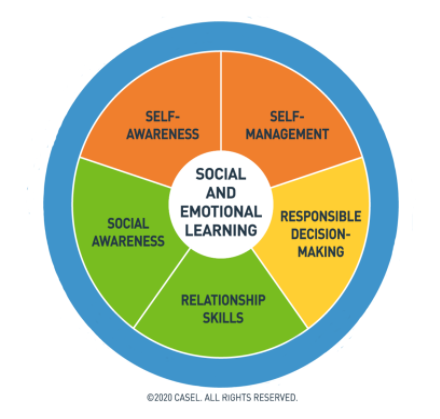
This connects directly to social-emotional learning skills students are still developing.
Students are learning to:
When we teach telling vs tattling, we’re not just reducing interruptions. We’re helping students learn how to think through situations, make better choices, and take responsibility for how they respond.
To learn more about the CASEL 5 Social-Emotional Competencies, read this blog post. You can also visit their site here.
One of the biggest challenges with this skill is that students are often reporting behavior that we actually care about. They may be pointing out:
And as teachers, we often do address those behaviors. That’s where the confusion comes in. We tell students not to tattle, but then we still respond to the behavior they reported. From their perspective, that can feel inconsistent.
This is why it’s important to separate how we respond to the behavior from how we respond to the reporting. We can still address the behavior if needed, but without reinforcing the habit of reporting every problem or making it the student’s job to manage others.

One of the most effective ways to teach this skill is through guided discussion using real situations students actually experience. Instead of giving a quick rule, you’re helping students learn how to think through situations on their own. This isn’t something you do once and move on from—it works best when you revisit it over time using multiple scenarios.
As you work through this, it’s important to include a range of situations. Some should be very clear, where the answer is obvious. Others should be more difficult to decide. In fact, those “in between” situations are often the most valuable. Students need to understand that there won’t always be one clear right answer, and that thinking through the situation is what matters most.
You might start with a familiar situation your students will recognize right away, like someone looking at their paper, cutting in line, or being out of their seat. Using real, relatable examples helps students stay engaged and makes the discussion more meaningful.
Before jumping straight to telling vs tattling, slow students down and focus on safety. Ask, “Is someone hurt or in danger of getting hurt?” Most of the time, students will say no. Then follow up with, “Is this a big problem or a little problem?”
At this point, students may still feel like it’s a big problem, especially if something feels unfair or frustrating. This is where you guide the conversation further by asking questions like, “What might happen if you don’t say anything?”, “Will this stop on its own?”, and “Will you still be able to do your work?” As you walk through different scenarios, students begin to notice patterns. They start to see that not every problem needs immediate adult involvement and that some situations can be handled in other ways.
Once students have had a chance to think about whether something is a big or little problem, bring it back to your anchor question: “So is this tattling or telling?” At first, it helps to model the thinking out loud so students can hear the process. For example, you might say, “No one is hurt, and it’s not dangerous, so this would be tattling.”
As you continue working through different scenarios, begin to shift that thinking to the students. This is also a good place to introduce situations that aren’t as clear. For example, you might ask what happens if something keeps happening over and over, or if someone is being unkind but not physically hurting anyone. Questions like “Does this depend on the situation?” and “Would there ever be a time you need a teacher?” help students move beyond black-and-white thinking and start to understand that context matters.
One of the biggest reasons students tattle is because they feel responsible for what other students are doing. Making this explicit can be very helpful. Ask students, “Is this your job to handle, or is it the teacher’s job?” Then connect it back to your earlier discussion by reinforcing that safety problems are the teacher’s responsibility, while other situations may be something students can handle on their own.
As you revisit this idea across multiple scenarios, students begin to understand that not every situation belongs to them. This can reduce the need to report every problem and help them focus more on their own choices.
Once students understand the difference between telling and tattling, the next step is helping them figure out what to do instead. Without this, simply telling students not to tattle won’t be effective.
Go back to the same types of scenarios and ask, “If you’re not going to tell the teacher right away, what could you do?” Talk through options such as ignoring it, using their words, walking away, waiting to see if the situation resolves, or solving the problem on their own. Then guide students to think more deeply by asking, “Which option would work best here?”, “Do you really need a teacher for this?”, and “What might happen if you handle it on your own?”
As students work through multiple examples, they begin to build a set of responses they can use independently instead of relying on reporting.
Another helpful approach is to take a single situation and look at two different ways to respond. For example, one student might immediately tell the teacher, while another might try to handle the situation independently. Walking through both options allows students to compare outcomes.
You can guide this discussion by asking, “Which response helps solve the problem?”, “Which might make it bigger?”, and “Does this situation really need a teacher?” These comparisons help students see how their choices affect what happens next.
Some of the most valuable discussions come from situations that are not completely clear. These might involve something that feels unfair or a rule that is being broken, but where no one is in danger.
Instead of giving students a quick answer, let them think through these situations. Ask questions like, “Is this something you need help with?”, “Could you handle this on your own?”, and “What would be the best choice here?” It’s okay if students don’t all agree. In fact, those differences in thinking are part of the learning process.
Helping students see that some situations require judgment—and that different responses might make sense depending on the context—builds stronger decision-making skills than simply memorizing a rule.

Once students understand the difference between telling and tattling, it’s important to give them opportunities to apply that thinking in different ways. These activities help reinforce the skill and make it more likely that students will use it independently.
One way to deepen understanding is to have students explain the concept to someone else. You can ask them to write a letter to a fictional student who tattles about everything. In their letter, they explain what telling is, what tattling is, and how to decide between the two. Encourage them to include a few examples so they are thinking through real situations, not just definitions. This activity helps students organize their thinking and gives you a clear picture of what they understand.
Another effective option is to have students create a short story or comic based on a common classroom situation. They can show two versions of the same scenario—one where the character tattles and one where the character handles the situation in a different way. Afterward, guide students to reflect on which response worked better and why. This helps them see how different choices can lead to different outcomes and reinforces the idea that they have options beyond reporting everything.
You can also reinforce this skill through a read-aloud. *Fix Your Dragon’s Attitude works well because it highlights how quickly students can react without fully thinking through a situation. As you read, pause to talk about how the character reacts, whether that reaction matches the situation, and what the character could have done differently. You can connect this back to telling vs tattling by asking, “Was this a situation where someone needed help, or could it have been handled differently?” This helps students understand that their reactions—and not just the situation itself—matter.
*This is an affiliate link, which means I may earn a small commission at no extra cost to you.

It’s easy to unintentionally make this more confusing for students, especially if responses are inconsistent. Avoid treating all reporting as negative, ignoring real safety concerns, or giving too much attention to tattling. Instead, keep the focus on helping students think through situations and make appropriate decisions.
Teaching the difference between telling and tattling takes more than a quick explanation. Students are often trying to make sense of fairness, rules, and their role in the classroom, and without guidance, they may fall into patterns of reporting everything or trying to manage others.
The goal isn’t to stop students from coming to you. It’s to help them understand when adult help is needed and when they can handle something on their own. Over time, this builds independence, improves classroom dynamics, and helps students focus more on their own choices.
Stories give students a chance to decide whether a character is reporting a problem to keep someone safe or trying to get someone in trouble. These books about tattling versus telling can help you teach the distinction through examples rather than expecting students to remember a rule on their own.


Support your students’ individual needs with our exclusive Classroom Concerns Checklist. Identify patterns in areas like cognitive skills, communication, social/emotional behavior, and more.
Sign up now to receive instant access and valuable insights on addressing classroom concerns.

Support your students’ individual needs with our exclusive Classroom Concerns Checklist.
Identify key concerns in areas like:
…and more to help drive collaboration and problem-solving.
Sign up now to receive instant access and valuable insights on addressing classroom concerns.

When a student is struggling, it can be difficult to know what information matters or what to look at next. The free Classroom Concerns Checklist can help you organize what you are seeing, identify patterns, and decide what information your team may need.