teasing and bullying books

Top 14 Teasing and Bullying Books to Help Kids Increase Empathy and Courage

Table of Contents

Introduction to Teasing and Bullying Books

Teasing and bullying can have a lasting impact on how children see themselves and interact with others. Picture books provide a safe and relatable way to explore these difficult topics with students. The stories below don’t just name the problem—they offer meaningful insights into what it feels like to be teased, how bullying affects confidence and belonging, and how children can respond with empathy, courage, or self-advocacy. Whether you’re looking for books to spark classroom discussions, support social-emotional learning, or help a specific child process their experiences, these titles are powerful tools for promoting kindness and inclusion.


For some of the books on this website, I have created interactive read-alouds to enrich their use in the classroom. These interactive read-alouds include discussion questions, activities, and prompts that engage students and deepen their understanding of the book’s themes. More interactive read-alouds are on the way. If there are specific books for which you would like to see a read-aloud created, please contact me using the form at the bottom of the page.


To learn more about supporting social-emotional learning and using interactive read-alouds in the classroom, check out these posts:


(As an Amazon affiliate, I earn a small commission if you purchase products through the links on my posts. Thank you for your support!)

Book Recommendations

Bully B.E.A.N.S.- Julia Cook

Summary: Bully B.E.A.N.S. tells the story of Maxine, a girl who bullies her classmates—especially Winston, whom she intimidates into doing her homework and giving up his lunch money. While the other students disapprove of her behavior, they’re too scared to speak up. That changes when one student confides in her mom and receives a bag of “bully beans,” which symbolize the courage to stand up to bullying. With new confidence and support, the students begin to stand together and challenge Maxine’s behavior.


Description: This updated version of Bully B.E.A.N.S. simplifies and strengthens Julia Cook’s original text while featuring more engaging illustrations. The story clearly defines bullying and offers strategies for students whether they are being bullied, witnessing it, or realizing they might be engaging in it themselves. The acronym B.E.A.N.S. (Bullies Everywhere Are Now Stopped) and the use of “magic” jelly beans make the topic accessible and empowering for young children. Practical tips at the end help children understand how to take safe, appropriate action.


Reviews and Considerations: Educators and counselors consistently praise this book for its realistic examples, student appeal, and actionable strategies. Many highlight how it encourages empathy and provides a child-friendly way to start difficult conversations. The updated illustrations and shortened text were well received, though one reviewer found the illustrations unappealing and confusing. Overall, the book is widely regarded as a must-have for classrooms and counseling offices, offering helpful guidance for targets, bystanders, and even bullies themselves.


border

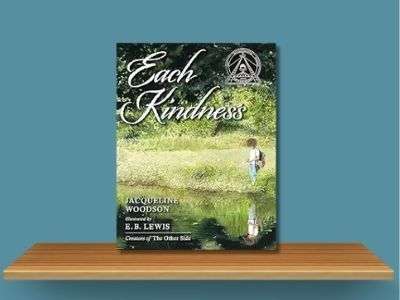
Each Kindness - Jacqueline Woodson

Summary: In Each Kindness, Chloe and her classmates repeatedly exclude a new student named Maya, rejecting her attempts to connect. When Maya suddenly stops coming to school, Chloe begins to reflect on her behavior—especially after a classroom lesson about how acts of kindness ripple outward. With Maya gone, Chloe realizes she has missed her chance to show kindness, and the story ends without resolution, leaving readers to sit with the weight of regret.


Description: This poignant and beautifully illustrated book offers a powerful lesson about missed opportunities for kindness. Jacqueline Woodson doesn’t shy away from the emotional complexity of exclusion and remorse, and the absence of a happy ending gives the message lasting impact. It challenges readers to consider how their choices affect others and invites meaningful reflection and discussion. E. B. Lewis’s watercolor illustrations add depth and subtlety to the emotional tone, enhancing the book’s ability to resonate with students, educators, and parents alike.


Reviews and Considerations: Each Kindness is widely praised for its honesty, emotional depth, and ability to spark powerful conversations about empathy and kindness. Many reviewers—including teachers, counselors, and parents—note its effectiveness in both classroom and home settings, though several emphasize that the book is best shared with adult guidance due to its emotional weight. Some reviewers felt the story’s realism was too heavy or complex for younger students, especially because there’s no chance for the characters to make amends. A few also expressed concern about the visual depiction of Maya’s poverty and how it might be interpreted in different school contexts. Still, the overwhelming consensus is that this is an important book that teaches a vital, sometimes painful truth: kindness matters—and it’s not always possible to go back and fix what we’ve done wrong.

border

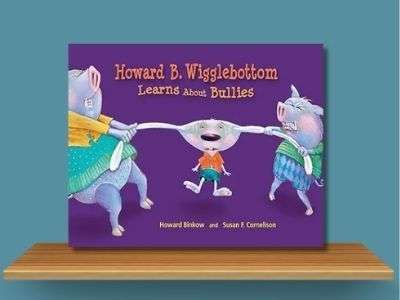
Howard B. Wigglebottom Learns About Bullies- Howard Binkow

Summary: In this story, Howard is being bullied by the Snorton twins and doesn’t know how to handle it. He tries a variety of strategies—ignoring them, avoiding them—but nothing works. Eventually, Howard realizes that he needs to be brave, speak up, and tell a trusted adult. His experience models both the fear and the courage involved in asking for help. With a repeated chant of “Be Brave, Be Bold,” the story reinforces key messages in a way that sticks with young readers.


Description: This book is part of the Howard B. Wigglebottom series, which uses clear language, vibrant illustrations, and repetition to teach young children important social-emotional lessons. This title is aimed specifically at children in Pre-K through second grade and gives a realistic look at how bullying can happen—even at a young age. It distinguishes between minor conflicts and actual bullying, helping kids understand when to seek adult help. The book also aligns with many schools’ character education programs and is supported by online resources from the publisher.


Reviews and Considerations: Reviewers overwhelmingly praise this book for its clarity, kid-friendly tone, and effectiveness in prompting discussions about bullying. Many educators report success using it with young students to introduce or reinforce anti-bullying lessons. Parents say the story helped their children open up about their own experiences. One reader shared that her child began quoting the book’s message daily, while another said it finally helped a struggling child understand when to tell a teacher. The accompanying animated version and resources on the We Do Listen Foundation website add additional value. However, a few reviewers noted that in real life, telling an adult doesn’t always stop the bullying immediately, which may lead to some confusion for children expecting quick resolution. Still, most agree this is a valuable tool for laying the groundwork for early conversations about bullying and assertiveness.

border

Llama Llama and the Bully Goat - Anna Dewdney

Summary: In this school-based story, Llama Llama is enjoying his day when a classmate, Gilroy Goat, starts calling names and disrupting the group. With guidance from his teacher, Llama learns how to respond appropriately—by walking away and telling an adult. Later, when Gilroy’s behavior changes, the classmates work toward forgiveness and friendship. The story models emotional growth in both characters and delivers a memorable message using rhythmic, rhyming text.


Description: This book uses familiar characters and gentle language to introduce early learners to the concept of bullying and respectful conflict resolution. Llama Llama is a beloved series for a reason—its predictability, rhythm, and expressive illustrations make it an accessible entry point for tough topics. This installment encourages children to recognize hurtful behavior, speak up, and stay safe, while also leaving space for understanding and second chances. It’s a helpful conversation starter for children ages 3–7.


Reviews and Considerations: Readers consistently praise the book’s clarity and age-appropriate handling of bullying. Many parents report that it helped their child identify unkind behavior, whether they were experiencing it or exhibiting it. The phrase “don’t be a Bully Goat” stuck with children, and some even used it to self-regulate or talk to peers. While the resolution is somewhat idealized—bullying is stopped quickly after a teacher intervenes—many see this as a helpful early model for young children learning how to handle conflict. Some reviewers note that the book presents Gilroy’s bullying as a one-time misstep rather than a repeated pattern, which may underplay the seriousness of true bullying. Still, the book introduces key ideas like telling an adult, setting boundaries, and offering forgiveness, all in a format that feels safe and supportive for young readers.

border

Enemy Pie - Derek Munson

Summary: When a young boy’s perfect summer is ruined by a new neighborhood “enemy,” his dad offers a solution: Enemy Pie. But there’s a twist—the recipe requires the boy to spend a whole day with his so-called enemy. As the day unfolds, animosity gives way to understanding and friendship, and the boy begins to question whether Jeremy Ross was ever truly an enemy at all.


Description: Enemy Pie uses humor, relatable childhood conflict, and a clever narrative device to guide readers through the emotional journey from judgment to connection. The story models how spending time with someone we think we dislike can change our perspective. With expressive illustrations and a warm, father-son dynamic, this book is well-suited for children ages 5–9 who are navigating the social challenges of friendship, first impressions, and forgiveness.


Reviews and Considerations: Enemy Pie is widely praised by parents and teachers for its engaging story and message about giving others a chance. It’s been successfully used in classrooms from first through fifth grade and is a favorite among students and adults alike. Readers consistently mention its ability to prompt meaningful conversations about friendship and assumptions. Many teachers use it during the first weeks of school to build a foundation for respectful relationships. While some adults may see the ending as predictable, young readers experience it as a fresh and satisfying twist. The book does not explicitly name bullying or include serious conflict, making it a safe and effective read-aloud for most group settings.

border

One- Kathryn Otoshi

Summary: Blue is a quiet color who gets pushed around by Red, a loud and aggressive color who picks on others to feel powerful. Although the other colors—Yellow, Green, Purple, and Orange—feel uncomfortable, none of them speak up. That is, until One arrives. Unlike the others, One stands tall, speaks firmly, and helps the colors see that everyone counts. With One’s example, the colors find the courage to stand together and stop Red’s bullying behavior.


Description: One uses simple colors, numbers, and bold illustrations to deliver a powerful message about bullying, standing up for others, and the importance of every voice. Without naming the word “bullying,” the book clearly shows what it looks like—and more importantly, what it takes to stop it. The story’s concrete language and visual metaphors make it ideal for even very young children, while still resonating with older students. It encourages kids to move from silent bystanders to active allies with a tone that is empowering, not preachy.


Reviews and Considerations: Praised for its originality and impact, One is often described as a must-have for school counselors, SEL lessons, and classroom libraries. Teachers appreciate how easily it opens up conversations about peer pressure, friendship, and choosing to do the right thing even when it’s hard. Some readers note that its minimalist style may seem overly simple at first glance—but that simplicity is exactly what makes the message so clear and accessible. Because of its versatility and effectiveness across age groups, One is highly recommended for introducing conflict resolution and anti-bullying themes.

border

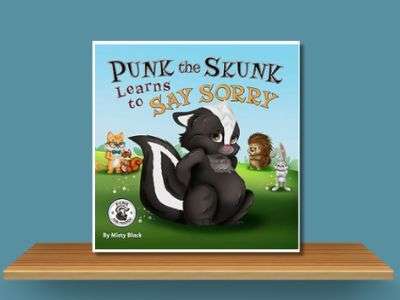
Punk the Skunk Learns to Say Sorry- Misty Black

Summary: Punk the Skunk Learns to Say Sorry follows Punk, a playful skunk who loves to make his friends laugh through teasing and pranks. But when his jokes begin to hurt others, Punk suddenly finds himself alone and labeled a bully. As he reflects on his actions, Punk realizes that saying sorry—and truly meaning it—may be the only way to make things right again.


Description: This rhyming picture book addresses a common issue in early childhood: the blurry line between teasing and bullying. With colorful illustrations and lovable animal characters, the story helps children see how seemingly harmless jokes can have real consequences. The book also teaches valuable lessons about empathy, self-reflection, making amends, and forgiveness. It includes a thoughtful discussion guide created with input from a school counselor, making it a helpful resource for both classrooms and homes.


Reviews and Considerations: Readers overwhelmingly praise this book for its engaging tone, charming artwork, and effective messaging around recognizing and repairing harm. Many note that it encourages self-awareness in children who may not realize when they’ve crossed a line. Several reviewers mention using the book to spark honest conversations with kids about times they’ve hurt others—intentionally or not. There are no flagged concerns in the reviews, and the book is widely recommended by teachers, counselors, and parents alike as a gentle but clear tool for supporting early conflict resolution and social-emotional growth.

border
border

Stand Tall, Molly Lou Melon - Patty Lovell

Summary: Stand Tall, Molly Lou Melon tells the story of a small, quirky girl with a big personality. With her grandmother’s guidance to “walk proud, smile big, and sing loud,” Molly Lou embraces her unique features with confidence. But when she starts at a new school and faces teasing from a bully, Molly Lou responds with creativity, resilience, and grace—ultimately winning him over with her spirit and self-assurance.


Description: This story celebrates individuality and self-worth, making it a strong tool for discussions around standing up to bullying in a positive way. Molly Lou doesn’t ignore mistreatment or retaliate with meanness—instead, she responds by owning who she is and showing others that confidence comes from within. The book is humorous, energetic, and relatable, making it a great choice for read-alouds or individual reflection. The illustrations by David Catrow add vibrancy and playfulness, reinforcing the message of joy in being yourself.


Reviews and Considerations: Reviewers praise this book as an empowering read that helps children recognize their strengths and develop confidence in the face of teasing. Many educators and parents use it to support discussions about bullying, kindness, and resilience. A few readers note that the book could introduce the concept of teasing to very young children who haven’t experienced it yet, but most agree it opens the door for supportive conversations when needed. The clear resolution, where the bully becomes a friend, is viewed as hopeful and developmentally appropriate. Stand Tall, Molly Lou Melon is widely regarded as a favorite for classroom libraries and home bookshelves alike.

border

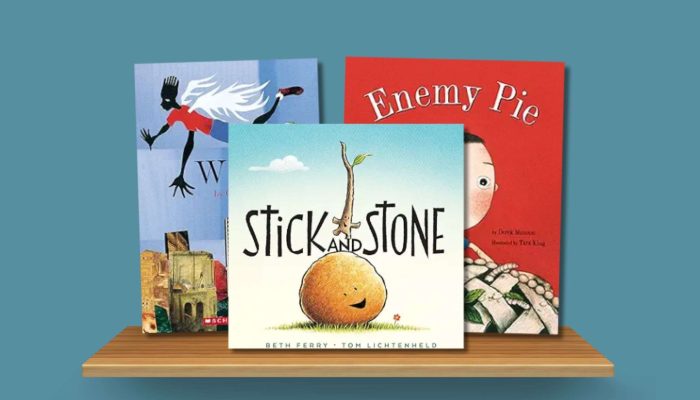
Stick and Stone - Beth Ferry

Summary: Stick and Stone is a lighthearted yet meaningful story about two unlikely friends who stand up for one another. When Stick defends Stone from Pinecone’s teasing, their friendship begins. Later, when Stick needs help himself, Stone is there to return the kindness. Their bond is simple, sweet, and grounded in loyalty and compassion.


Description: This book introduces conflict resolution and friendship in a way that’s easy for young children to understand. The rhyming text is minimal and accessible, making it ideal for early readers or preschool read-alouds. Though the story is simple, the themes of kindness, empathy, and standing up for others are strong. The characters—Stick, Stone, and Pinecone—offer just enough narrative tension to prompt meaningful classroom discussions or home conversations.


Reviews and Considerations: Most readers praise Stick and Stone as a charming and effective story for teaching kindness and early conflict resolution. The visuals are colorful and engaging, and the text’s simplicity makes it approachable for ages 3–6. Several reviews highlight how easily children memorize the story, reinforcing the message through repetition. However, one reviewer criticized the storyline as promoting “trauma bonding” due to the characters forming a friendship after a bullying incident, and another described the narrative as overly simplistic. Some readers also noted the lack of complete sentences as a downside for modeling grammar. Still, for its intended age group, Stick and Stone remains a widely loved choice for teaching friendship, empathy, and how to stand up for others in small but meaningful ways.

border

Tease Monster - Julia Cook

Summary: One-of-a-Kind is a vibrant, unique character who doesn’t quite understand why others are laughing at him—especially when some comments feel playful and others feel hurtful. With help from his mom, One learns to tell the difference between friendly teasing and mean teasing. Together, they work through specific examples to help One build clarity and confidence in handling social situations, especially teasing and potential bullying.


Description: Tease Monster uses colorful characters and clear examples to help children grasp the subtle but important distinction between joking with someone and laughing at someone. The story promotes empathy and self-reflection while encouraging kids to recognize how their words affect others. This book is a strong fit for classroom discussions or small-group work focused on peer relationships, especially in grades 1–4. Included tips at the end support adults in guiding children through teasing, bullying, and everything in between.


Reviews and Considerations: Readers widely appreciate this book for opening up thoughtful conversations about social behavior. Many praise it for helping students better understand the impact of teasing and for making the topic approachable. However, some reviewers felt the message could be confusing—especially the idea that certain types of teasing might be “okay.” Critics expressed concern that trying to differentiate teasing types might downplay the emotional impact of any name-calling. Educators using this book may wish to clarify personal or school expectations around teasing and emphasize kindness over classification. Despite mixed views, this book is still a useful springboard for deeper conversations.

border

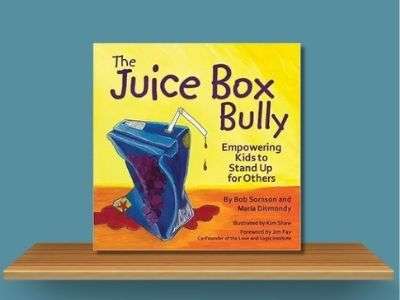
The Juice Box Bully - Bob Somson

Summary: When Pete joins Mr. Peltzer’s class, he quickly begins acting out, pushing boundaries and upsetting classmates. But this class is different—they’ve made “The Promise,” a group pledge to stand up for each other and refuse to accept unkind behavior. Instead of ignoring Pete’s actions or retaliating, the students respond with courage, boundaries, and empathy, showing him how to be part of a respectful classroom community.


Description: The Juice Box Bully is a well-regarded book for teaching students the importance of not being passive bystanders. It presents a realistic school scenario where peer influence—used positively—can help transform behavior. The book doesn’t just address bullying from the victim’s point of view; it also emphasizes student responsibility, peer support, and the potential for change in the person doing the bullying. The “Promise” at the end provides a concrete classroom tool for reinforcing these values.


Reviews and Considerations: Educators and parents consistently praise this book for promoting kindness, accountability, and classroom unity. Many highlight its usefulness during the first weeks of school and as part of an anti-bullying curriculum. The inclusion of a class pledge has been especially impactful for group discussions. However, some reviewers felt the resolution was overly simplistic, noting that Pete’s sudden change of heart might not reflect how real bullying situations unfold. Others pointed out that the book focuses more on peer dynamics than giving explicit guidance on what to say or do in serious bullying cases. Still, the story is widely appreciated as a strong conversation starter and a meaningful way to empower students to stand up for themselves and others.

border

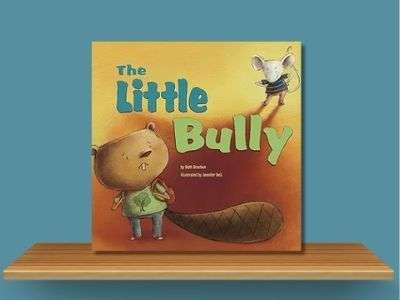
The Little Bully - Beth Bracken

Summary: The Little Bully follows Billy, a cheerful student who enjoys school—until a classmate named Fred starts picking on him. Fred is small but loud, and he teases Billy relentlessly, pointing out flaws and laughing when others don’t. As Billy’s confidence begins to fade, he eventually finds the courage to stand up for himself without being unkind. Rather than retaliating, he sets a boundary and expresses his feelings, prompting Fred to reflect and change. In the end, the boys build a friendship based on mutual respect.


Description: This story is a gentle and relatable introduction to bullying dynamics for younger children. Billy’s experience models emotional resilience and respectful assertiveness—he stands up for himself, but never stoops to Fred’s level. The book also touches on themes of empathy and redemption, showing that hurtful behavior can sometimes come from a place of insecurity. It’s a solid choice for sparking conversations about how to handle unkind behavior, when to speak up, and how to move forward after conflict. The text is simple enough for preschool and early elementary students, yet the message is meaningful across grade levels.


Reviews and Considerations: Educators and parents praise this book for being clear, age-appropriate, and discussion-ready. Many note that children instinctively respond to the emotional shifts in the story and are eager to share their thoughts. Some reviewers appreciate that Billy chooses not to bully back, while others commend the story’s emphasis on forgiveness. However, a few readers feel the resolution is overly idealistic—Fred changes quickly, which may not reflect many children’s real-life experiences with bullying. For that reason, it’s best used as a conversation starter rather than a how-to guide. The illustrations are charming, and the tone stays positive without downplaying the impact of Fred’s behavior.

border

The Not-So-Friendly Friend: How To Set Boundaries for Healthy Friendships - Christina Furnival

Summary: The Little Bully tells the story of Billy, a kind and likable student whose school experience changes when a classmate named Fred begins teasing him. Fred’s behavior chips away at Billy’s confidence, making him dread going to school. Eventually, Billy chooses to speak up—not with cruelty, but with calm honesty. Fred listens, reflects, and changes his behavior. The two begin to form a friendship built on mutual understanding.


Description: This story introduces bullying in a way that young children can understand and relate to. Billy models healthy responses to teasing—he doesn’t tease back, but he also doesn’t stay silent forever. His response offers a strong example of self-respect and boundary-setting without retaliation. The story also explores how bullies may act out of their own insecurities, providing an opportunity to talk about empathy and change. With its approachable text and clear message, this book works well for preschool through early elementary students.


Reviews and Considerations: Readers describe this book as a solid introduction to bullying, kindness, and speaking up. It has been used successfully with students from preschool through first grade, sparking thoughtful discussions. Many appreciate the way Billy stands up for himself without being mean. However, a few reviewers felt the resolution was too neat—Fred’s quick change of heart may not reflect the real challenges some children face when dealing with persistent bullies. Because of this, it’s most effective when paired with guided conversation. The gentle tone and engaging illustrations make this a useful resource for building classroom community or addressing friendship challenges.

border

Wings - Christopher Myers

Summary: Wings by Christopher Myers tells the story of Ikarus Jackson, a boy who is different—he has wings. But instead of awe, his uniqueness brings ridicule from classmates, teachers, and neighbors. Only one quiet girl sees his beauty and strength, yet she’s too shy to speak up. Eventually, inspired by Ikarus’s resilience, she finds her voice and defends him, setting both of them on a path of transformation and self-acceptance.


Description: This poetic and visually striking book is a powerful allegory about embracing individuality, finding your voice, and standing up for others. With layered collage art and lyrical text, Wings invites readers to reflect on what it means to be different and how our silence—or our courage—can affect others. The metaphor of wings represents not only uniqueness but also the potential to rise above cruelty and conformity. This book is especially effective for upper elementary students but has meaningful application across a wide age range.


Reviews and Considerations: Wings has received high praise for its message, artwork, and emotional depth. Educators and parents note its success in sparking discussions about bullying, empathy, and inclusion. Many reviewers describe the book as moving and thought-provoking, particularly for kids who feel like outsiders or who have struggled to speak up. However, one reviewer noted that the abstract language and symbolism may be challenging for independent reading by younger students without adult guidance. Overall, Wings stands out as a deeply meaningful resource for exploring self-worth and  compassion.

border

Get Your Free Quick Start Guide to Children’s Books for Common Behavior & SEL Needs

Sign up now to receive a Quick Start Guide to Children’s Books for Behavior and SEL Needs.


This practical guide will help you quickly match common classroom challenges with picture books that actually support behavior, social-emotional learning, and student growth.


By signing up, you’ll also join my newsletter, where you’ll receive:


  • Targeted strategies for addressing specific behavior and SEL concerns in your classroom


  • Weekly emails that pair a behavior/SEL skill with books — one week you’ll get strategies, the next week a curated list of picture books on the same topic.


  • Time-saving tools and ideas you can use right away to support students’ behavior, emotions, and peer relationships


This guide takes the guesswork out of finding the right book for the right moment. 


Join our community of educators who are committed to using books, relationships, and evidence-based strategies to support students’ behavior and social-emotional growth in the classroom.

SEL book list opt in cover on an ipad on light wood desk