I once worked with a student who threw a weighted pad at another student. When I told him that he was not allowed to throw things at people, even when he was angry, he quickly explained, “I threw it, but it hit him by itself.”
He acknowledged the first part of what happened, but somehow the outcome had become separate from his choice. The pad hitting the other student was treated as an unfortunate event that had occurred on its own rather than the predictable result of throwing it. If you have worked with a student who always has a reason something was not their fault, you have probably heard your own version of this explanation.
It is easy to view responses like these as dishonesty, defiance, or an unwillingness to follow classroom expectations. Sometimes those concerns are part of the problem. However, the behavior also tells us that the student needs more instruction in taking responsibility. A consequence may stop the conversation temporarily, but it does not necessarily teach the student how to connect a choice to its outcome, acknowledge personal responsibility, or decide what to do next.
Teaching responsibility requires more than telling students to “make good choices.” Students need to learn how to follow through on what they are expected to do, take ownership of their choices without immediately blaming someone else, and address the effect of their actions when something goes wrong. Those are related skills, but each one needs to be explained, modeled, and practiced.

Responsibility is often discussed as though it is a personality trait that some children have and others do not. We describe one student as responsible because she remembers her homework and another as irresponsible because he needs five reminders to put away his materials. That language can cause us to overlook all the smaller skills involved in following through successfully.
A student may need to remember an expectation, understand what needs to happen, organize materials, begin a task, persist when the task becomes difficult, and monitor whether the task was completed. If a problem occurs, the student then needs to describe what happened accurately, recognize the part that was within his control, consider how others were affected, and decide how to repair the situation. “Be responsible” does not explain any of that.
For classroom purposes, I think of responsibility as having three connected parts:
This definition also helps separate responsibility from compliance. A student who quietly does whatever an adult says is not necessarily learning to manage responsibilities independently. At the same time, understanding why a student struggles does not remove expectations or accountability. It helps us identify what the student must learn if we want the behavior to improve in a lasting way.
Students do not demonstrate responsibility by proving that they can manage every expectation without support. Adults use calendars, alarms, lists, reminders, automatic payments, GPS directions, and countless other tools to manage our own lives. We do not consider ourselves less responsible because we use systems that help us succeed. Teaching responsibility to students includes helping them discover the tools that will help them succeed.
Students may need visual schedules, checklists, timers, alarms, graphic organizers, reference sheets, or reminders. The goal is not to remove those supports as quickly as possible. The goal is to help each student learn which tools are useful, how to access them, and when to use them. Over time, the responsibility shifts from the adult repeatedly managing the student to the student using an appropriate system.
If a child has difficulty getting up in the morning, an adult can teach the child how to set and respond to an alarm. If a student struggles to organize writing, we can explicitly teach several types of graphic organizers and make them available. The student’s responsibility is not to stop having difficulty. It is to learn how to use a reasonable support and increasingly take an active role in solving the problem.
This distinction matters for students with disabilities. A support is not an excuse, and needing an accommodation is not a character flaw. Responsibility means using available supports, communicating what is needed, and participating in the solution to the greatest extent the student can.
One student I taught always had a reason he could not meet an expectation in the classroom. The same pattern appeared on the basketball court at recess. Every missed shot could be explained by a lopsided ball, not enough air, gravel on the court, or a hoop that was not regulation height.
The problem was not one unfinished assignment or one missed basket. He was developing a habit of looking outside himself whenever an outcome was disappointing. That habit protected him from feeling unsuccessful in the moment, but it also kept him from considering what he could change, practice, or try differently.
People who can take responsibility are better able to solve problems because they look for the part they can influence. They can use tools when they need support, follow through on commitments, acknowledge mistakes, repair trust, and adjust their choices. These skills matter in friendships, families, employment, and adult life. A student who believes every problem is caused by someone or something else has very little reason to change what happens next.

Before responding to excuses or blame, it helps to consider what the student may be trying to avoid or what skill may be missing. The explanation does not erase the student’s responsibility, but it should shape how we teach it.
Some students hear “You made a poor choice” as “You are a bad person.” If past mistakes have led to anger, humiliation, or lengthy lectures, denying responsibility may feel safer than telling the truth. The student may argue over small details because accepting any part of the situation seems likely to bring an overwhelming response.
These students need to experience accountability without shame. We can be clear about what happened and maintain appropriate limits while also communicating that mistakes can be addressed. When students learn that owning a choice leads to problem solving and repair rather than a judgment about their character, they have less reason to protect themselves through immediate denial.
A student may insist, “I didn’t mean to hurt him,” as though the absence of harmful intent removes all responsibility for the result. Intention matters, but it is only one part of the situation. A student can have a reasonable intention, make an unsafe choice, and still be responsible for helping repair the harm.
This distinction must be taught directly. We can acknowledge the intention while bringing the student back to the outcome: “I understand that you were trying to get the pad away from you. Throwing it still caused someone else to get hurt. What can you do now to help make this right?”
Remembering assignments, estimating time, organizing materials, beginning work, and monitoring completion all depend on executive functioning. A student may understand that homework is a responsibility and still lack an effective system for bringing it back to school. More reminders might help for one day, but they do not teach the student how to manage the responsibility tomorrow.
When the problem involves organization, time, initiation, or memory, the intervention should include tools for those skills. A checklist, visual routine, alarm, assignment tracker, or consistent storage location may be exactly what responsible follow-through looks like for that student.
When a student consistently struggles with follow-through, it can help to identify the specific executive functioning skill that is breaking down rather than treating the entire problem as irresponsibility. My executive functioning skills checklists and intervention resources are organized by grade level and can help teachers identify student needs, select appropriate supports, and develop meaningful goals.
Students learn quickly when asking an adult is easier than using a tool or working through a problem. One of the students I currently teach has several ways to find support during math. Each problem in her textbook identifies the lesson where the skill was introduced. She can return to that lesson to study an example, look at an earlier assignment, draw a picture, or use a binder of visual tools that includes resources such as multiplication charts, fraction models, and examples of operations with decimals.
She knows these supports are available, but her immediate response is often to ask an adult. In her mind, that is easier and faster than checking the lesson or finding a tool. If an adult immediately explains the problem each time, the system unintentionally teaches her that asking someone else to take over is the most efficient strategy.
This is not a reason to refuse help. It is a reason to change how help is provided. Instead of solving the problem, I can ask, “Okay, so what are you going to do to solve that problem?” She is still supported, but she must take the next step in using what she has already been taught.
Delayed outcomes are difficult for many children to evaluate. Reading ten pages today may feel unrelated to a reading celebration several weeks away. When the student later cannot participate, it may genuinely feel as though an adult suddenly took something away.
Students need help seeing the connection while there is still time to act. The discussion should happen before the outcome, not only after it: “The reading party is for students who complete the monthly reading goal. You can choose to read during this time or choose not to read. If you choose not to read, what will that mean for your goal? What could help you get started?”
Choice language should be used carefully. A meaningful choice exists only when the student understands the options, has the skills and supports needed to act, and can reasonably predict the outcome. We should not describe a disability-related barrier, an unclear expectation, or a task the student cannot yet perform as simply a poor choice.
Teachers do not intentionally teach dependence or defensiveness. These patterns usually develop because adults are trying to keep the day moving, prevent a student from failing, or get to the truth of a problem. Unfortunately, several understandable responses can make it harder for students to take responsibility over time.
When a student has not started, it is natural to remind the student again. If nothing happens, we remind again, stand nearby, point to the materials, and walk the student through every step. The assignment may eventually get done, but the adult has provided the planning, initiation, and monitoring.
Students do need reminders while learning a routine. The problem occurs when reminders remain the entire system. We need a plan for transferring the cue from the adult to a checklist, schedule, timer, or other support the student can learn to use.
Adults sometimes replace forgotten materials, finish incomplete steps, negotiate exceptions, or solve problems before students experience any effect from not following through. Occasional help is reasonable, especially when a student is still learning. Continually removing every manageable outcome, however, teaches the student that someone else will eventually assume the responsibility.
The answer is not to manufacture harsh consequences. It is to allow reasonable, related outcomes while helping the student decide what to do next. Accountability becomes useful when it leads to action rather than resentment or shame.
A long lecture may convince a student that admitting a mistake will make an unpleasant interaction last even longer. Public correction adds another reason to deny, minimize, or argue. Once the conversation becomes a contest over whether the student will say the expected words, very little learning is taking place.
Keep the response calm, brief, and focused on observable information. The goal is not to force a confession. The goal is to help the student recognize personal responsibility and take an appropriate next step.
A consequence may be necessary when a student damages property, hurts someone, or does not complete a responsibility. However, a consequence by itself does not teach planning, organization, emotional regulation, accurate self-reflection, or repair. If the student does not know what to do differently, the same pattern is likely to return.
Whenever possible, pair accountability with instruction. Ask what broke down, identify a tool or strategy, practice how it will be used, and decide how the student can repair the current problem.
Taking away a checklist or organizer does not create responsibility. It may simply remove the system that allowed the student to be successful. Independence is not doing everything from memory; it is managing responsibilities with the level of support that is appropriate and available.
Rather than removing a tool because the student “should know this by now,” look at which part can be transferred. The adult might stop verbally listing every step while continuing to provide the visual checklist. Later, the student may learn to create or select the checklist independently.
Responsibility develops through repeated experiences in which students understand what belongs to them, make choices with predictable outcomes, use tools, and participate in fixing problems. The strategies below teach those skills directly instead of relying on reminders to eventually turn into independence.
Begin by replacing broad directions with language students can see and practice. “Be responsible with your work” may mean writing the assignment down, placing papers in the correct folder, checking the directions, using a reference tool when stuck, and turning in the completed work. “Take responsibility for what happened” may mean describing the event accurately, identifying your part, listening to how someone else was affected, and helping repair the problem.
Choose examples that match the students and setting. Younger students may need pictures of each action, while older students can help create a list of what responsibility looks and sounds like during common parts of the day. Clear expectations make it possible to determine which specific step needs more teaching.
Discuss choices before students reach the outcome. When possible, help them name what they want, what actions are required, and what is likely to happen if they do or do not follow through. This turns consequence language into planning rather than a statement made after it is too late.
For the reading-party example, a student might identify the goal, calculate how many pages need to be read each week, choose a regular reading time, and track progress. If the student falls behind, the conversation becomes, “What does your tracker show? What choice can you make today?” The adult is not threatening to take away the party. The student is learning to connect present action to a future goal.
Do not assume students know how to use a checklist, organizer, or reference sheet simply because it is available. Model the tool, practice with it, and explain when it is helpful. If several tools are available, teach students how to choose between them.
A student struggling with a math problem might follow a short sequence: reread the question, identify the lesson, look at an example, check the tools binder, try a representation such as a drawing, and then ask a specific question if still stuck. A student who frequently forgets materials might use an end-of-day checklist attached to a folder. The tool should match the point where responsibility is breaking down.
In my classroom, many of these supports are kept in sheet protectors in a tools binder that students can access when they need it. The binder might include multiplication charts, fraction visuals, math formulas, graphic organizers, or a list of alternatives to words such as “said.” It is a living resource that grows as I notice skills students have already learned but still need help remembering or applying. Students are expected to check the binder and try an appropriate tool before asking an adult to take over. If the tools are not enough, I still provide support, but I might work through a related example or ask questions about what the student understands and what could come next rather than simply giving the answer.
This also creates an opportunity to teach self-advocacy. Students can learn to say, “I need a visual checklist for this,” “Can you show me where the example is?” or “I used these two tools, but I am still confused about this step.” Accepting appropriate support and taking responsibility work together.
Once a student has been taught the available systems, shift some adult prompts from directions to questions. Instead of repeatedly saying, “Check your binder,” ask, “What can you use to solve this problem?” Rather than listing every missing step, ask, “How will you know when you are finished?”
The student may still need a cue, especially while the routine is new. The difference is that the question sends the thinking back to the student. Over time, the goal is for the student to ask the question internally and initiate the strategy without waiting for an adult.
Useful questions include:
Responsibility does not mean accepting blame for everything that happened. Peer conflicts often include choices by more than one person. Students need to learn that they can identify their own part without deciding that the entire problem was their fault.
A student might say, “He called me a name, and I pushed him.” The other student’s words matter and should be addressed. They do not remove responsibility for pushing. We can respond, “You are responsible for the push. He is responsible for what he said. Let’s decide what needs to happen for each part.”
This language reduces the student’s need to prove that someone else also did something wrong. It communicates that responsibility can be shared without becoming meaningless.
When a student who typically denies responsibility begins to own even a small part of a situation, make sure that change is noticed. One of my students frequently blames others or denies involvement, even in fairly minor situations. When she recently admitted what she had done and apologized, I told her directly that I appreciated her accepting responsibility rather than denying it or blaming someone else.
This does not mean ignoring the choice or removing every related outcome. It means showing the student that honest ownership matters. If students receive attention when they argue or deny responsibility but an honest admission passes without notice, we miss an important opportunity to reinforce the skill we are trying to teach.
An apology can be part of repair, but saying “sorry” is not always enough. Students need to consider what was affected and what action could reasonably improve the situation. Repair might include checking on someone who was hurt, replacing or fixing an item, cleaning a shared area, completing a missed responsibility, correcting inaccurate information, or making a plan to prevent the same problem.
Guide students through four questions: What happened? What was your part? Who or what was affected? What can you do now? This keeps the conversation focused on accountability and action. It also reinforces that making a mistake does not end the student’s ability to make a constructive choice.
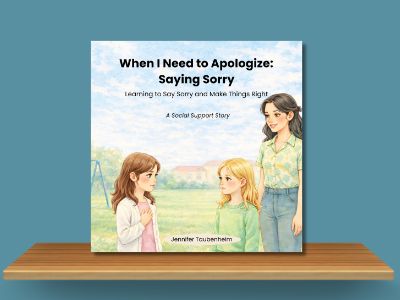
For students who need more explicit teaching in this area, my Apologizing Social Support Story goes beyond prompting children to say “sorry.” It helps students understand how their choices affect others, what a meaningful apology includes, and how both words and actions can help repair a relationship after a mistake. This makes it useful for students who know the expected words but still need support with accepting responsibility and making amends.
Students should not receive attention only when they avoid responsibility. Notice when a student tells the truth about a difficult situation, uses a tool without being prompted, returns to finish something, or attempts to repair a mistake. Be specific about the skill you observed.
You might say, “You told me what happened even though you knew there would be an outcome. That was taking responsibility,” or “You noticed you were behind and used your planner to make a new plan.” This is not praise for perfection. It helps students recognize the actions that make them more reliable and independent.
If a student currently requires frequent prompting, decide how responsibility will gradually shift. You might begin with an adult verbal reminder and a visual checklist, then move to pointing toward the checklist, followed by a scheduled self-check. The final step may be the student independently choosing and using the tool.
Monitor whether the change is actually increasing independence. If performance drops sharply, the support may have been removed before the student had learned the next step. Fading support should be based on what the student can manage, not an arbitrary belief about what the student should be able to do.
Activities are most useful when they reinforce responsibility skills that have already been explained and modeled. The goal is not for students to complete a cute worksheet about responsibility. It is for them to practice recognizing choices, using tools, owning their part, and planning repair before they have to do those things in a stressful moment.
Purpose: This activity teaches students to identify their own responsibility without taking all the blame or avoiding responsibility because someone else also made a poor choice.
Materials and preparation: Prepare several brief classroom or peer-conflict scenarios. Each scenario should include actions by at least two people. Create three headings: “My Part,” “The Other Person’s Part,” and “What We Can Do Next.”
Procedure: Read one scenario aloud and ask students to separate the actions. For example: “Maya borrowed a marker without asking. Jordan grabbed it from her hand and broke it.” Students identify what Maya is responsible for, what Jordan is responsible for, and what each person could do next. Repeat with scenarios involving group work, recess, shared materials, unfinished responsibilities, and misunderstandings.
Discussion and debrief: Ask why people sometimes focus on the other person’s behavior first. Discuss how identifying another person’s poor choice does not erase our own part. Reinforce that responsibility can be divided accurately without assigning the entire problem to one student.
Tips and variations: Begin with fictional situations so students are not defending their behavior while learning the process. Students who need more support can sort picture cards or choose between two possible responses. Older students can rewrite a blame-focused response as a statement that acknowledges both the context and personal responsibility.
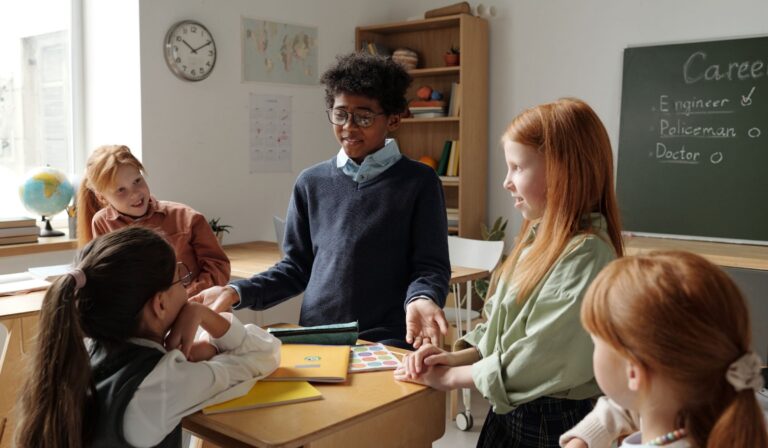
Purpose: This activity helps students connect present choices to later outcomes and identify supports that make a successful choice more manageable.
Materials and preparation: Create a simple pathway with four spaces: “What do I want?” “What do I need to do?” “What could help me?” and “What is likely to happen?” Prepare familiar examples such as completing a reading goal, bringing materials, participating in a preferred activity, or being ready for a group project.
Procedure: Model one pathway with the class. If the goal is attending a reading celebration, students might identify the number of pages required, how many pages to read each week, a time and place to read, and a tracker or reminder that could help. Then compare two realistic choices and follow each one to its likely outcome.
Discussion and debrief: Ask students where the outcome began. Help them see that a later result is often connected to several earlier choices rather than one final decision. Discuss how using a tool can change the pathway without removing the student’s responsibility.
Tips and variations: Avoid using examples in which the student lacks a genuine choice or the required skill. The activity should teach prediction and planning, not suggest that every difficult outcome is the child’s fault. Students can complete pathways individually for personal goals once they understand the process.
Purpose: This activity teaches students to recognize a problem, select an appropriate support, and try a strategy before asking an adult to take over.
Materials and preparation: Gather tools students already use, such as checklists, visual schedules, timers, graphic organizers, reference charts, sample problems, sentence starters, highlighters, or assignment trackers. Prepare brief task cards describing common classroom problems.
Procedure: Present a problem such as, “You do not remember how to subtract decimals,” “You keep forgetting what to take home,” or “You have several ideas but do not know how to organize your paragraph.” Students select one or more tools and explain how each tool could help. Model how to ask for help after using a tool: “I checked the example and tried the first step, but I do not understand why the decimal moves here.”
Discussion and debrief: Ask students how using a tool differs from waiting for someone else to solve the problem. Discuss situations in which asking for help is the responsible choice and situations in which a student can try an available strategy first.
Tips and variations: Personalize the tool collection because different students need different supports. Some students may need a small visual menu on their desks. Continue providing help when needed; the goal is purposeful help-seeking, not withholding assistance.
Purpose: Literature allows students to examine blame, excuses, and responsibility through a character before discussing their own choices. This distance can reduce defensiveness and make complicated ideas easier to explore.
Materials and preparation: Use But It’s Not My Fault! by Julia Cook. Before reading, choose several stopping points where the character blames someone else, avoids ownership, or begins to recognize what is within his control.
Procedure: Ask students to listen for the explanations the character gives when something goes wrong. At each stopping point, discuss what happened, what was outside the character’s control, what was within his control, and what he could do next. After reading, return to several situations and have students replace an excuse with a responsible response that is honest about both the problem and the character’s part.
Discussion and debrief: Ask, “Why might blaming someone else feel helpful at first?” and “What becomes possible when the character recognizes his own choices?” Connect the story to the three parts of responsibility: following through, owning choices, and repairing problems.
Tips and variations: Do not ask students to disclose personal mistakes in front of the group. They can respond through fictional scenarios, partner discussion, or private writing. Additional books that address follow-through, ownership, and responsibility are included in Responsibility Picture Books: 9 Read Alouds About Responsibility for Kids.
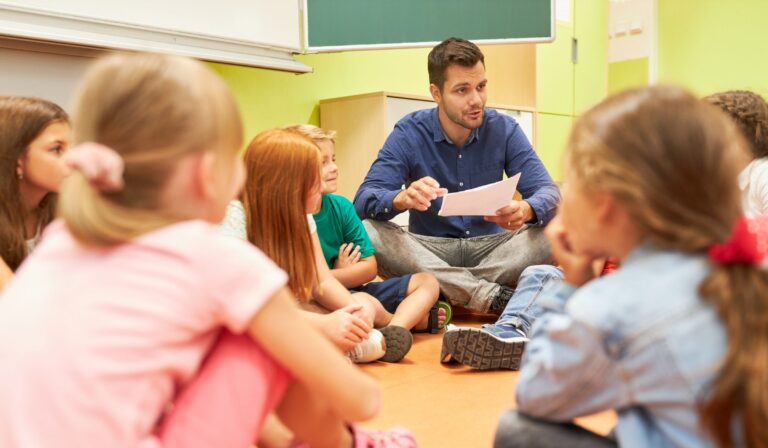
Purpose: This activity teaches students that responsibility continues after a mistake has been acknowledged. Students practice selecting a repair that matches the effect of the action.
Materials and preparation: Prepare scenarios involving hurt feelings, damaged materials, unfinished group work, a mess left for someone else, inaccurate information, or an unsafe choice. Provide a repair-planning page with four questions: What happened? What was my part? Who or what was affected? What can I do now?
Procedure: Work through one example together. If a student knocked over a classmate’s project while running in the classroom, students might suggest checking on the classmate, helping rebuild the project, replacing materials, and identifying a safer choice for next time. Discuss which responses address the actual harm and which responses merely end the adult conversation.
Discussion and debrief: Ask whether every problem can be completely fixed. Explain that repair does not guarantee that another person will immediately feel better or trust will instantly return. The responsible action is to acknowledge the impact and do what is reasonably possible to improve the situation.
Tips and variations: Offer a visual menu of repair options for students who struggle to generate ideas. Avoid requiring physical affection, immediate forgiveness, or a public apology. The repair should be safe, related to the problem, and respectful of everyone involved.
Some students need more structure to work through this process, especially when they are still learning how to separate what happened, what they were responsible for, and what they can do next. My behavior reflection think sheets provide targeted prompts for behaviors such as blaming others, refusing to accept responsibility, throwing objects, peer conflict, and asking for help before trying. They are designed to turn the incident into an opportunity to reflect, solve the problem, and practice a more responsible response.
When a student immediately denies, argues, or blames someone else, continuing to press for an admission often creates a power struggle. Begin with the observable facts rather than a judgment: “The pad left your hands and hit another student,” or “The assignment is not finished, and the checklist has not been used.” This gives the student less to debate and keeps the conversation focused.
If the student is highly emotional, address safety and regulation before expecting thoughtful reflection. Responsibility requires the student to connect actions, outcomes, and next steps. A student who is overwhelmed may not be ready to do that accurately in the moment.
When the student is able to participate, ask for the part that belongs to the student. “What part of this was your responsibility?” is often more productive than “Was this your fault?” If another person also made a poor choice, acknowledge that it will be addressed separately. The student does not have to accept responsibility for everything in order to own something.
Separate the explanation from the responsibility. A student may have been angry, confused, embarrassed, distracted, or treated unfairly. Those facts can be true while the student still has responsibility for a specific action. Try language such as, “That helps me understand why this was difficult. Now we need to decide what you can do about your part.”
Finally, move toward action. Ask what tool, follow-through step, or repair is needed now. The purpose of the conversation is not to make the student feel bad enough to avoid the behavior. It is to help the student make a more responsible choice while there is still something constructive to do.
Teaching responsibility is not about creating students who never need reminders, make mistakes, or require support. It is about helping students recognize what belongs to them and become active participants in solving their own problems. A responsible student may use an alarm, a checklist, a graphic organizer, a visual schedule, or another person’s guidance. The important change is that the student learns to use those supports intentionally rather than waiting for an adult to manage every step.
Students also need to learn that acknowledging a mistake does not end the story. They can tell the truth about their part, consider how someone else was affected, and choose an action that repairs what can be repaired. That combination of ownership and problem solving is much more valuable than a reluctant apology or a forced admission.
The classroom gives students daily opportunities to practice following through, making decisions, responding to outcomes, and rebuilding trust. When we teach those skills clearly and hold students accountable without shame, we are doing more than improving classroom behavior. We are helping them become people who can manage commitments, advocate for the support they need, learn from mistakes, and take constructive action throughout their lives.


Support your students’ individual needs with our exclusive Classroom Concerns Checklist. Identify patterns in areas like cognitive skills, communication, social/emotional behavior, and more.
Sign up now to receive instant access and valuable insights on addressing classroom concerns.

Support your students’ individual needs with our exclusive Classroom Concerns Checklist.
Identify key concerns in areas like:
…and more to help drive collaboration and problem-solving.
Sign up now to receive instant access and valuable insights on addressing classroom concerns.