



Description
Students may know that lying is wrong and still struggle to admit a mistake when they feel afraid, embarrassed, or worried about disappointing someone. Correcting the false statement matters, but students also need practice telling the truth, accepting responsibility, and repairing what happened. These Teach Your Dragon to Stop Lying Activities provide a structured way to teach those skills without relying on shame. See Preview
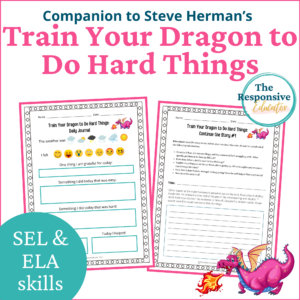
This companion to *Teach Your Dragon to Stop Lying* by Steve Herman combines an interactive read-aloud with honesty worksheets, scenarios, reflection, and literacy instruction. Students examine why someone might lie, how that choice affects other people, and how an honest response can begin solving the problem. The emphasis is accountability with instruction: understanding the reason for dishonesty helps adults teach a better response while maintaining appropriate expectations.
Teach What Honesty Looks Like After a Mistake
Honesty involves more than answering a question with a true statement. It can also mean giving complete information, correcting misinformation, admitting a mistake, or avoiding blame. The activities help students compare honest and dishonest responses and explain how those choices affect trust and problem-solving.
Students consider what a truthful explanation might sound like and what steps are needed afterward. Telling the truth may not remove every consequence, but it allows the original problem to be addressed. This distinction helps teachers reinforce honesty while continuing to support responsibility and repair.
Explore Motives and Outcomes Through Scenarios
The lying worksheets and honesty scenarios ask students to look beyond whether a statement is true or false. They consider what happened beforehand, what the person hoped to avoid or gain, who was affected, and whether the lie solved the original problem. They also examine what additional problems developed and what could happen next.
Discussing a scenario gives students an opportunity to think through these questions before talking about their own experiences. Teachers can use the activities for whole-group instruction, small-group discussion, individual reflection, or behavior reteaching.
Help Students Manage the Discomfort of Telling the Truth
Fear, embarrassment, and anticipated disapproval can make honesty difficult in the moment. Emotional-awareness and regulation activities help students recognize those feelings, pause before making an excuse, and consider a more responsible response. Students practice ideas such as using calm words, asking for help, and explaining what actually happened.
Understanding the feeling underneath a lie does not excuse the dishonesty. It helps identify the skill that needs instruction so the student has a more useful way to respond next time. Teachers can select activities based on the student’s needs rather than treating every instance of lying as the same problem.
Practice Repairing Trust
Admitting the truth after a lie is an important step, but trust may take time to rebuild. Reflection and apology activities help students consider how to correct false information, acknowledge another person’s experience, apologize without adding excuses, and repair harm when possible. Students also identify what they can do differently in the future.
Choices and consequences activities connect decisions with their effects on relationships and trust. The aim is to help students understand consequences as outcomes connected to actions and to practice following through with more honest behavior over time.
Combine Honesty Instruction With Reading and Writing
The interactive read-aloud lesson includes before-, during-, and after-reading questions and structured prompts for examining motives and outcomes. Students connect the story to real-life honesty while practicing predictions, summarizing, character analysis, compare and contrast, cause and effect, text-to-self connections, and written responses.
The 100-page resource includes more than 40 differentiated activities. Select the pages that fit your students’ needs and use them across several lessons, small groups, centers, or individual instruction. The range of options allows teachers to revisit a skill without assigning the same task each time.
What’s Included in Teach Your Dragon to Stop Lying Activities: Honesty & Taking Responsibility Worksheets
- Interactive read-aloud lesson plan and discussion prompts
- More than 40 differentiated activities within a 100-page resource
- Honesty worksheets and lying worksheets
- Honesty-versus-dishonesty scenarios and outcomes
- Positive behavior choices and choices and consequences activities
- Emotional-awareness and regulation activities
- Reflection pages and apology letter templates
- ELA comprehension and writing activities
- Family connection notes
- Real photographs and varied response options
Ways to Use This Companion
Use selected activities during whole-class read-alouds, small-group SEL instruction, counseling or behavior-support groups, centers, independent work, or individual reteaching. Teachers can focus on truthfulness, taking responsibility, managing the discomfort of admitting mistakes, or rebuilding trust. Choose the activity type and response format that fit your students’ learning needs.
Book and Format Information
This downloadable resource is a teaching companion to *Teach Your Dragon to Stop Lying* by Steve Herman. The picture book is required and is not included. The purchase provides lesson plans and follow-up activities rather than the story itself.
Use the companion to teach students how to tell the truth, address mistakes, and rebuild trust through their actions in school and beyond.
Reviews
There are no reviews yet.