
Description
Student Engagement Checklist & Classroom Engagement Strategies with IEP Goals
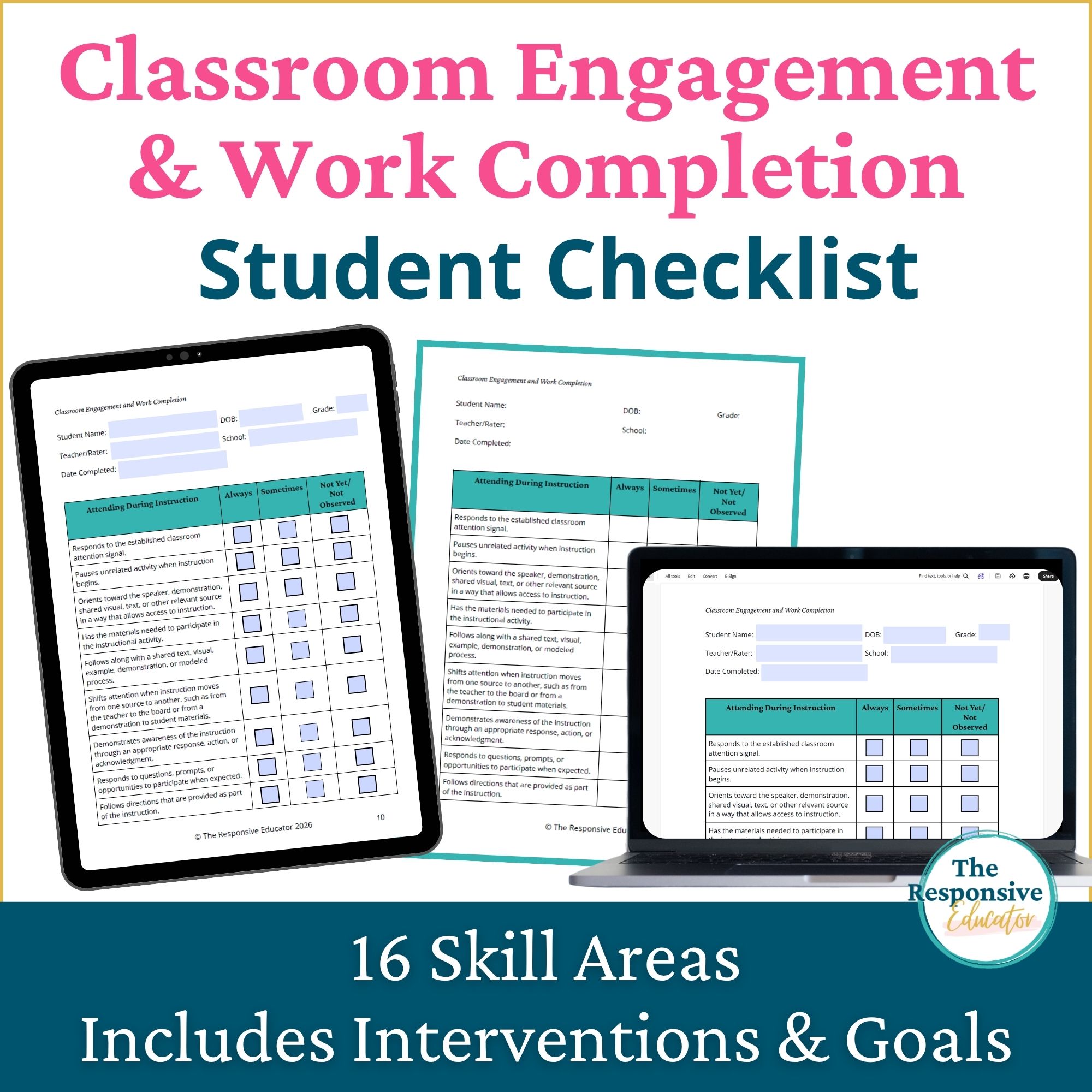
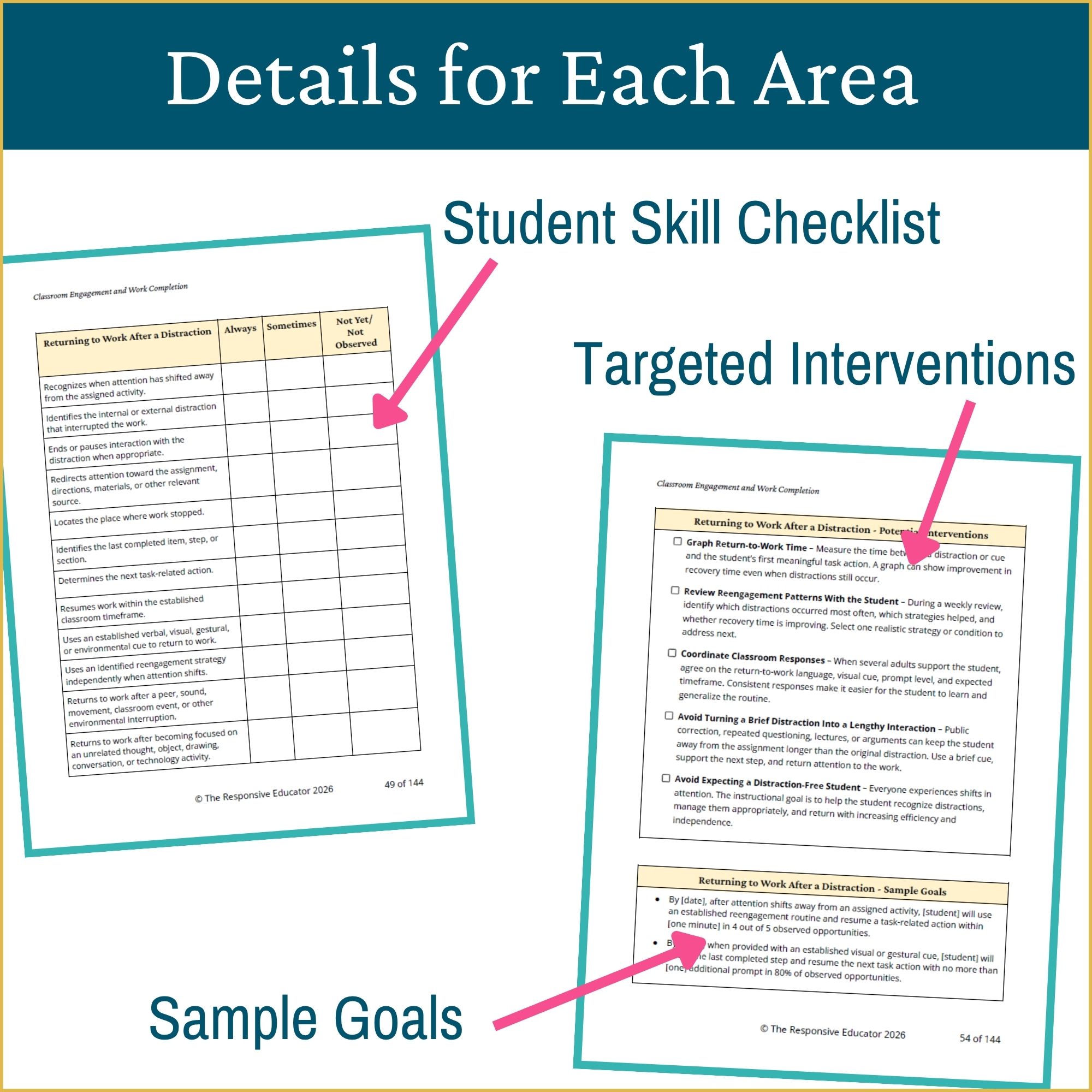
This student engagement checklist helps educators identify why a student is struggling to begin, remain engaged with, or complete classroom work. It includes 16 detailed skill checklists, 489 targeted classroom engagement strategies, and 197 measurable sample IEP goals—all organized into one 146-page assessment and intervention-planning resource.
A student described as “unmotivated,” “off task,” or “refusing to work” may actually need support with a specific skill. The student may have difficulty attending during instruction, beginning an assignment, returning to work after a distraction, asking for help, persisting through difficulty, managing time, or checking completed work.
Those differences matter. A broad description such as “doesn’t complete work” does not tell a team what the student needs to learn or what adults should change. This resource helps you move from a general concern about engagement or work completion to a specific, teachable skill.
Move From Assessment to Targeted Support
Instead of gathering a student engagement checklist, work completion checklist, intervention ideas, and IEP goals from several unrelated sources, you can use one aligned toolkit to:
- Identify the specific skill that needs support
- Select classroom engagement strategies matched to that skill
- Choose or adapt a measurable goal
- Monitor progress and adjust support over time
The interventions and goals are organized by skill area, making it easier to connect what you observe with what you teach next.
What’s Included
This 146-page resource includes:
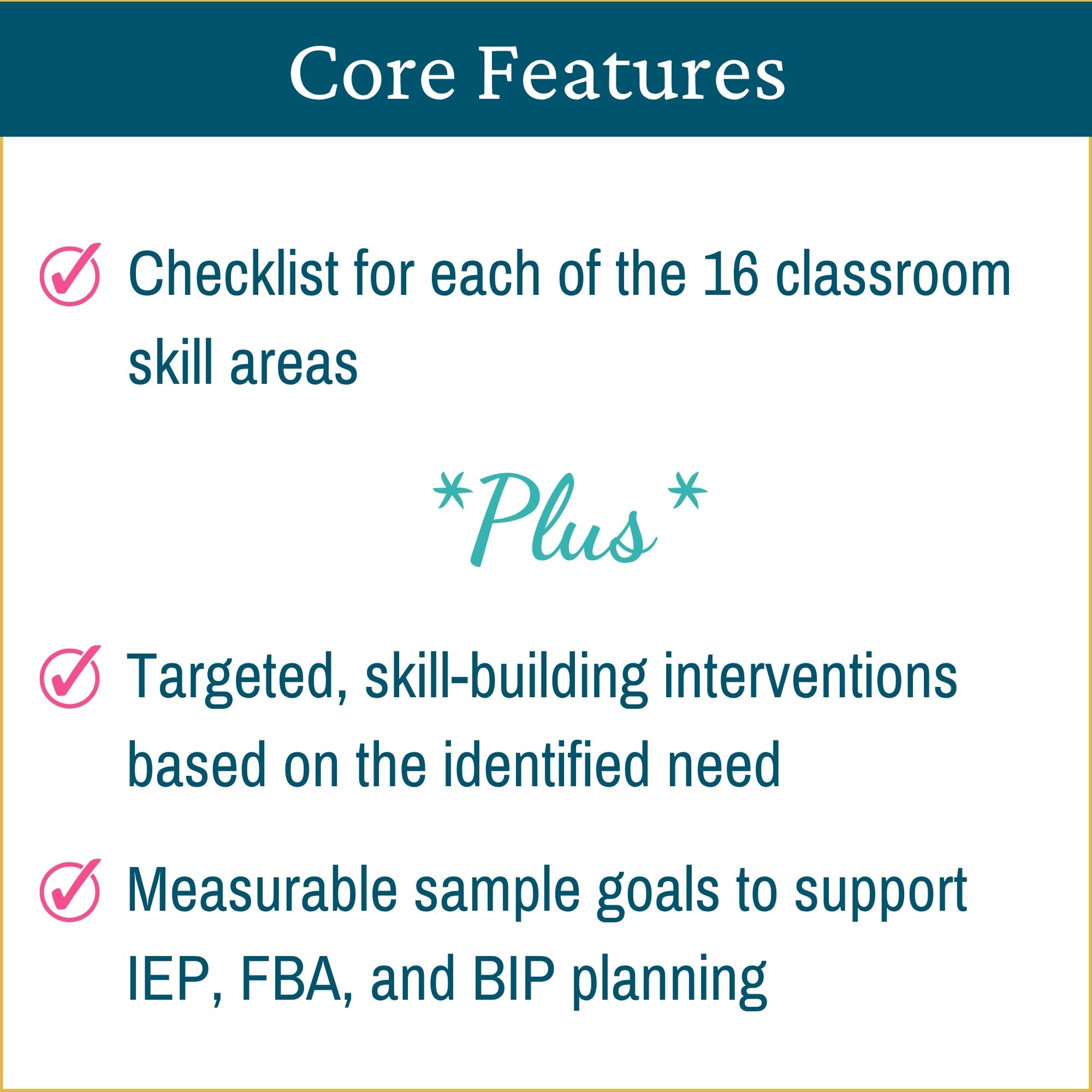
- 16 detailed student skill checklists
- 489 targeted intervention ideas
- 197 measurable sample goals
- An Always, Sometimes, or Not Yet/Not Observed rating scale
- Space for notes and observations
- Printable checklists
- Fillable digital checklists with clickable rating boxes
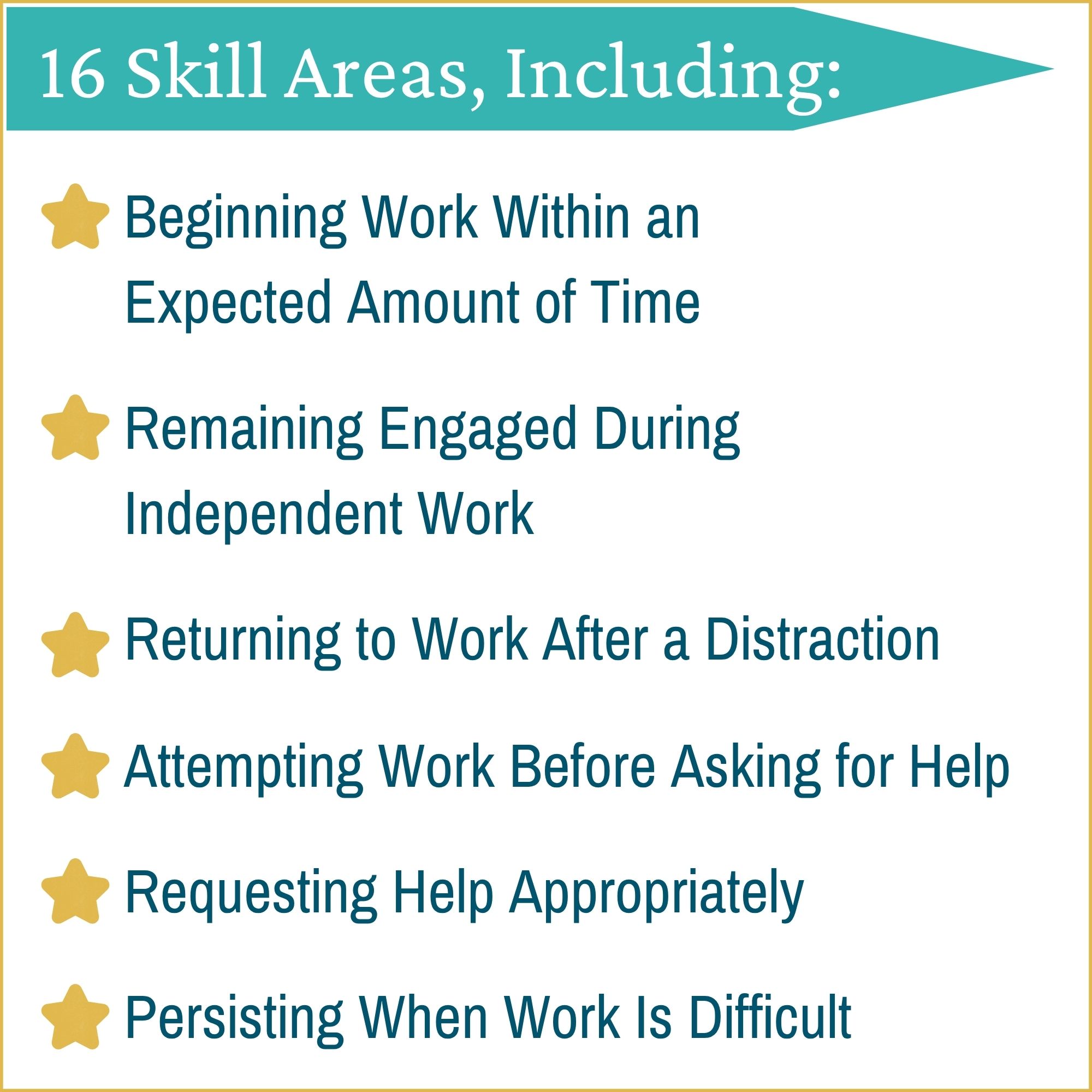
16 Student Engagement and Work-Completion Skill Areas
The checklists assess skills related to:
- Attending during instruction
- Participating in class discussions
- Beginning work within an expected amount of time
- Remaining engaged during independent work
- Sustaining attention
- Returning to work after a distraction
- Attempting work before asking for help
- Requesting help appropriately
- Persisting when work is difficult
- Completing expected work
- Working at an appropriate pace
- Balancing accuracy and speed
- Checking completed work
- Participating without dominating the activity
- Completing nonpreferred tasks
- Managing independent work time
Because broad concerns are separated into specific skills, individual sections can also function as a:
- Work completion checklist
- Task completion checklist
- Task initiation checklist
- On-task behavior checklist
- Independent work checklist
- Class participation checklist
Targeted Classroom Engagement Strategies
The resource includes 489 classroom engagement strategies aligned with the 16 assessed skill areas. The recommendations are specific to the identified concern rather than repeating the same general interventions across every checklist.
Strategies may include:
- Explicit skill instruction
- Clear cues for beginning work
- Task chunking
- Visual supports
- Environmental adjustments
- Planned breaks
- Modeling and guided practice
- Help-seeking instruction
- Reinforcement
- Self-monitoring
- Time-management supports
- Strategies for increasing persistence and independence
These interventions help teams move beyond repeated reminders, consequences, or assumptions about motivation. Educators can select supports based on the student’s specific needs, the classroom setting, and the likely reason the skill is difficult.
Measurable Sample IEP Goals
The resource includes 197 measurable sample goals connected to the individual checklist skills. Goal areas include:
- Student engagement
- Work and task completion
- Task initiation
- On-task behavior
- Attention
- Persistence
- Help-seeking
- Work pace and accuracy
- Classroom participation
- Independent work habits
The sample IEP goals provide a practical starting point and can be adjusted to reflect the student’s baseline performance, setting, level of support, and expected criteria. They may also support BIP, MTSS, and classroom intervention planning.
Use This Resource To:
- Identify the skill connected to an engagement or work-completion concern
- Recognize student strengths and areas needing instruction
- Distinguish among difficulties with attention, initiation, persistence, pacing, help-seeking, and completion
- Establish baseline information
- Select interventions matched to the identified need
- Develop measurable student and IEP goals
- Plan instruction for more productive and independent work habits
- Monitor progress across review periods
- Support IEP, BIP, FBA, and MTSS discussions
- Improve communication among teachers, families, and support teams
Printable and Fillable Options
Print the student engagement checklists to complete them by hand or use the fillable PDF checkboxes to record ratings digitally. You can save a dated copy for each student and compare results across review periods to document progress and determine whether supports should be continued, adjusted, or replaced.
Ideal For:
- Special education teachers
- General education teachers
- School psychologists
- Behavior specialists
- Interventionists
- Case managers
- MTSS teams
- IEP and student support teams
Please Note
This student engagement checklist is intended to support educational assessment, intervention planning, and progress monitoring. It is not a standardized or diagnostic assessment and does not replace an individualized evaluation or functional behavior assessment.
Reviews
There are no reviews yet.