


Description
Teachers are often told to collect behavior data without being shown how to choose the kind of data that will answer their question. A tally can tell you how many times a behavior occurred, but it cannot tell you how long it lasted or account for observation periods of different lengths. This free Behavior Data Collection Quick Guide helps educators make those decisions before choosing a form.
The 19-page PDF explains common behavior data collection methods in clear, teacher-friendly language. Classroom examples show how to define what you will record, match the measurement method to the question, and turn observations into information that can guide support. The aim is a system that provides useful data and can be used consistently during a real school day.
Start With the Question You Need to Answer
The name of a behavior does not automatically determine the measurement method. Calling out might be counted during a lesson, measured as a rate when lesson lengths differ, or recorded across intervals when it happens too often to count accurately. What matters is what the team needs to know and what staff can reliably record.
This guide helps teachers consider questions such as how many times behavior occurred, how long it lasted, how often it happened per unit of time, and whether it occurred during part or all of an interval. Choosing the question first makes it easier to select a meaningful method and avoid collecting numbers that do not support the decision ahead.
Understand Frequency, Rate, Duration, and Interval Recording
Frequency recording counts how many times a behavior occurs. Rate recording relates that count to observation time, which helps when observations differ in length. Duration recording measures how long a behavior lasts, making it useful when a small number of incidents may still take up a substantial amount of time.
Interval recording estimates behavior across an observation. Partial interval recording asks whether behavior occurred at any point in an interval, while whole interval recording asks whether it continued throughout the interval. The guide also introduces latency, momentary time sampling, and permanent product data to help teachers recognize other measurement options.
Match the Method to Classroom Behavior
Examples address calling out, leaving the area, work refusal, on-task behavior, and emotional escalation. The same behavior can be measured in different ways: a teacher might count departures from an area or record how long a student remains away. The guide helps connect that choice to the information needed for baseline or progress-monitoring decisions.
On-task examples also consider teacher tracking, peer comparison, and student self-monitoring. These approaches serve different purposes, and the guide helps teachers think about which source of information fits their classroom question.
Use Patterns to Guide the Next Decision
A data sheet captures individual observations, while a graph can make patterns over time easier to see. The guide explains how visual data can support comparisons between baseline and intervention, monitoring of challenging behavior and replacement skills, and communication during team meetings.
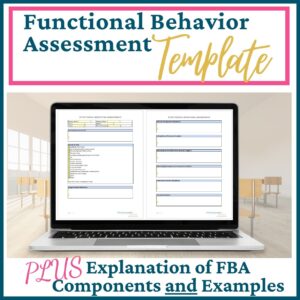
It also introduces when ABC data may be more useful and how classroom teachers can contribute information during an FBA or team process. Measurement describes behavior; understanding its function requires broader assessment information. Common-mistake reminders and next-step questions help educators consider when they need a different tool or additional team support.
What’s Included in Behavior Data Collection Quick Guide: Free Guide to Frequency, Duration, Rate & Interval Recording
- Purposes of behavior data collection and baseline measurement
- Observable, measurable behavior definitions
- Frequency, rate, duration, partial interval, and whole interval recording
- Introductions to latency, momentary time sampling, and permanent product data
- Classroom examples for choosing measurement methods
- On-task tracking, peer comparison, and self-monitoring considerations
- Using behavior graphs to review patterns and communicate progress
- ABC data, teacher contributions to an FBA, and common collection mistakes
- Choosing additional data collection and graphing tools when needed
What You Receive
One free, downloadable 19-page PDF guide with explanations, classroom examples, behavior graphing guidance, common-mistake reminders, and next-step support. It is written for teachers, interventionists, behavior specialists, school psychologists, counselors, paraprofessionals, and other educators collecting classroom behavior data.
Important Format and Scope Information
This is an educational quick-reference guide. It does not include editable behavior data sheets, automatic graphs, or individualized behavior plans. Links to optional data collection and graphing resources are included for educators who need those tools. Use the guide alongside your district’s procedures and support from qualified team members.
Download the guide to choose a practical method and collect enough of the right information to guide the next instructional or intervention decision.
Reviews
There are no reviews yet.