Description
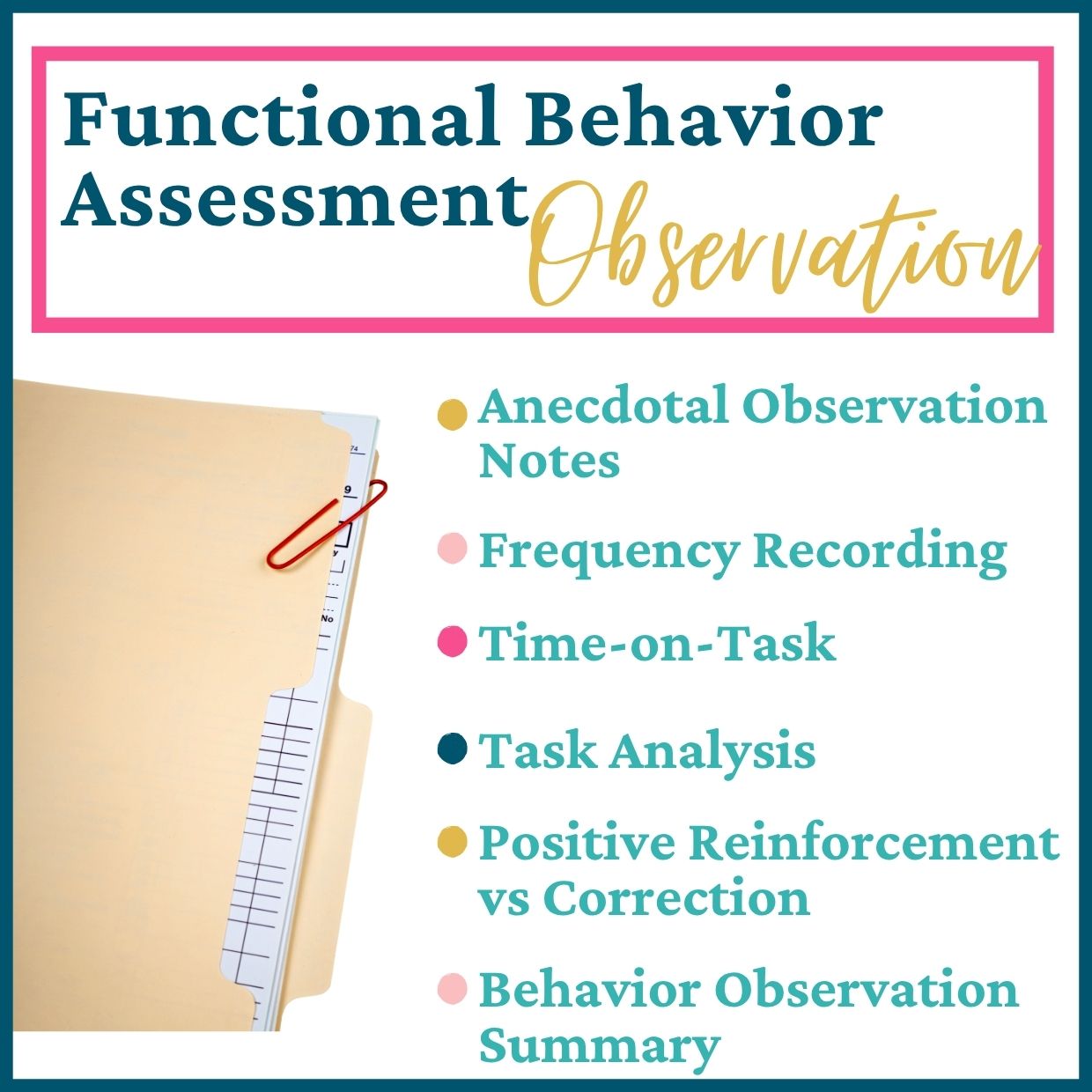
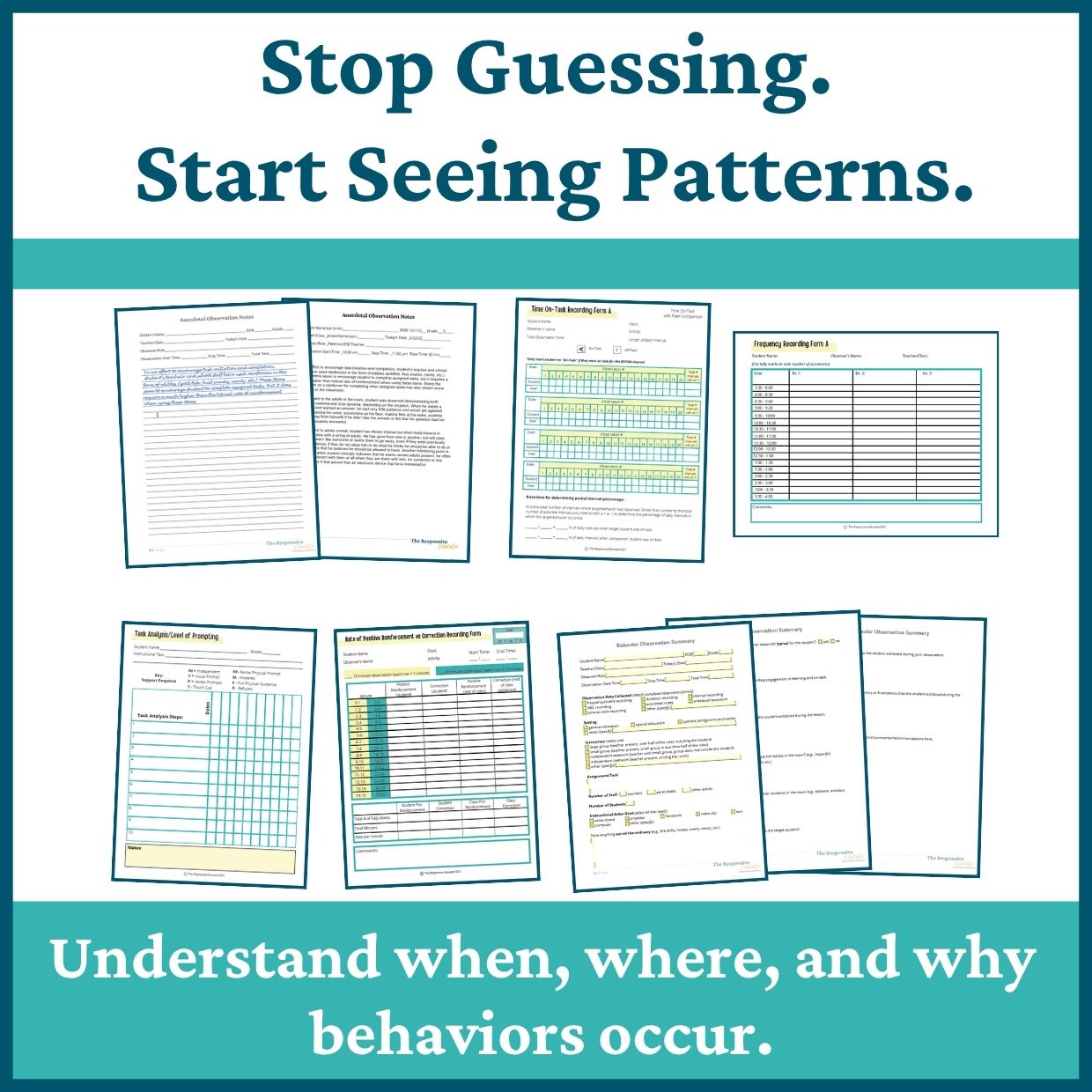
Behavior observation forms help you document what a student does, when it happens, and what support they may need. These classroom observation forms give you several ways to collect information, including anecdotal notes, frequency recording, time-on-task observations, and task analysis. Use them for classroom problem-solving, Functional Behavior Assessments (FBAs), and organizing information for student support meetings.
When observations are scattered across notes or based mainly on memory, it can be difficult to explain a concern or recognize a pattern. This resource provides a consistent place to record what you observe, examine the classroom context, and summarize findings for your team.
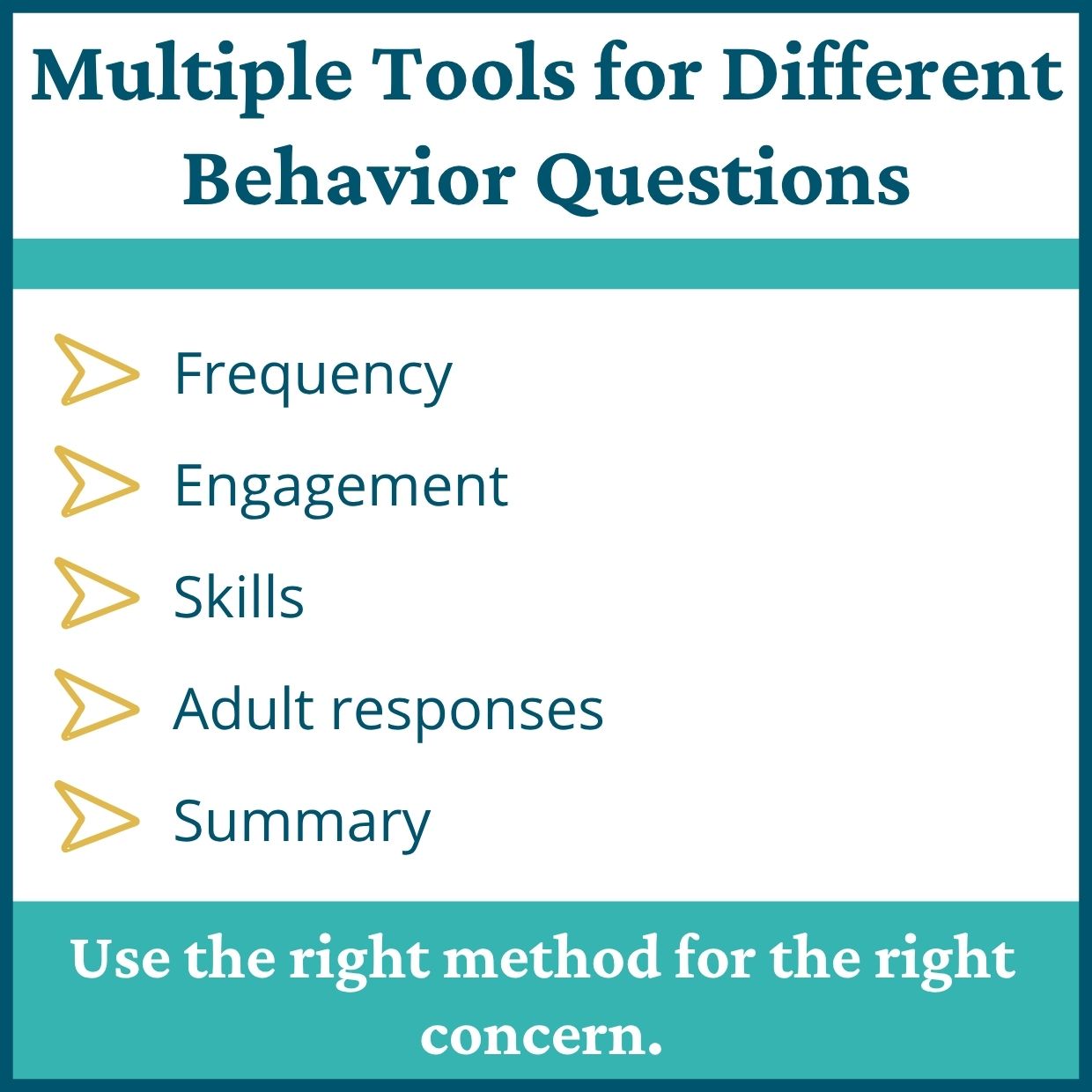
Choose Behavior Observation Forms That Match Your Questions
Different questions require different types of data. Counting how often a student calls out tells you something different from recording time on task or documenting the prompts needed to complete a routine.
These behavior data collection sheets let you select the method that fits what you need to understand. You can gather descriptive information, record measurable behavior, and examine adult responses without creating a separate form for each purpose.
What’s Included
- Anecdotal observation forms in lined and unlined formats
- Frequency and event recording data sheet
- Time-on-task recording form with peer comparison
- Task analysis and level-of-prompting form
- Positive reinforcement versus correction recording form
- Behavior observation summary with checklist-style sections
- Directions for using the recording methods and calculating relevant rates or percentages
- Digital and printable formats
Anecdotal Observation Forms
Use an anecdotal observation form to describe what happens during an observation, including the activity, setting, student behavior, and responses from adults or peers.
The lined and unlined options provide space to record:
- What happened before the behavior
- What the student said or did
- How other people responded
- Details about the activity and classroom context
- Observation start and stop times
These notes help preserve details that a tally or percentage alone may miss. Record observable actions and words so your team can distinguish what happened from possible explanations for the behavior.
Frequency and Event Recording Data Sheet
The event recording data sheet allows you to track up to three behaviors during an observation. Tally each occurrence and use the observation length to calculate a rate per minute.
This method is useful for behaviors with a clear beginning and end that can be counted consistently, such as calling out, leaving a seat, or hitting.
Rate information can help you compare observations of different lengths. Define each behavior before collecting data so the adults using the form know what counts as an occurrence.
Time on Task Observation Form With Peer Comparison
The time on task observation form uses partial-interval recording to document on-task or off-task behavior during an observation. It also includes peer comparison, giving your team additional context when reviewing student engagement.
Use this form to:
- Record behavior across observation intervals
- Compare the target student’s behavior with a peer
- Examine participation during different activities
- Calculate the percentage of intervals in which the recorded behavior occurred
The percentage describes the intervals in which behavior was observed, rather than the exact percentage of time spent on or off task. Peer comparison adds useful context, but should be considered alongside the task demands, classroom conditions, and each student’s support needs.
Task Analysis and Level of Prompting
The task analysis data sheet helps you break a skill or routine into up to ten steps and record the support needed at each step.
Document whether the student completes a step independently or needs support such as a verbal prompt, a model, or physical guidance.
Use this form for:
- Classroom and functional routines
- Adaptive skills
- Skills with several steps
- Monitoring independence
- Documenting prompting and support needs
Recording support at each step helps your team identify what the student can already do and where instruction or assistance is still needed.
Positive Reinforcement Versus Correction
Student behavior is only part of the picture. Adult responses can also affect participation, relationships, and what happens next.
This form helps you record positive reinforcement and correction for both the target student and the class. Compare the patterns to consider how feedback and attention are distributed during instruction.
Use the information to guide conversations about classroom supports, adult interactions, and intervention implementation. It provides another piece of context when a behavior plan is not producing the expected progress.
Behavior Observation Checklist and Summary
After collecting data, use the checklist-style behavior observation summary to organize your findings.
The summary includes sections for:
- Types of data collected
- Setting and instruction type
- Academic and social behaviors
- Student strengths and behavior concerns
- Additional notes and recommendations
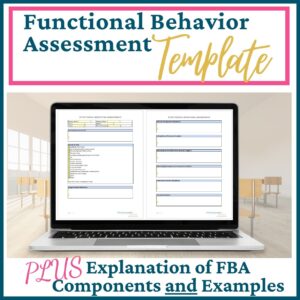
This behavior observation checklist helps bring the information together when preparing the direct observation section of an FBA or reviewing findings during an IEP or MTSS meeting.
Classroom Observation Forms for FBA and Student Support Planning
Use these classroom observation forms when you need to understand a concern, examine behavior across activities, or review progress after introducing support.
They can support:
- Classroom problem-solving
- FBA direct observations
- MTSS and RTI meetings
- IEP present levels and behavior planning
- Behavior intervention planning
- Progress monitoring
- Team discussions about student support needs
The forms can be used individually or together. Select the tools that answer your observation questions rather than completing every form during every session.
Turn Student Behavior Documentation Into Useful Information
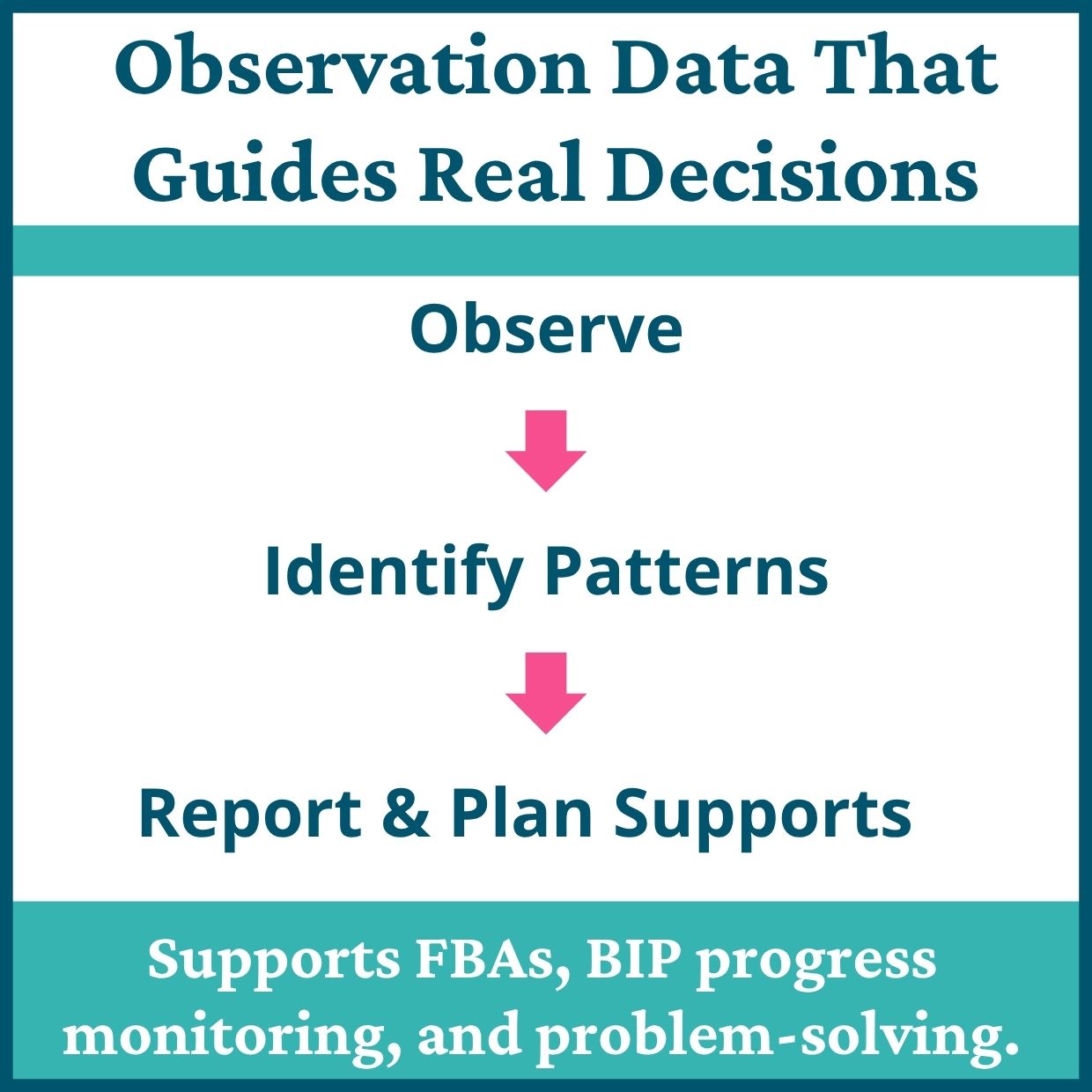
A completed form is most useful when it helps your team decide what to examine or do next. Review observations across sessions and settings to look for patterns in behavior, task demands, prompting, and adult responses.
These FBA observation forms support direct data collection, but they do not establish the function of behavior on their own. Consider the findings alongside interviews, records, ABC data, and other relevant assessment information.
The goal is to make student behavior documentation clear enough to guide instruction and support, while recognizing the student’s strengths and the conditions in which they are successful.
File Format and License
- Digital download with printable and digital forms
- No physical product will be shipped
- Licensed for use by one educator
- Redistribution or sharing of the files is not permitted


Reviews
There are no reviews yet.