

Description
These self monitoring behavior reflection sheets help students examine work habits that interfere with completing assignments accurately, independently, and on time. The set includes seven targeted behavior think sheets addressing concerns such as giving up, forgetting materials, wasting work time, ignoring feedback, and rushing without checking completed work.
A student may understand the assignment and still struggle to monitor what they are doing. Simply telling the student to “try harder,” “stay on task,” or “check your work” does not necessarily teach the thinking needed to follow through.
I designed these sheets to help students slow down, recognize the specific habit creating difficulty, and develop a more useful plan for the next assignment.
Targeted Reflection for Self-Monitoring and Work Habits
A general student behavior reflection sheet may ask what happened, but students often need more specific guidance to connect their choices with incomplete or inaccurate work.
Each sheet focuses on one self-monitoring concern. Students are guided to consider:
- What happened
- Why it happened
- Who was affected
- Why the behavior or choice mattered
- What they could do instead
- How they might respond in a similar situation
- What they will try the next time
- Whether they need help, a reminder, or another support
The goal is not to shame students for struggling. It is to help them identify the skill or habit they need to practice so they can become more independent.
What’s Included in the Self Monitoring Behavior Reflection Sheets
This resource includes seven targeted think sheets addressing:
- Giving up instead of asking for help
- Repeatedly forgetting materials or assignments
- Rushing through work without checking for errors
- Wasting time instead of working
- Ignoring feedback or corrections
- Choosing not to verify whether work is finished
- Not completing work on time
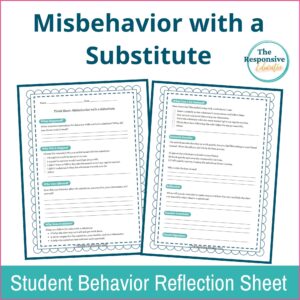
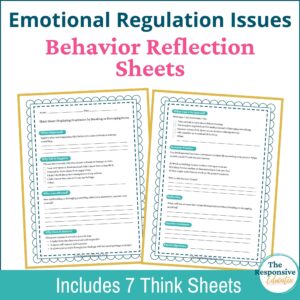
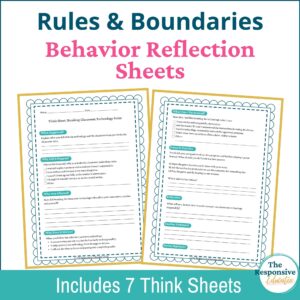
Each topic includes a two-page guided reflection.
Two-Page Behavior Think Sheet Format
The first page helps students understand the situation by examining what happened, why it happened, who was affected, and why the behavior mattered.
The second page moves from reflection to instruction. Students identify what they can do instead, respond to a related scenario, and develop a plan for handling a similar situation more successfully.
Space is also included for:
- Teacher comments
- A student reflection or plan
- An optional parent or guardian signature
This structure provides more meaningful reflection than assigning a behavior essay to copy or asking a student to promise that it will not happen again.
Skills Students Practice
These behavior reflection worksheets support skills connected to self-monitoring, executive functioning, and independent work, including:
- Recognizing when work habits are creating a problem
- Asking for help appropriately
- Responding to feedback and corrections
- Checking work for completion and accuracy
- Managing materials and assignments
- Using work time more effectively
- Persisting when work is difficult
- Taking responsibility for completing expected work
- Creating a specific plan for improvement
Students are not merely identifying that a choice was inappropriate. They are practicing how to recognize the problem and choose a more productive response.
Ways to Use These Behavior Reflection Sheets
Use the sheets during:
- Individual behavior reflection
- Work-habit conferences
- Restorative conversations
- Classroom problem-solving
- SEL or executive-functioning instruction
- Behavior intervention planning
- MTSS or student-support meetings
- Parent-teacher conferences
- Home-school communication
- IEP progress discussions
- Reentry conversations following a work-related concern
Completed sheets may also provide helpful informal documentation of recurring patterns, student explanations, and strategies that have been discussed.
Choosing the Right Level of Support
Some students may be able to complete a sheet independently. Others may need an adult to read the prompts, clarify what happened, or help turn a broad response into a practical plan.
The reflection should take place after the student is calm and able to think about the situation. These sheets are not intended to replace direct instruction, accommodations, individualized behavior support, or an assessment of why the student is struggling.
A student who repeatedly forgets assignments, for example, may need an organizational system—not another reminder to be responsible. A student who gives up may need work broken into smaller steps, instruction in asking for help, or support tolerating challenging tasks. The completed reflection can help begin that problem-solving process.
Help Students Build More Independent Work Habits
Self-monitoring develops when students learn to notice what they are doing, recognize when a strategy is not working, and make an adjustment. These self-monitoring behavior reflection sheets and think sheets for behavior give students a structured way to examine their choices, practice a more effective response, and make a specific plan for moving forward.
Need Think Sheets for Other Student Behaviors?
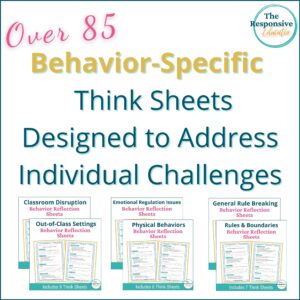
This individual think sheet is also included in the Student Behavior Reflection Sheets and Think Sheets Bundle. The complete bundle includes more than 85 behavior-specific reflection tools covering classroom disruptions, following directions, off-task behavior, emotional regulation, peer conflicts, honesty, rules and boundaries, physical behavior, transitions, self-monitoring, and behavior in out-of-class settings.
Choose the complete bundle if you need a coordinated collection of targeted think sheets for a wide range of classroom behavior concerns.
Reviews
There are no reviews yet.