


Description
Young students’ behavior can look very different depending on the activity, transition, or time of day. Without a simple daily behavior chart, those patterns can be easy to miss. A complicated point system may also be difficult for preschool and primary students who need more concrete visual feedback.
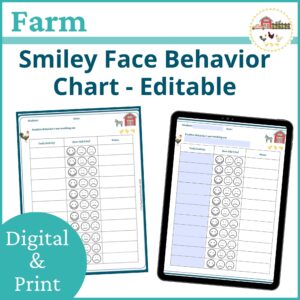
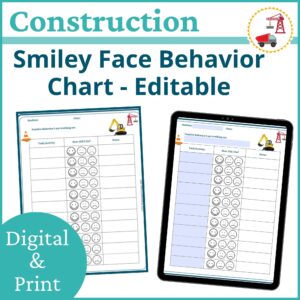
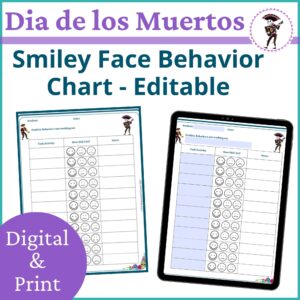
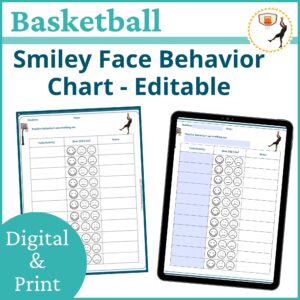
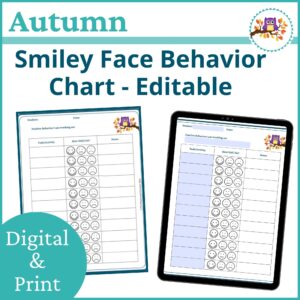
This Smiley Face Behavior Chart Bundle includes 40 editable, themed charts that give teachers a straightforward way to record behavior throughout the day. Each chart uses happy, straight, and sad face icons to help students understand the feedback they are receiving without requiring them to interpret numerical scores.
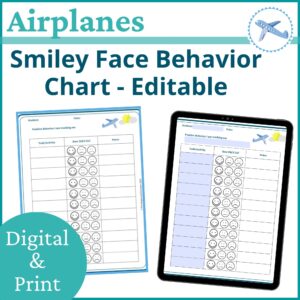
The consistent format allows you to change the theme without changing the behavior-tracking system. Choose a design connected to the student’s interests, rotate seasonal themes throughout the year, or use different charts with different students while keeping the expectations and implementation process the same.
Visual Feedback for Younger Students
Some students are not yet ready to understand what a score of one, two, or three means across several behaviors or class periods. A smiley face system makes the feedback more concrete.
For each activity or part of the day, the teacher selects:
- A happy face
- A straight face
- A sad face
Before using the chart, explain what each face means for that particular student. The faces should connect to behavior that has already been clearly taught rather than serving as a vague rating of whether the student was “good” or “bad.”
For example, the chart may help a student reflect on whether they:
- Followed directions
- Used safe hands
- Remained in the expected area
- Participated appropriately
- Began assigned work
- Used a respectful voice
- Followed the routine for that activity
Clear expectations make the feedback more meaningful and help different adults use the chart consistently.
Editable Preschool and Kindergarten Behavior Charts
Each chart includes type-in fields for entering the student’s schedule, activities, class periods, or parts of the day. This allows you to create a chart that reflects the student’s actual routine rather than trying to make a fixed schedule fit.
The charts can be used as:
- A preschool behavior sheet
- A kindergarten behavior sheet
- An editable behavior point sheet
- A daily behavior chart
- A visual check-in form
- A school-to-home communication tool
- A student reflection sheet
Please note that editable means the designated fields can be typed into. The graphics, colors, wording, and overall layout are not customizable.
How the Daily Behavior Point Sheet Works
Enter the student’s schedule before using the chart. During or after each part of the day, mark the face that best represents the student’s behavior during that period. Optional notes can provide additional context when needed.
At the end of the day, review the completed chart to identify:
- Activities during which the student was most successful
- Times of day when additional support may be needed
- Transitions that are consistently difficult
- Differences across subjects, settings, or adults
- Changes that occur after an intervention is introduced
- Skills that may need additional instruction or practice
The completed chart provides a quick visual summary without requiring lengthy behavior documentation during instruction.
Use the Charts for Student Reflection
For students who are ready, these charts can also support self-awareness and reflection. The teacher and student can complete separate copies and then compare their ratings during a brief check-in.
Use differences between the two charts as an opportunity to discuss:
- What the expected behavior looked like
- What the student noticed about their own choices
- What the teacher observed
- What helped the student succeed
- What support may be helpful next time
The purpose is not to prove that the adult’s rating is correct. Comparing the charts can help students become more accurate in recognizing and evaluating their own behavior over time.
Support Parent Communication
A completed smiley face behavior chart can be sent home to provide families with a quick snapshot of the student’s day. The visual format makes it easier to see patterns without relying on a general statement such as “had a good day” or “had a difficult day.”
Use the charts to:
- Share successful parts of the day
- Identify activities that remain challenging
- Maintain consistent expectations between school and home
- Support short conversations with families
- Document changes across days or weeks
- Recognize progress over time
Optional notes can be added when a face alone does not provide enough context.
Thirty-Five Themes for Different Students and Seasons
A chart is more likely to feel personal when the design reflects something the student enjoys. I included 35 themes so teachers can choose a design connected to a student’s interests or rotate themes throughout the school year without teaching a new system each time.
The bundle includes a mix of:
- Animal themes
- Sports themes
- Fantasy and character-inspired themes
- Seasonal and holiday themes
- Nature themes
- Transportation and construction themes
- Other kid-friendly designs
Changing the theme can renew interest while the familiar structure keeps the expectations predictable.
Flexible Ways to Use the Smiley Face Behavior Chart Bundle
These charts can support:
- Daily behavior check-ins
- Individual behavior interventions
- Preschool and kindergarten classrooms
- Primary special education classrooms
- Self-contained classrooms
- Inclusive classroom support
- School-to-home communication
- Student reflection
- Behavior pattern identification
- IEP, BIP, MTSS, or RTI support
Use the full-day schedule or focus the chart on specific activities, transitions, or times when the student needs additional feedback.
What’s Included in the Smiley Face Behavior Chart Bundle
- 35 themed smiley face behavior charts
- Happy, straight, and sad face rating options
- Editable type-in fields for schedules, activities, or class periods
- Space for optional notes
- Seasonal, everyday, sports, animal, and kid-interest themes
- Digital and printable PDF formats
- Designs created for preschool, kindergarten, and younger elementary students
Each individual chart uses the same basic structure. The themes change, but the behavior-tracking process remains consistent.
Important Use Information
These charts are designed to provide simple feedback and help identify patterns. They work best when:
- Expected behaviors are clearly defined and taught
- The student understands what each face represents
- Adults rate behavior consistently
- Feedback is provided calmly
- Successful behavior is acknowledged
- Difficult periods lead to problem-solving and additional instruction
- The chart is reviewed regularly to determine whether the support is helping
A sad or straight face should provide information, not simply function as a punishment. When a pattern appears, consider what skill the student may need to learn and what adults can change about the instruction, expectations, environment, prompting, or reinforcement.
This Smiley Face Behavior Chart Bundle provides a simple, visual way to track behavior, identify patterns, communicate with families, and help younger students begin developing greater awareness of their choices. Choose a theme, enter the student’s schedule, and use the chart in the way that best fits the student and classroom.
Reviews
There are no reviews yet.