Description
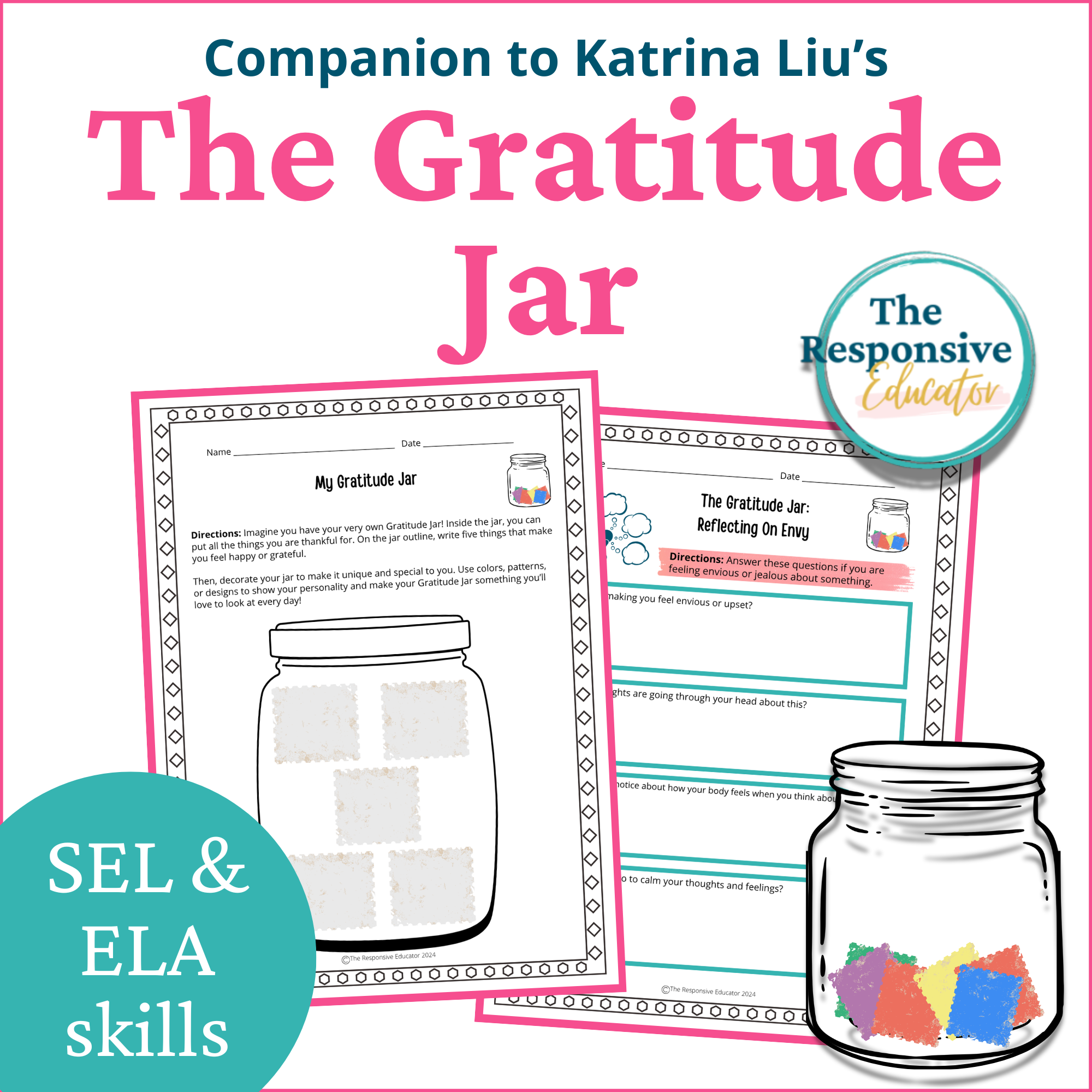
The Gratitude Jar read aloud book activities help students move beyond comparison, jealousy, and repeated “it’s not fair” thinking as they learn to recognize gratitude, consider another perspective, and make thoughtful behavior choices. This 105-page SEL and ELA companion to The Gratitude Jar by Katrina Liu includes an interactive read-aloud lesson plan and more than 40 differentiated activities.
Students are not simply told to “be grateful.” They examine how comparison can affect their thoughts, feelings, behavior, and relationships. Through guided discussion, reflection, gratitude practice, and literacy activities, students learn that gratitude does not require them to ignore disappointment. They can acknowledge a difficult feeling while also developing a more balanced perspective.
Help Students Move Beyond Comparison and “It’s Not Fair”
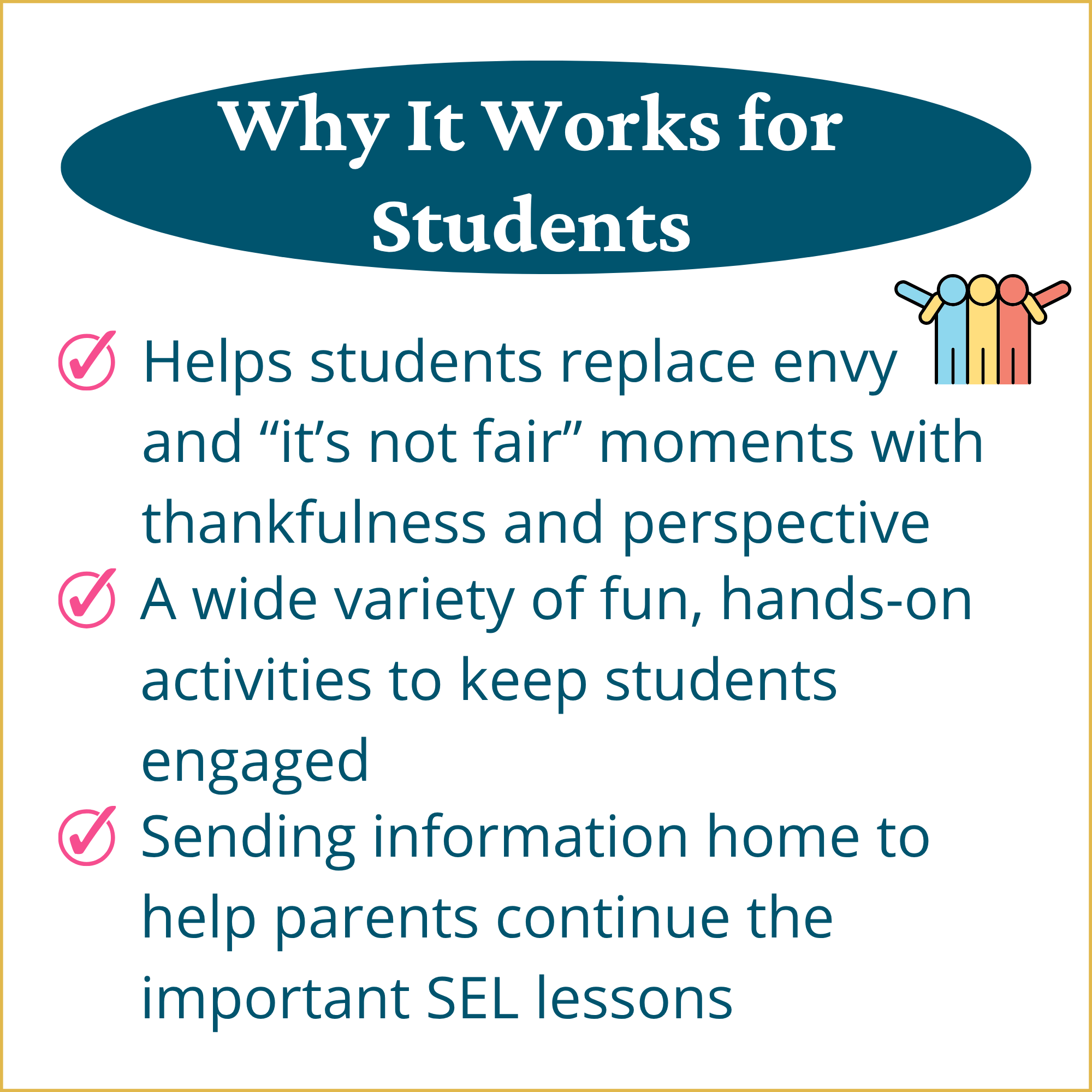
Students may understand the idea of gratitude when they are calm but struggle to use that perspective when someone else receives something they wanted. Comparison can appear as complaining, jealousy, resentment, unkind comments, refusal, or repeated statements that a situation is unfair.
Telling a student to appreciate what they have identifies the expectation, but it does not necessarily teach the thinking skills underneath it. This companion uses Mina’s experiences in The Gratitude Jar to help students recognize comparison, consider another point of view, and choose a response that supports both their feelings and their relationships.
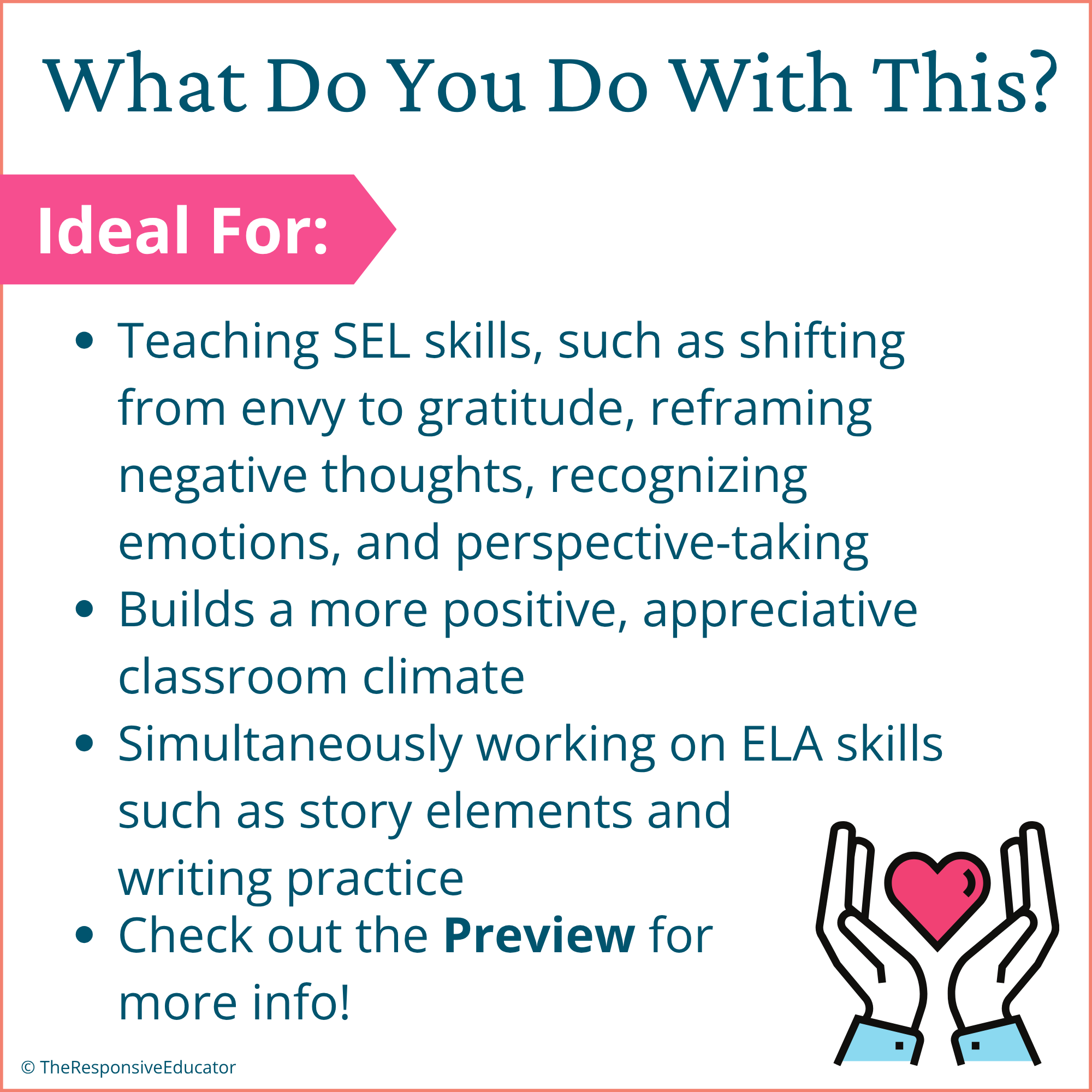
Students practice:
- Recognizing comparison, jealousy, disappointment, and envy
- Identifying positive parts of their lives that may be easy to overlook
- Considering more than one perspective
- Separating an uncomfortable feeling from the behavior that follows
- Reframing an unhelpful thought without dismissing the problem
- Expressing appreciation to other people
- Choosing a respectful response when they feel disappointed
- Understanding how their choices affect relationships
Teach Gratitude Without Dismissing Difficult Feelings
Gratitude instruction can become unhelpful when students receive the message that they should always feel positive. A student can be disappointed, frustrated, or envious and still learn how to respond thoughtfully.
The gratitude worksheets, journal activities, reflection pages, and draw-and-write templates give students several ways to practice noticing what they value and appreciate. The goal is not to require gratitude in every moment. It is to help students develop another perspective they can use when comparison or disappointment begins influencing their choices.
Activities explore:
- People, experiences, and resources students appreciate
- Positive moments that are easily overlooked
- The difference between gratitude, jealousy, and envy
- Ways gratitude can influence thoughts and actions
- How to express appreciation
- How to build gratitude into classroom routines
Connect Thoughts, Feelings, and Positive Behavior Choices
Comparison and negative thinking can influence how students speak to others, approach an activity, or respond when something feels unfair. The behavior choices activities help students slow the situation down and examine what happened before deciding what a more productive response might look like.
Making choices worksheets guide students to consider:
- What happened in the situation
- What the person was thinking and feeling
- What choice the person made
- How that choice affected other people
- What another response might have looked like
- Which choice would support a more positive outcome
Students learn that they may not control every situation or emotion, but they can build greater awareness of what they do next.
Build Emotional Regulation and Perspective-Taking
Students may need explicit practice recognizing the thoughts and feelings connected to comparison and disappointment. Emotional-regulation worksheets help them identify what is happening, pause before reacting, and consider a response that fits the situation.
Students practice:
- Naming disappointment, jealousy, frustration, and envy
- Recognizing negative comparison
- Identifying thoughts that make a difficult moment feel worse
- Considering another person’s perspective
- Reframing an unhelpful thought
- Choosing a respectful response
- Using gratitude as one possible coping and perspective-taking strategy
Use The Gratitude Jar as an Interactive Read Aloud
The interactive read-aloud lesson plan includes questions for before, during, and after reading. These prompts help you guide discussion about Mina’s thoughts, feelings, choices, and changing perspective.
Rather than reading the story and moving directly to a worksheet, teachers can pause at meaningful points, invite students to make predictions, examine the character’s thinking, and connect the story to real classroom situations.
Follow-up ELA activities reinforce:
- Predictions
- Summarizing
- Character analysis
- Comparing and contrasting
- Sequencing
- Text-to-self connections
- Written responses
- Extended writing
Students can explore gratitude, emotional regulation, and positive behavior choices while practicing meaningful literacy skills through the same picture book.
What’s Included in The Gratitude Jar Read Aloud Book Activities
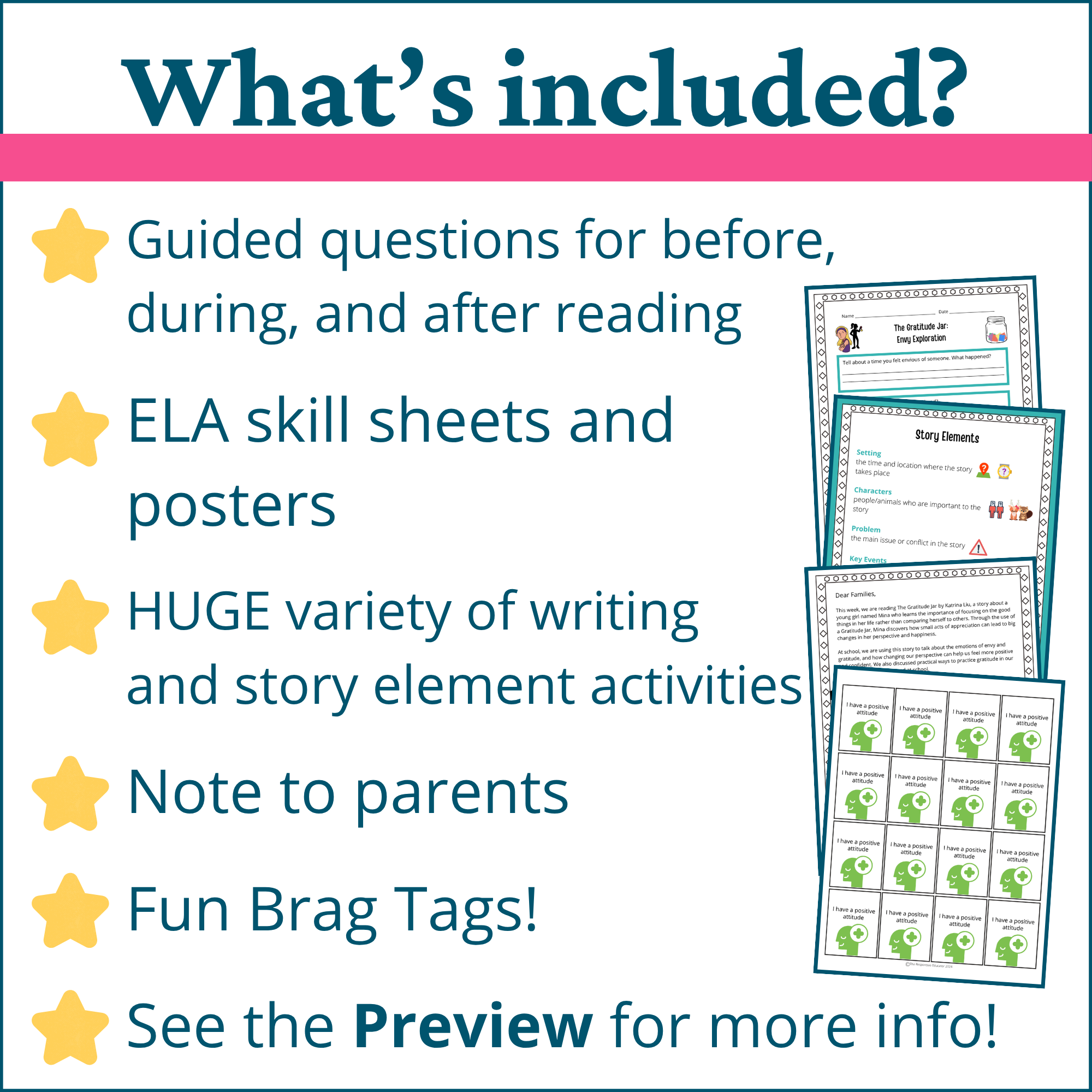
- 105 pages of instruction and activities
- More than 40 differentiated SEL and ELA activities
- Interactive read-aloud lesson plan
- Questions for before, during, and after reading
- Gratitude worksheets and reflection activities
- Gratitude journal activities
- Draw-and-write templates
- Comparison, jealousy, and perspective-taking activities
- Positive behavior choices and consequences worksheets
- Emotional-regulation activities
- Predictions, summarizing, and character-analysis practice
- Compare-and-contrast and sequencing activities
- Text-to-self connections and writing prompts
- Picture-to-Ponder discussion activities
- ELA posters and visual supports
- Real photographs to support discussion and engagement
- Family connection notes for practicing gratitude at home
- Options for verbal, written, and visual responses
Flexible Ways to Use This Book Companion
Use these activities during:
- Whole-class interactive read-aloud lessons
- Small-group SEL instruction
- Counseling or behavior-support groups
- Morning meetings
- Literacy centers
- Self-contained classroom instruction
- Individual reflection and reteaching
- Short gratitude or character-education units
You do not need to complete every page. Select a few activities for a focused lesson, build a short gratitude unit, or revisit the ideas throughout the year. The differentiated formats allow students to explore the same concepts through discussion, drawing, writing, and visual responses based on their readiness and support needs.
File Format and License
- Digital download with printable PDF materials
- Files available immediately after purchase
- Licensed for use by one educator
- Redistribution or sharing of the files is not permitted
- The picture book is not included. You will need access to The Gratitude Jar by Katrina Liu to use the interactive read-aloud lesson.




Reviews
There are no reviews yet.