Description
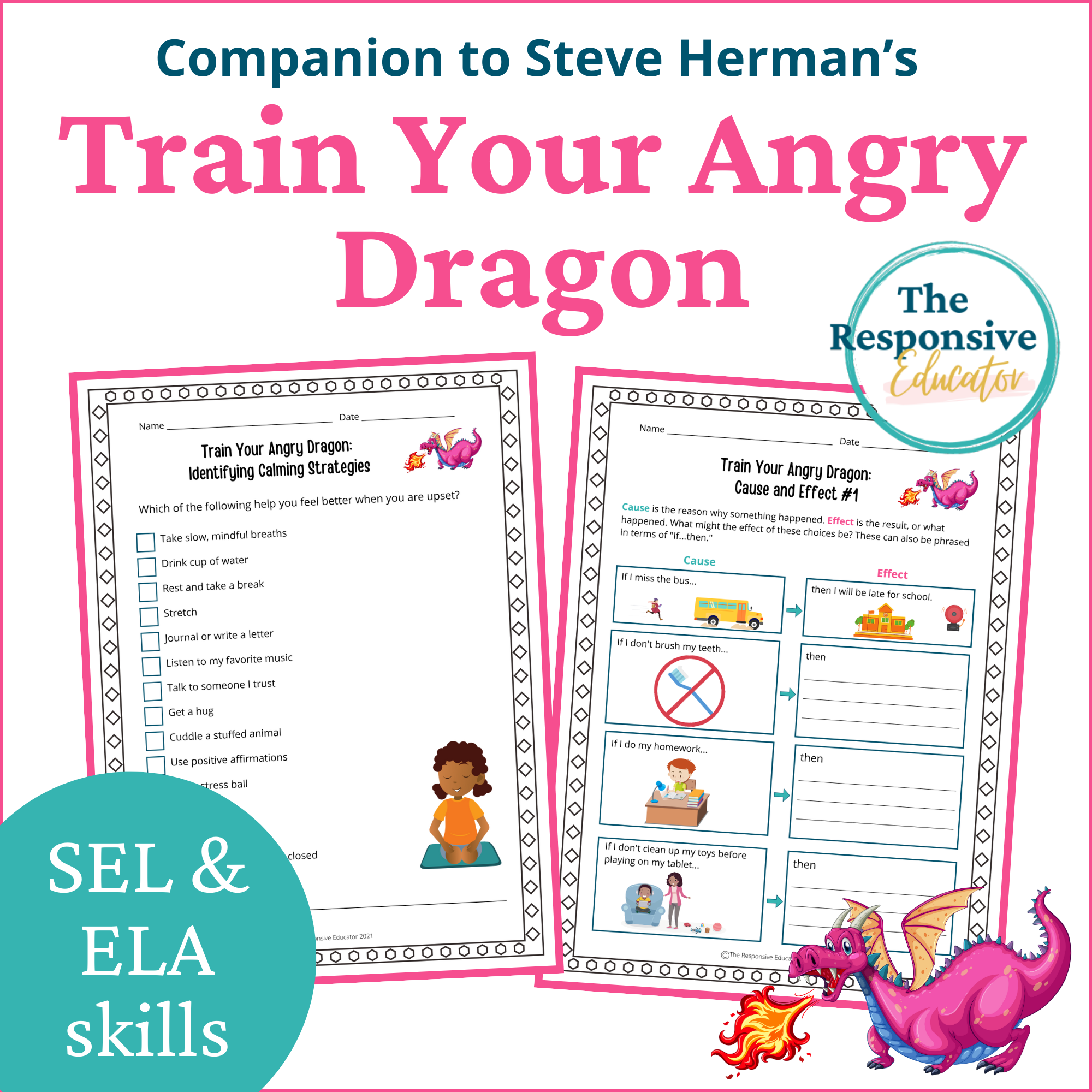
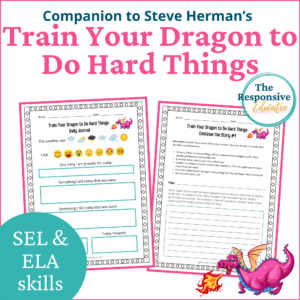
Anger management worksheets and activities help students recognize anger, identify triggers, and practice safer responses when feelings become intense. This companion for Steve Herman’s Train Your Angry Dragon includes 106 pages with more than 40 differentiated SEL and literacy activities.
An interactive read-aloud lesson plan and follow-up materials connect the story to everyday situations. Through discussion, reflection, and writing, students explore calming strategies, consider how their actions affect others, and practice taking responsibility after mistakes.
Teach Students What to Do With Anger
Students are often told to calm down without enough instruction in how to recognize anger early or decide what to do next. They may need help noticing physical warning signs, identifying an angry thought, and choosing a strategy that fits the situation.
This companion gives you a structured way to teach those skills while students are calm. The story provides a shared example for discussing anger before students connect the ideas to their own experiences.
Anger is a normal emotion. Students can acknowledge that they feel upset, disappointed, or treated unfairly while learning to express those feelings safely.
Students practice:
- Identifying situations that trigger anger
- Recognizing physical and emotional warning signs
- Connecting thoughts, feelings, and actions
- Selecting calming and coping strategies
- Expressing feelings in healthy ways
- Considering choices and possible consequences
- Taking responsibility and repairing harm after a mistake
Anger Management Worksheets With Practical Reflection
The anger management worksheets help students examine what happened before an angry response, what the person thought and felt, and how the response affected the situation. Students consider whether the action helped solve the original problem and what another response might have looked like.
Reflection activities provide opportunities to apply these ideas through discussion and writing. Students can explore the character’s experiences and work through examples without being expected to begin by sharing personal situations with the whole class.
Personal anger-management planning pages help students identify strategies they can practice and use during difficult moments.
Explore Calming Strategies and Anger Coping Skills
Knowing several calming strategies is useful, but students also need help deciding when and how to use them. A student may need space, movement, breathing, support from an adult, or another approach depending on the situation.
The emotional regulation activities help students connect early warning signs with possible next steps. Guided practice encourages them to pause, choose a strategy, and reflect on whether it helped.
Students also consider what to do after becoming calmer, such as returning to an activity, explaining the problem, or asking for help. These conversations connect anger coping skills with everyday problem-solving.
Consider Choices, Consequences, and Repair
The choices and consequences activities help students compare different responses to anger. They examine how words and actions can affect safety, trust, relationships, and learning.
Follow-up reflection encourages students to recognize how another person was affected and take responsibility for their response. Students practice considering meaningful apologies, ways to repair harm, and what they could try differently next time.
These activities keep accountability connected to learning. Students receive support with managing their emotions while developing the skills needed to respond more safely and independently.
Connect SEL With Literacy Instruction
The interactive read-aloud lesson plan includes questions for before, during, and after reading. These prompts guide conversations about Diggory Doo’s feelings, choices, and use of strategies.
Follow-up ELA activities include predictions, summarizing, character analysis, comparing and contrasting, cause and effect, text-to-self connections, and writing. You can teach anger awareness and self-control alongside literacy objectives, then revisit the skills through different forms of practice.
What’s Included in Train Your Angry Dragon: Anger Management Worksheets
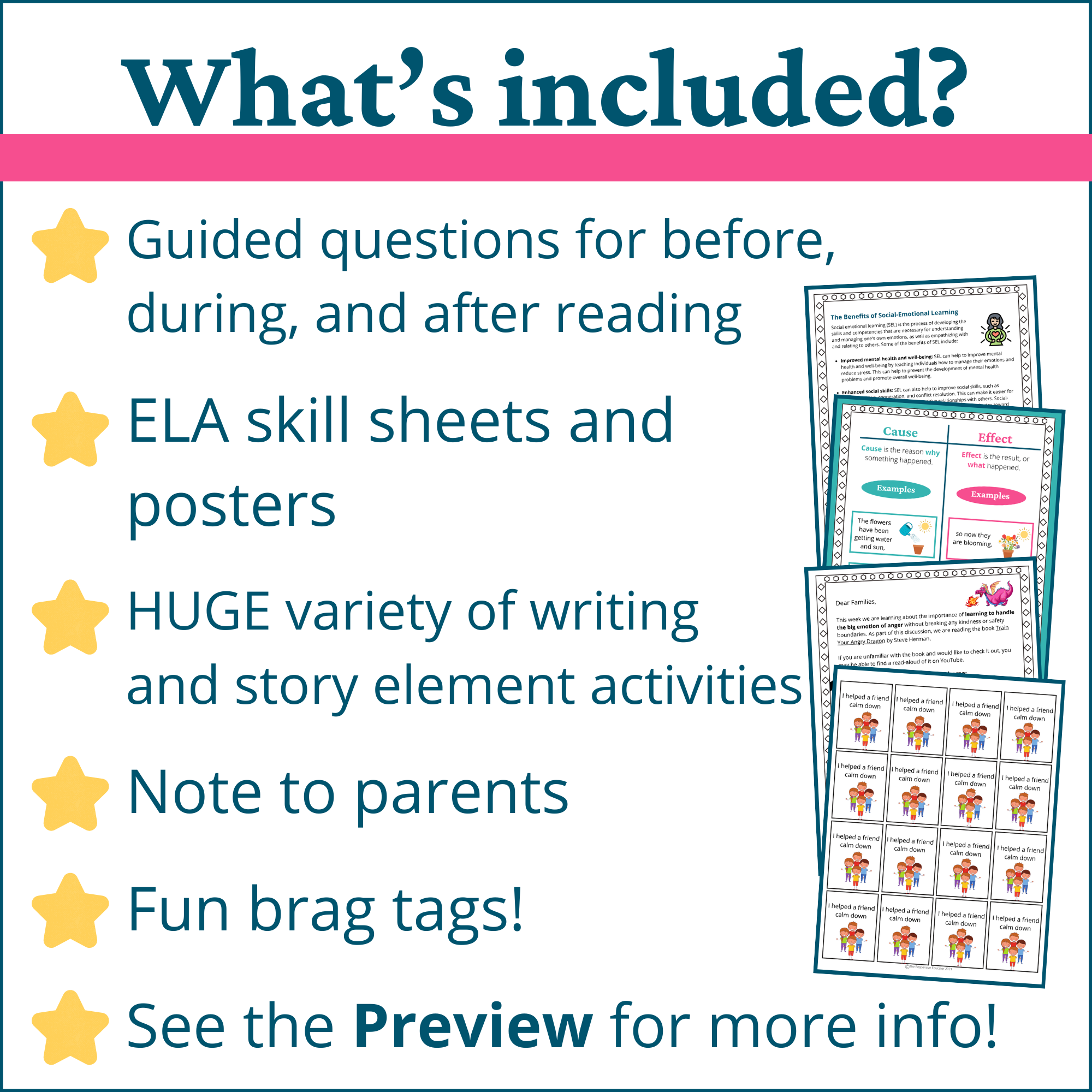
- 106 pages with more than 40 differentiated activities
- Interactive read-aloud lesson plan with before-, during-, and after-reading questions
- Anger management worksheets and activities
- Practice identifying triggers and recognizing anger warning signs
- Calming strategies and emotional regulation activities
- Choices and consequences activities
- Reflection pages focused on responsibility and repair
- Personal anger-management planning pages
- ELA activities for comprehension, character analysis, and writing
- SEL and ELA posters and visual supports
- Family connection notes for reinforcing skills at home
- Varied activity formats with opportunities for verbal, written, and visual responses
Flexible Ways to Use This Companion
Use the materials during whole-class interactive read-alouds, small-group SEL lessons, counseling or behavior-support groups, literacy centers, or individual reteaching.
You do not need to complete every page. Select activities that match your students’ needs and ability levels, then revisit the concepts over several days or weeks. The variety allows students to practice anger awareness, calming strategies, and responsible choices without repeating the same assignment.
In self-contained settings, the companion can support repeated instruction and guided practice. Pair the lessons with opportunities to rehearse strategies during daily routines so students can begin applying the skills beyond the worksheet.
File Format and License
- Digital download with printable PDF materials
- Files available immediately after purchase
- Licensed for use by one educator
- Redistribution or sharing of the files is not permitted
- The picture book is not included. You will need access to Steve Herman’s Train Your Angry Dragon to use the read-aloud lesson.


Reviews
There are no reviews yet.