Description
These executive functioning IEP goals middle school educators can adapt, along with structured skills checklists and targeted interventions, help identify the specific skills underneath common academic, organizational, behavioral, and social difficulties. Use this resource to examine student strengths and needs across 12 executive-functioning areas and develop more individualized support plans.
Middle school places new demands on students. They are expected to manage different teachers, changing classrooms, longer assignments, increased homework, complex schedules, and greater social pressure. When a student struggles with these expectations, it may appear to be a problem with motivation or responsibility when the student actually needs more direct instruction and support in a specific executive-functioning skill.
This resource helps educators move from a broad concern to a clearer understanding of the skills that may be affecting the student’s performance and independence.
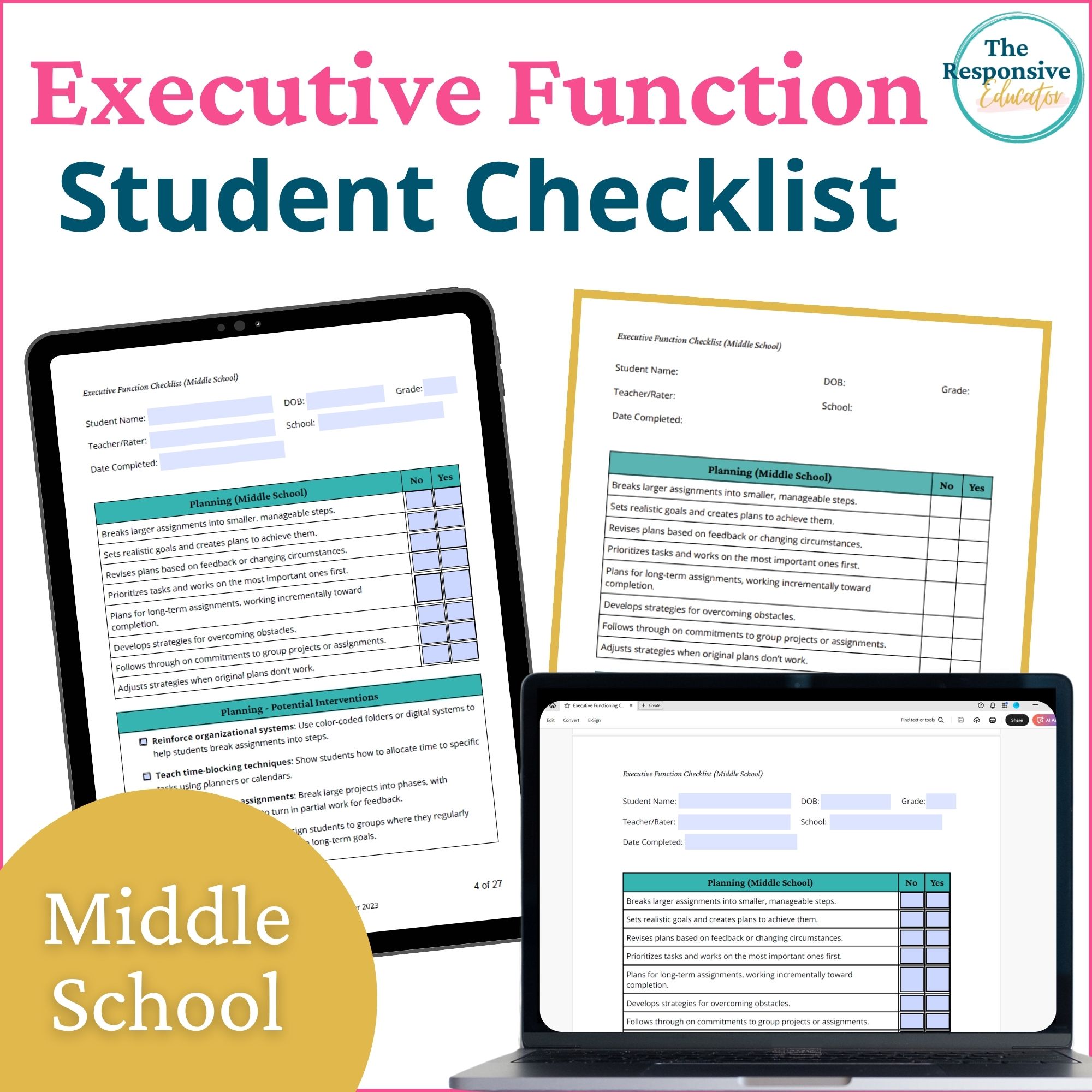
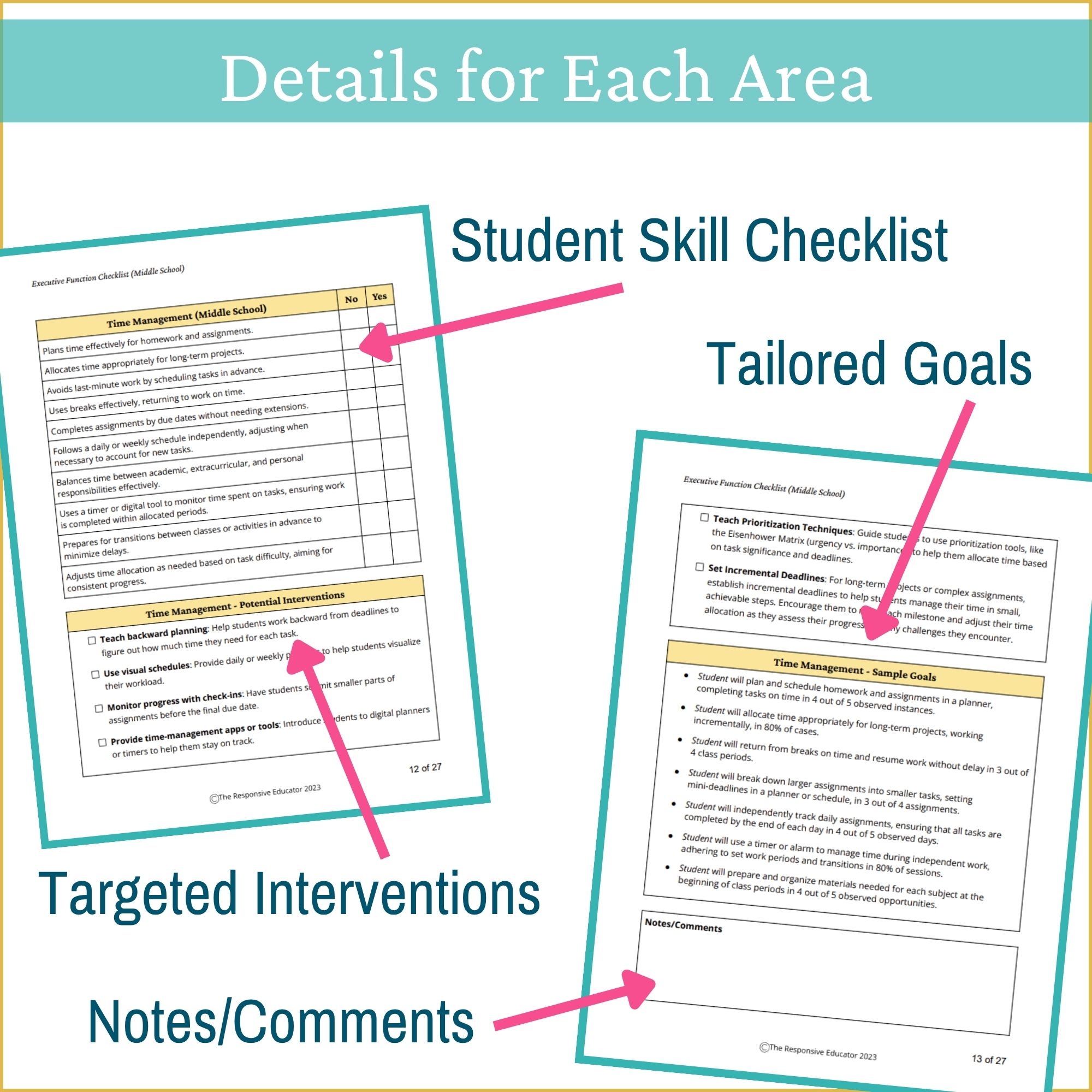
Executive Function Skills Checklist for Middle School Students
Use the structured executive function skills checklist to:
- Record observations across 12 executive-functioning areas
- Identify patterns in student strengths and challenges
- Break broad concerns into specific, teachable skills
- Determine which areas may require additional support
- Guide conversations with students, families, and educational teams
- Choose interventions that match the identified skill
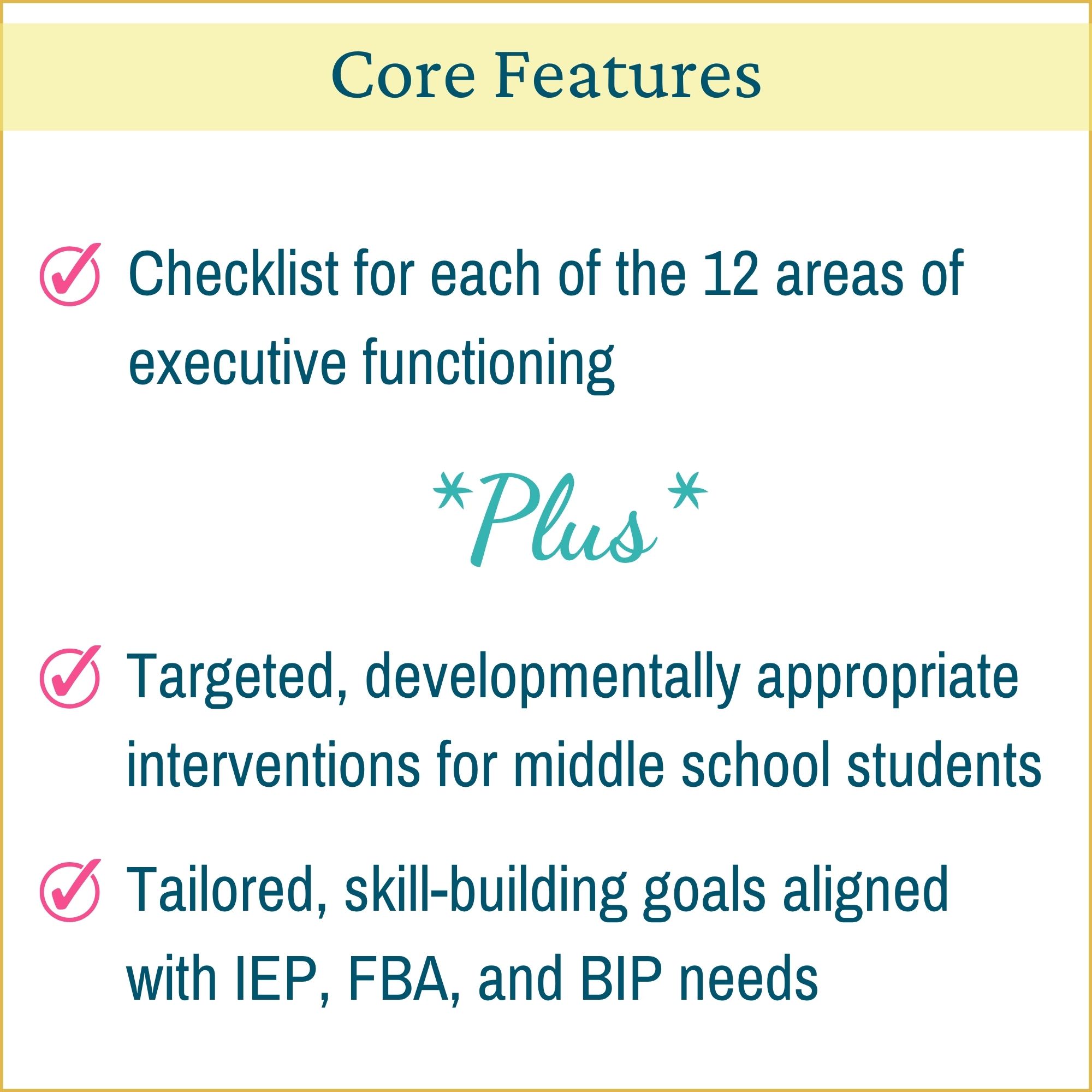
- Develop individualized goals based on current performance
Each area includes age-appropriate subskills that can be observed across academic classes, independent work, transitions, homework routines, group activities, and social situations.
A Structured Executive Function Assessment Tool
This resource provides an organized way to conduct an informal executive function assessment using educator observations. It helps you consider a student’s performance across several related areas rather than looking at each difficulty in isolation.
For example, missing assignments could be connected to planning, organization, working memory, task initiation, time management, persistence, or self-monitoring. Difficulty during group work could involve impulse control, emotional regulation, flexible thinking, or awareness of how the student’s behavior affects others.
The checklist helps educators look more closely at the skills underneath the behavior before selecting an intervention or writing a goal.
Please note: This is an educator observation and planning tool. It is not a standardized or diagnostic assessment.
Executive-Functioning Skills Addressed
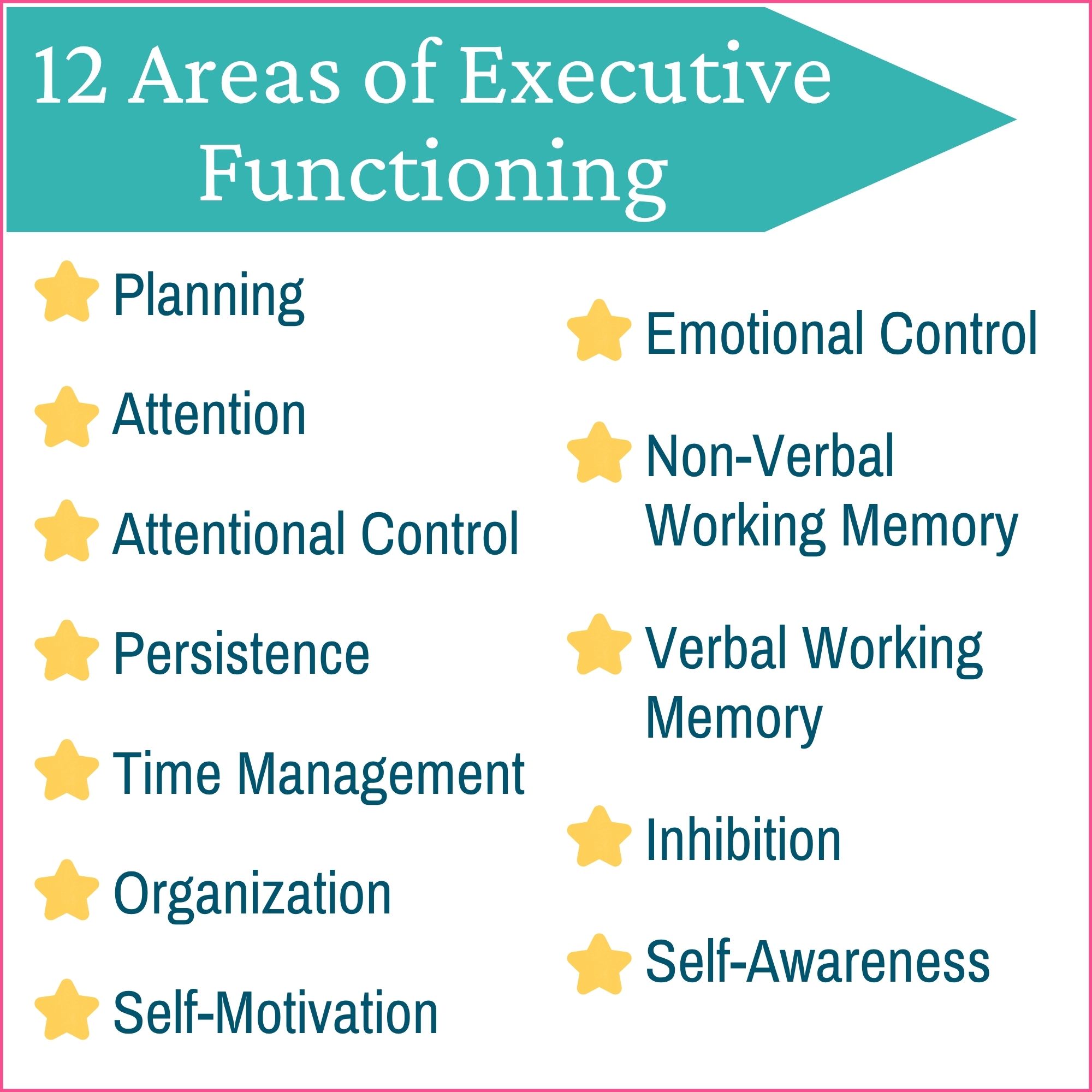
The resource examines 12 areas of executive functioning, including skills related to:
- Attention and focus
- Planning
- Organization
- Working memory
- Task initiation
- Persistence
- Emotional control
- Impulse control
- Self-monitoring
- Self-motivation
The age-appropriate indicators help educators recognize how broader executive-functioning needs may appear during the middle school years.
Executive Functioning Interventions for Middle School Students
After identifying an area of need, use the included executive functioning interventions to select practical supports that can be implemented or adapted for the individual student.
The interventions are designed for middle school students and focus on explicitly teaching skills while helping students assume more responsibility for using them. Supports may include organizational systems, visual reminders, planning routines, task breakdown, self-monitoring tools, guided reflection, environmental changes, and gradually reduced adult prompting.
Instead of treating executive functioning as one broad problem, you can select supports based on whether the student needs help:
- Managing materials across multiple classes
- Recording and remembering assignments
- Planning long-term projects
- Estimating and managing time
- Beginning work independently
- Following multistep directions
- Persisting through difficult assignments
- Managing frustration and emotional reactions
- Controlling impulses in academic or social situations
- Monitoring work and recognizing when help is needed
This makes it easier to connect an identified need with an intervention that addresses the underlying skill while supporting greater independence.
Executive Functioning IEP Goals Middle School Teams Can Individualize
Sample goals are included for each executive-functioning area. These executive functioning IEP goals middle school students may need can save planning time and provide a starting point for:
- IEP goals and objectives
- FBA and BIP planning
- Classroom intervention plans
- MTSS and problem-solving meetings
- Student support team discussions
- Transition planning for increasing independence
The sample goals are intended as a foundation. Each goal should be individualized using the student’s present levels, baseline data, learning environment, and specific support needs.
What’s Included
- 27-page printable PDF
- Executive function skills checklists
- 12 executive-functioning skill areas
- Age-appropriate middle school subskills
- Suggested interventions for identified needs
- Sample executive functioning IEP goals
- Organized sections for reviewing student strengths and challenges
Who Is This Resource For?
This resource is designed for educators supporting middle school students, including:
- Special education teachers
- General education teachers
- Behavior specialists
- School psychologists
- Interventionists
- Case managers
- Related service providers
- Student support teams
Use this resource when a student’s difficulties seem broader than one isolated behavior and you need a structured way to consider whether planning, organization, working memory, task initiation, emotional control, self-monitoring, or another executive-functioning skill may be contributing.


Reviews
There are no reviews yet.