Description
Apologizing Social Support Story for Making Amends and Repairing Relationships
Some students say “sorry” quickly without understanding what it means. Others refuse to apologize, become defensive, blame someone else, or insist that they did not mean to cause harm. What looks like indifference or refusal may mean that the student does not yet understand how their behavior affected another person or what is needed to repair the relationship.
This Apologizing Social Support Story explicitly teaches students that a meaningful apology involves more than repeating the words “I’m sorry.” Through clear visuals and step-by-step guidance, students learn how to recognize a mistake, understand another person’s feelings, apologize sincerely, and take action to make things right.
Teach the Meaning Behind an Apology
Apologizing requires several social-emotional skills working together. A student must regulate their own emotions, consider another person’s perspective, accept responsibility, and decide how to respond. That can be difficult to do while the student is still upset, embarrassed, or focused on defending their intentions.
This story helps students learn how to:
- Recognize when their behavior has hurt someone
- Understand how their actions affect other people
- Notice facial expressions and body language
- Calm down before trying to repair the situation
- Use appropriate language to apologize
- Take responsibility without becoming overwhelmed by shame
- Make amends through actions as well as words
- Understand that another person may still need time or space
The story also teaches an important distinction: not intending to hurt someone does not mean that no harm was done. Students learn to acknowledge both their intentions and the effect their choices had on someone else.
Apologizing Does Not Instantly Fix Everything
Many students become frustrated when another person remains upset after they have apologized. They may believe that saying “sorry” should immediately end the conflict or restore the relationship.
This resource helps students understand that an apology is the beginning of repair—not a demand that the other person stop feeling hurt. Rebuilding trust may require patience, changed behavior, and repeated respectful choices over time.
That deeper understanding supports:
- Perspective-taking
- Empathy
- Emotional regulation
- Accountability
- Conflict resolution
- Communication repair
- Friendship skills
- Social problem-solving
Visual Support for Social and Emotional Understanding
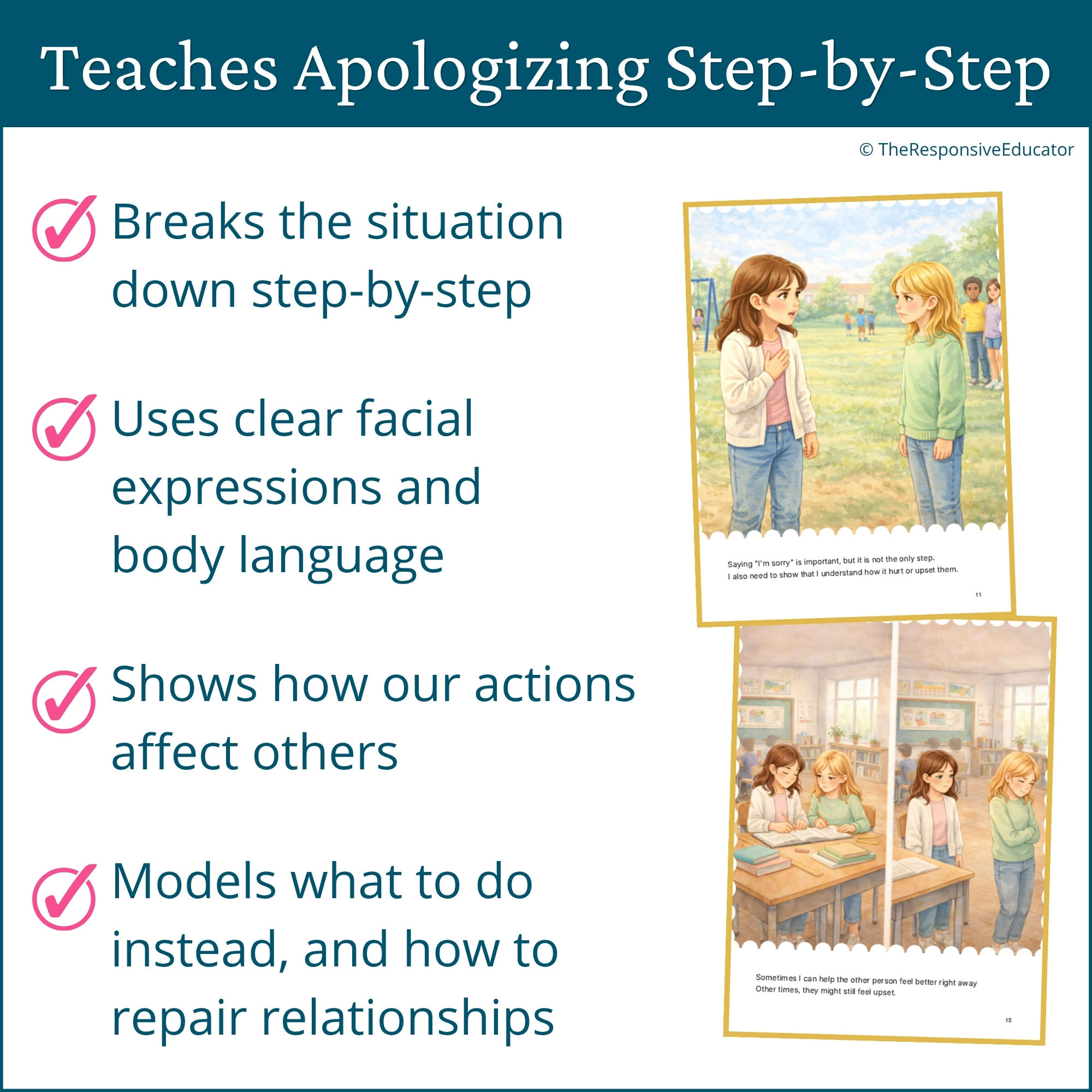
The illustrations help make abstract social information easier to understand. Students can see facial expressions, body language, peer reactions, and changes in relationships instead of being expected to interpret those cues without support.
The story connects:
- A student’s actions
- The other person’s emotional response
- The social consequences of the behavior
- The steps needed to repair the situation
This helps students understand not only what they should do, but why the response matters.
What’s Included
This digital resource includes:
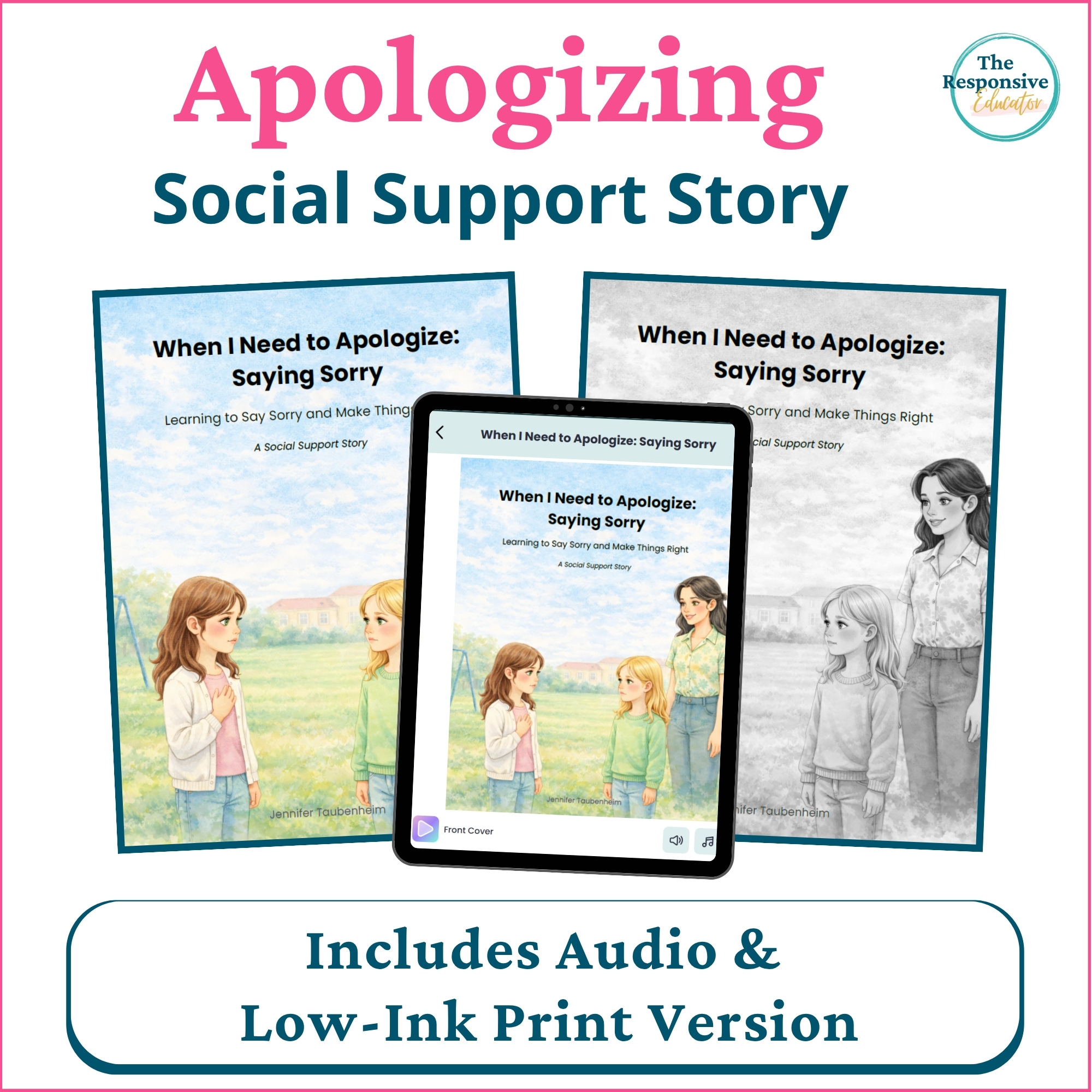
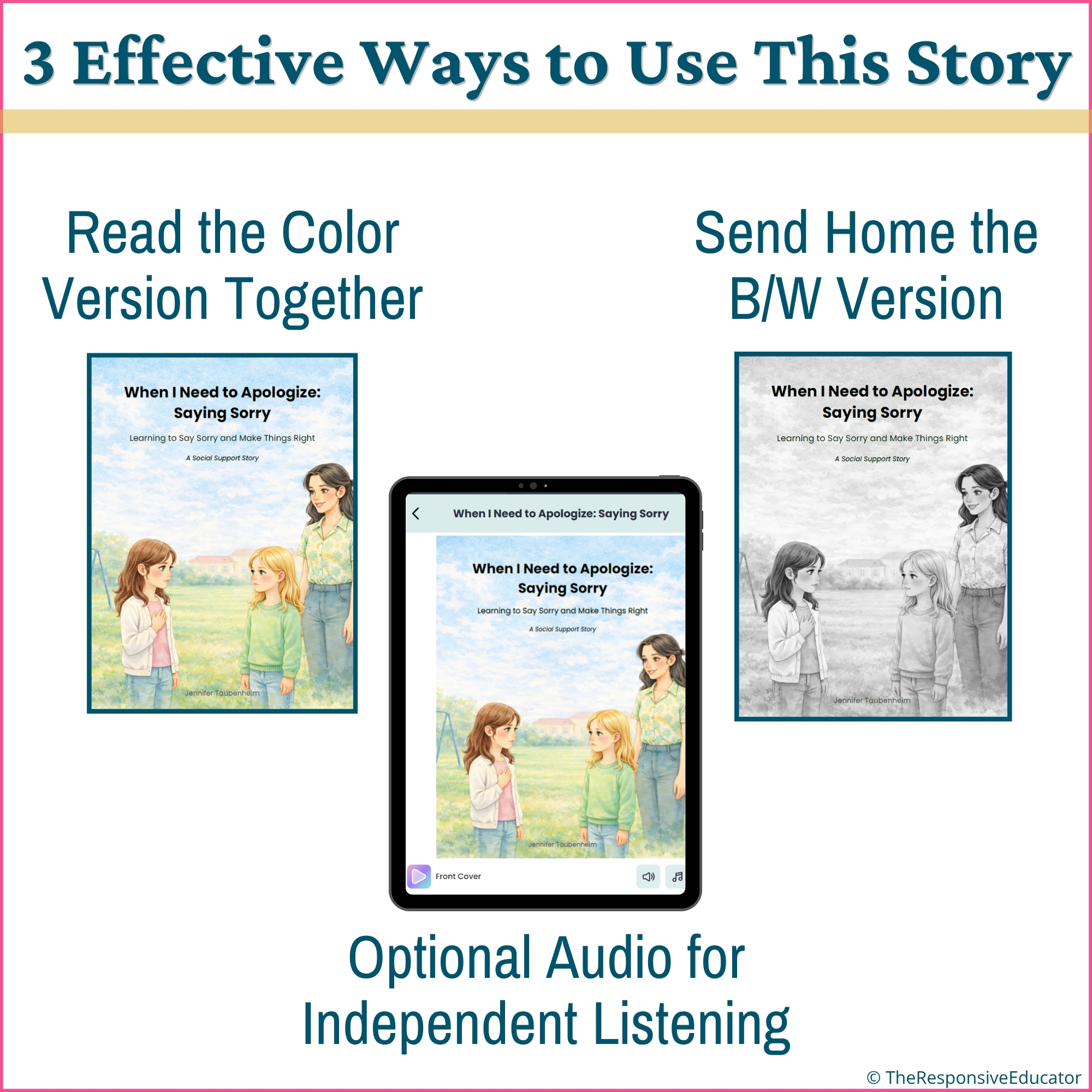
- Full-color Apologizing Social Support Story
- Black-and-white version for low-ink printing
- Optional audio narration
- Digital access for repeated instruction and review
- Visual examples of facial expressions and body language
- Modeled language for apologizing and making amends
- Step-by-step guidance for relationship repair
The black-and-white version can also be used for home reinforcement or when a student benefits from having an individual copy to revisit.
Ways to Use This Apologizing Story
Use this resource for:
- Whole-class SEL instruction
- Social-emotional mini lessons
- Small-group social-skills instruction
- Conflict-resolution lessons
- Individual behavior support
- Counseling or intervention sessions
- Restorative conversations
- Read-to-self or listening centers
- Reteaching after peer conflict
- Home reinforcement and family communication
The audio option allows students to revisit the story independently. This can be especially helpful for students who need repeated exposure to the same language, visuals, and steps before they can apply the skill in real situations.
Who May Benefit From This Resource?
This story may be helpful for students who:
- Struggle to apologize after making a mistake
- Say “sorry” without understanding its purpose
- Become defensive or blame others after conflict
- Focus on their intentions rather than the effect of their actions
- Have difficulty recognizing hurt feelings
- Need support reading facial expressions or body language
- Become emotionally overwhelmed when corrected
- Struggle to make amends or rebuild relationships
- Benefit from explicit visual instruction
The supportive approach avoids shaming students while still teaching accountability. Students learn that mistakes happen, but they are responsible for recognizing harm, making amends, and changing what they do next.
Prefer a Printed Book?
This page includes the digital resource with both full-color and black-and-white versions. If you would rather have a professionally printed, full-color book, When I Need to Apologize is also available on Amazon.
Please note that the printed Amazon book does not include the black-and-white printable version included with this digital resource.



Reviews
There are no reviews yet.