Description
Personal Space Social Support Story for Teaching Boundaries and Social Cues
Some students continue to stand too close, touch other people, or move into someone’s personal space even after repeated reminders. This does not always mean that they are deliberately ignoring directions. They may not recognize body language, facial expressions, or other social cues that show someone is uncomfortable.
This Personal Space Social Support Story explicitly teaches students what personal space looks like, why it matters, and how to adjust their behavior during everyday interactions. Instead of relying on reminders such as “back up” or “give them space,” the story makes the invisible parts of social situations more concrete.
Students learn how their body position affects other people and what they can do when someone appears to need more space.
Teach More Than the Rule to “Give Space”
Knowing the rule is not the same as knowing how to apply it. A student may understand that personal space is important but still have difficulty judging distance, noticing another person’s reaction, or deciding what to do next.
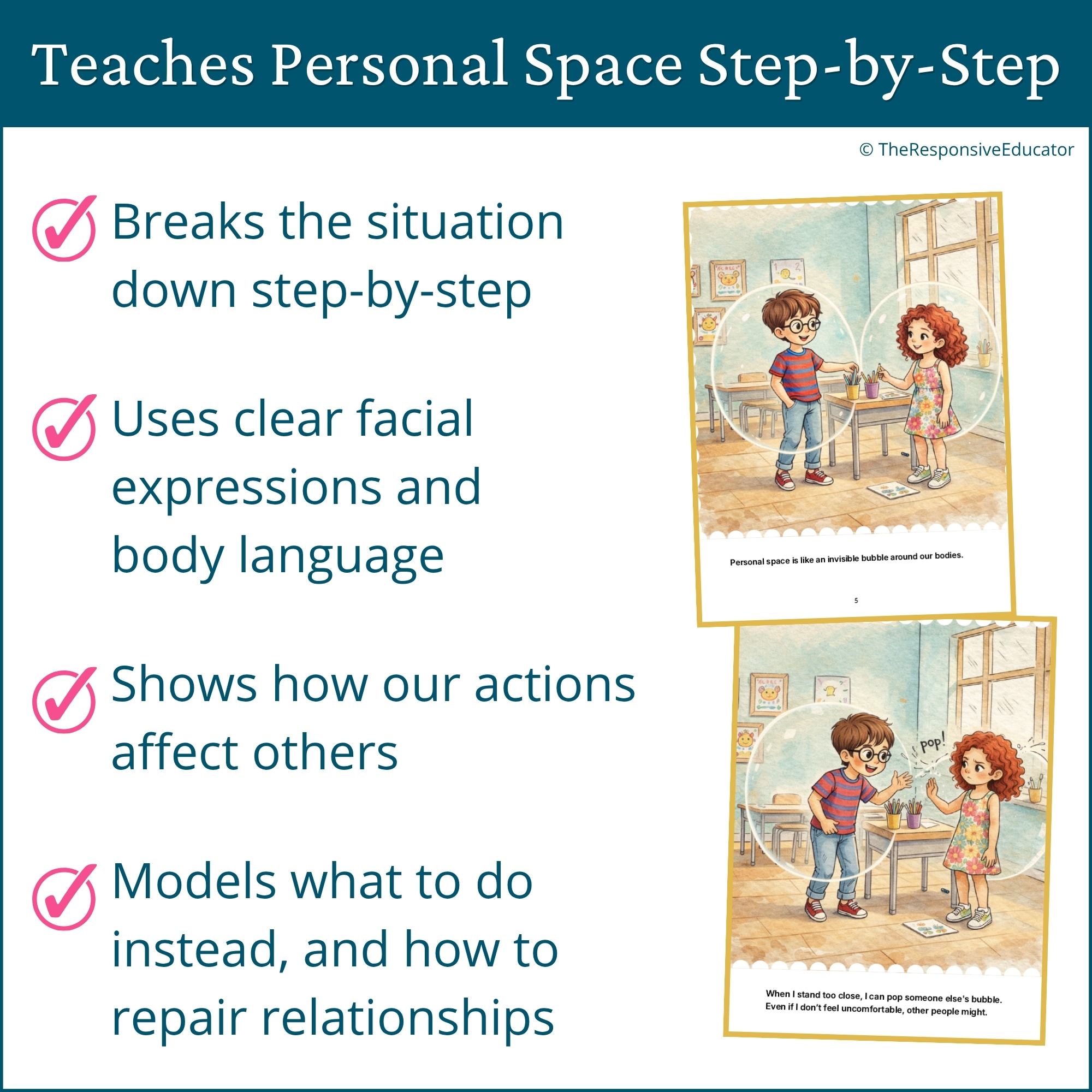
The story guides students through how to:
- Recognize when they may be standing too close
- Understand how their actions affect other people
- Notice facial expressions and body language
- Identify social cues that suggest someone is uncomfortable
- Adjust their position to create more space
- Respect personal boundaries in different situations
- Monitor their own behavior more independently
The goal is not simply to make students stand farther away. It is to help them develop body awareness, perspective-taking, and the ability to respond thoughtfully to social information.
Visual Support for Body Language and Social Awareness
Personal space can be difficult to explain because the appropriate amount of space changes depending on the person and situation. Clear illustrations help students see what social discomfort can look like instead of expecting them to understand an abstract explanation.
The visuals support instruction related to:
- Personal space and physical boundaries
- Body awareness
- Facial expressions
- Body language
- Perspective-taking
- Recognizing social cues
- Self-monitoring
- Peer relationships
Students can revisit the story as often as needed, giving them repeated exposure to the same language, visuals, and expectations.
What’s Included
This digital resource includes:
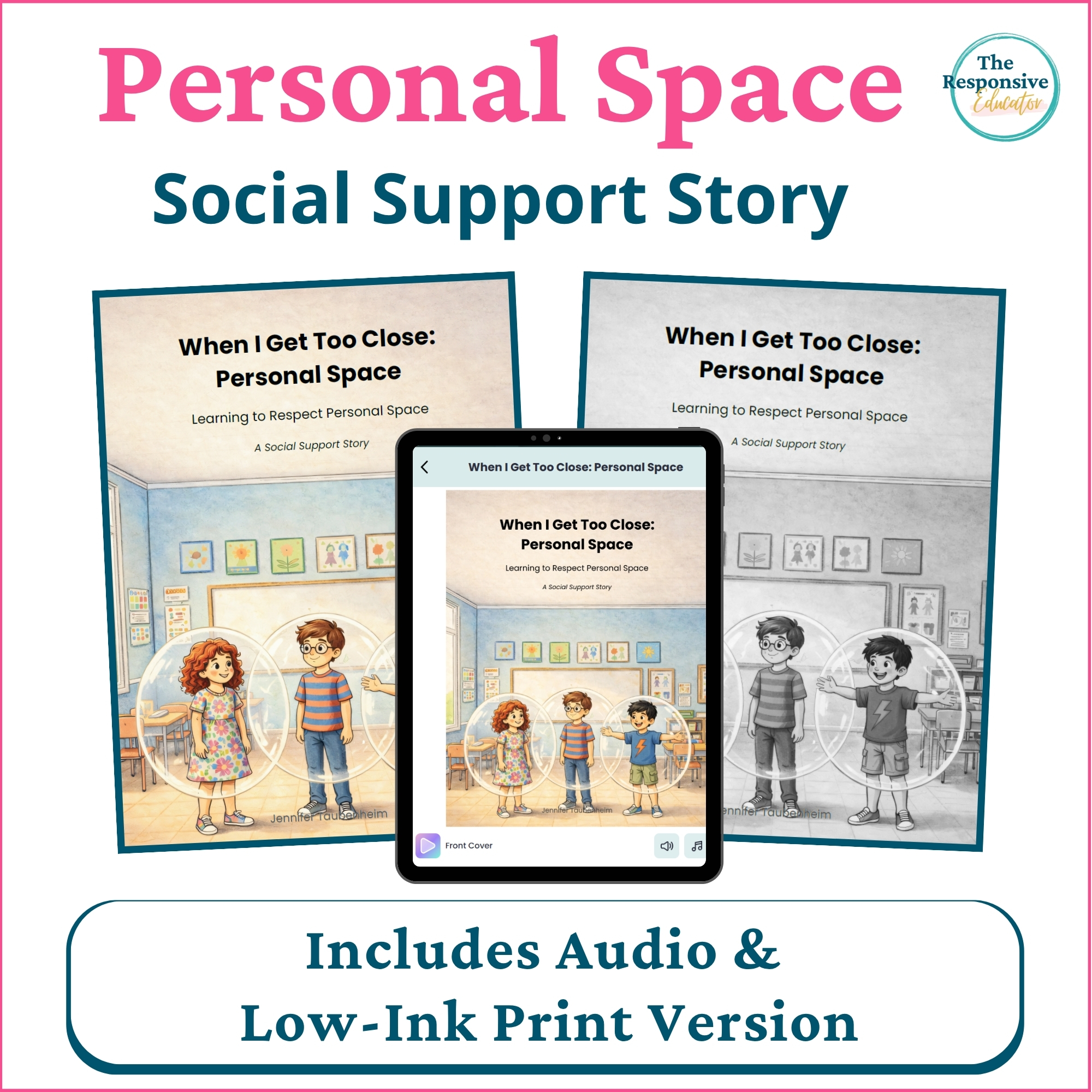
- Full-color Personal Space Social Support Story
- Black-and-white version for low-ink printing
- Optional audio narration
- Digital access for repeated instruction and review
- Clear visual examples of body language and social cues
- Step-by-step guidance for making appropriate adjustments
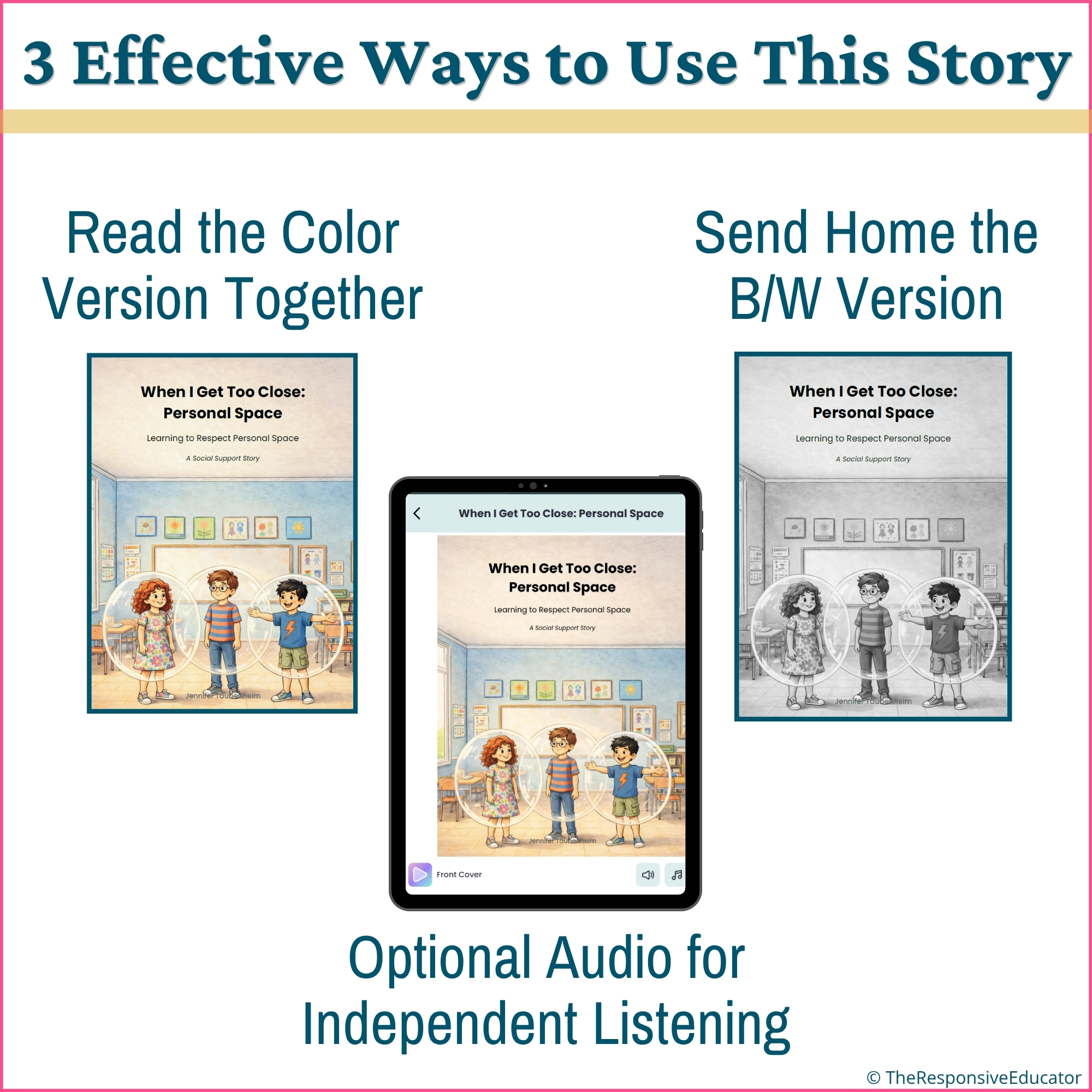
The black-and-white version can also be used for home reinforcement or when a student benefits from having an individual copy to revisit.
Ways to Use This Personal Space Story
Use the story for:
- Whole-class SEL instruction
- Social-emotional mini lessons
- Small-group social-skills instruction
- Individual behavior support
- Counseling or therapy sessions
- Read-to-self or listening centers
- Reteaching classroom expectations
- Home reinforcement and family communication
- Preparation before less-structured social activities
The audio option also allows students to listen independently, which can be helpful when they need repeated practice without requiring an adult to reread the story each time.
Who May Benefit From This Resource?
This story may be helpful for students who:
- Frequently stand too close to others
- Touch peers or adults without recognizing discomfort
- Have difficulty understanding personal boundaries
- Miss facial expressions or body-language cues
- Struggle with body awareness
- Need social expectations explained directly
- Benefit from visual examples and repeated instruction
- Have difficulty understanding how their behavior affects relationships
The supportive language focuses on awareness and skill development rather than presenting the student as rude or intentionally disrespectful. Students still learn that boundaries matter, but they are also taught how to recognize and respect those boundaries more independently.
Prefer a Printed Book?
This page includes the digital resource with both full-color and black-and-white versions. If you would rather have a professionally printed, full-color book, When I Get Too Close: Personal Space is also available on Amazon.
Please note that the printed Amazon book does not include the black-and-white printable version included with this digital resource.



Reviews
There are no reviews yet.