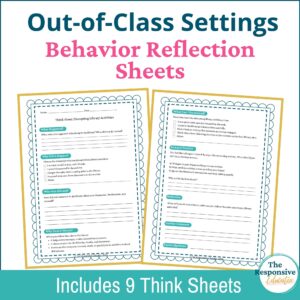
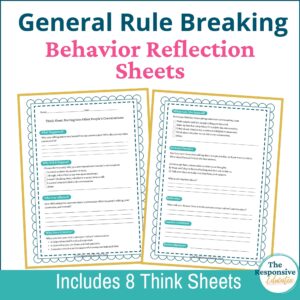
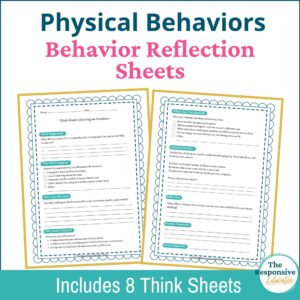


Description
These classroom disruption behavior reflection sheets help students examine behaviors that interrupt instruction, independent work, or their classmates’ ability to learn. The resource includes seven targeted behavior think sheets addressing calling out, talking, interrupting, leaving a seat, making excessive noise, and intentionally distracting others.
Classroom disruptions are often grouped together as “not following directions,” but the skills underneath them can be different. One student may need help waiting to speak, while another may struggle to remain in an assigned area, control the volume of their voice, or avoid seeking peer attention during instruction.
I designed these sheets to help students look more closely at the specific behavior, understand its effect on the classroom, and develop a practical response they can use next time.
Targeted Reflection for Classroom Disruptions
General reminders such as “stop interrupting” or “quit distracting others” tell students what not to do. They do not always teach students how to participate, communicate, or meet a need without disrupting learning.
Each student behavior reflection sheet focuses on one specific concern. Guided prompts help students consider:
- What happened
- Why it happened
- Who was affected
- Why the behavior mattered
- What they could do instead
- How they might respond in a similar situation
- What their plan is for next time
This provides a more meaningful alternative to assigning a behavior essay to copy or asking students to complete the same general form after every incident.
What’s Included in the Classroom Disruption Behavior Reflection Sheets
This resource includes seven targeted think sheets:
- Calling Out in Class
- Talking During Independent Work
- Out of My Seat Without Permission
- Interrupting the Teacher or Classmates
- Making Excessive Noise
- Whispering or Side Conversations
- Using Gestures or Faces to Distract Classmates
Each topic includes a two-page guided reflection process.
Two-Page Behavior Think Sheet Format
The first page helps students examine the incident by identifying what happened, why it happened, who was affected, and why the behavior created a problem.
The second page moves from reflection toward instruction. Students identify what they can do instead, respond to a related scenario, and develop a plan for handling a similar situation more successfully.
Space is also included for:
- Scenario-based practice
- Student reflection and planning
- Teacher comments
- An optional parent or guardian signature
The behavior-specific format helps students connect their reflection to the actual situation rather than writing a broad response such as “I will behave next time.”
Skills Students Practice
These behavior reflection worksheets help students practice:
- Waiting for an appropriate time to speak
- Participating without interrupting instruction
- Using an appropriate voice level
- Remaining in an assigned area
- Managing side conversations
- Recognizing how distractions affect classmates
- Seeking attention in a more appropriate way
- Taking responsibility without shame or labels
- Identifying replacement behaviors
- Creating a specific plan for future situations
The goal is not simply to make students quieter. Students need to learn how to participate, communicate, move, and interact in ways that allow them and the people around them to learn.
Ways to Use These Behavior Reflection Sheets
Use the sheets during:
- Individual behavior reflection
- Restorative conversations
- Classroom problem-solving
- Reteaching of participation expectations
- SEL or social-skills instruction
- Behavior intervention planning
- MTSS or student-support meetings
- Parent-teacher conferences
- Home-school communication
- Reentry conversations after a disruption
- Informal documentation of recurring behavior patterns
Completed sheets may help identify whether disruptions happen during particular activities, around certain peers, when work is difficult, or when the student needs attention, movement, clarification, or another form of support.
Consider What Is Underneath the Disruption
A classroom disruption describes what the behavior looks like, but it does not explain why it is happening. A student may call out because they are excited, worried they will forget their idea, unsure how to get help, or accustomed to receiving immediate attention. Another student may leave their seat because they need movement, lack needed materials, or are avoiding difficult work.
Reflection can provide useful information, but it should lead to instruction and problem-solving. Depending on the student, helpful supports might include:
- Explicit instruction in raising a hand or entering a conversation
- A visual reminder or nonverbal cue
- Planned opportunities to move
- A way to record ideas while waiting
- Instruction in appropriately requesting help
- Changes to seating or classroom routines
- Reinforcement for using the expected replacement behavior
These sheets should be completed after the student is calm enough to think clearly. They are not a replacement for accommodations, direct instruction, environmental changes, or a functional behavior assessment when one is needed.
Turn Disruptions Into Teachable Moments
Students need clear boundaries when behavior interferes with learning, but they also need instruction in what to do instead. Accountability is stronger when students understand what happened, recognize the effect of their choices, and practice a realistic alternative.
These classroom disruption behavior reflection sheets and behavior think sheets provide a structured way to guide that process while keeping the reflection connected to the specific classroom concern.
Need Think Sheets for Other Student Behaviors?
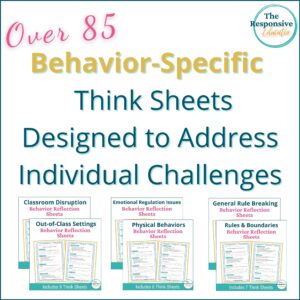
This individual think sheet is also included in the Student Behavior Reflection Sheets and Think Sheets Bundle. The complete bundle includes more than 85 behavior-specific reflection tools covering classroom disruptions, following directions, off-task behavior, emotional regulation, peer conflicts, honesty, rules and boundaries, physical behavior, transitions, self-monitoring, and behavior in out-of-class settings.
Choose the complete bundle if you need a coordinated collection of targeted think sheets for a wide range of classroom behavior concerns.
Reviews
There are no reviews yet.