

Description
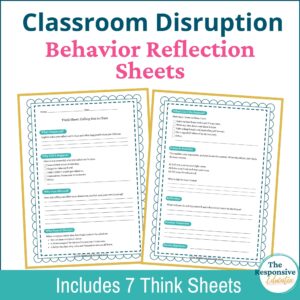
These following classroom rules behavior reflection sheets help students examine choices involving commonly broken school and classroom rules. The resource includes eight targeted behavior think sheets addressing inappropriate language, talking back, passing notes, creating messes, misusing school property, and other behaviors that can affect learning and relationships.
Students may understand that they broke a rule without fully recognizing why the rule exists, how their actions affected other people, or what they should do differently in a similar situation. A consequence by itself does not always teach that thinking.
I designed these sheets to move students beyond simply admitting that they broke a rule. Each reflection guides them through understanding the situation, considering its effect on others, and developing a practical plan for next time.
Teaching Students to Follow Classroom Rules
Broad reminders such as “follow the rules” or “make better choices” assume that students can connect a general expectation to a specific situation. Some students need more direct support recognizing which rule applied, why their choice created a problem, and what an appropriate response would have looked like.
Each student behavior reflection sheet addresses a specific concern. Students are guided to consider:
- What happened
- Why it happened
- Who was affected
- Why the behavior mattered
- What they could do instead
- How they might respond in a similar situation
- What their plan is for next time
This provides a more useful starting point for accountability than having students copy a behavior essay or promise to “be good.”
What’s Included in the Following Classroom Rules Behavior Reflection Sheets
This resource includes eight targeted think sheets:
- Eating in Class Without Permission
- Drawing on Desks or Walls
- Using Inappropriate Language
- Leaving Trash or a Mess Behind
- Butting Into Other People’s Conversations
- Talking Back to Adults
- Talking About Inappropriate Topics at School
- Passing Notes in Class
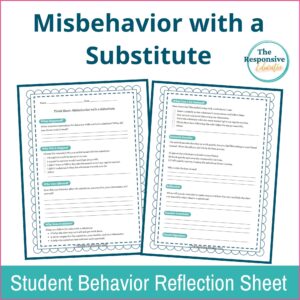
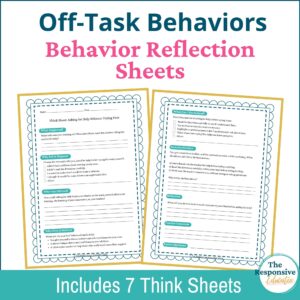
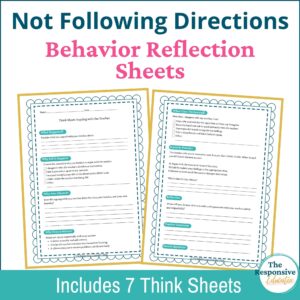
Each topic includes a two-page guided reflection process.
Two-Page Behavior Think Sheet Format
The first page helps students examine the incident by identifying what happened, why it happened, who was affected, and why the behavior created a concern.
The second page helps students apply what they have learned. Students identify an alternative response, work through a related scenario, and create a plan for handling a similar situation more successfully.
Space is also included for:
- Scenario-based practice
- Student reflection and planning
- Teacher comments
- An optional parent or guardian signature
The behavior-specific format helps students focus on the actual choice rather than completing the same generic form after every incident.
Skills Students Practice
These behavior reflection worksheets help students practice:
- Recognizing which classroom rule applies to a situation
- Understanding the purpose behind rules and expectations
- Considering how their choices affect other people
- Respecting shared property and learning spaces
- Using school-appropriate language and conversation topics
- Responding respectfully to adults
- Taking responsibility without shame or labels
- Identifying an appropriate alternative behavior
- Creating a specific plan for next time
The goal is not automatic compliance without understanding. Students need to learn how their choices affect safety, learning, property, and relationships so they can apply expectations more independently.
Ways to Use These Behavior Reflection Sheets
Use the sheets during:
- Individual behavior reflection
- Restorative conversations
- Reteaching of classroom rules
- Classroom problem-solving
- SEL or social-skills instruction
- Behavior intervention planning
- MTSS or student-support meetings
- Parent-teacher conferences
- Home-school communication
- Reentry conversations after an incident
- Informal documentation of recurring concerns
Completed sheets may help teachers identify patterns, including which rules are repeatedly difficult, what students believe led to the behavior, and whether additional teaching or support is needed.
Reflection Should Lead to Instruction
Students are more likely to follow classroom rules independently when they understand the expectation, the reason behind it, and the alternative behavior they can use.
A student who repeatedly passes notes may need support managing the urge to communicate during instruction. A student who leaves a mess may not understand the cleanup routine or may need a more clearly assigned responsibility. A student who talks back may need direct instruction in disagreeing, asking questions, or expressing frustration respectfully.
The reflection sheet can help begin this problem-solving process, but it should not replace explicit instruction, environmental changes, accommodations, or individualized behavior support when those are needed.
Students should complete the sheet after they are calm and able to think clearly. Some students can work independently, while others may need an adult to read the prompts, clarify the situation, or help turn a broad response into a realistic plan.
Build Accountability Through Understanding
Accountability involves more than identifying that a rule was broken. Students also need to understand the effect of their choice, consider another response, and make a plan they can use.
These following classroom rules behavior reflection sheets and behavior think sheets provide a structured way to teach that process while keeping the reflection connected to the specific situation.
Need Think Sheets for Other Student Behaviors?
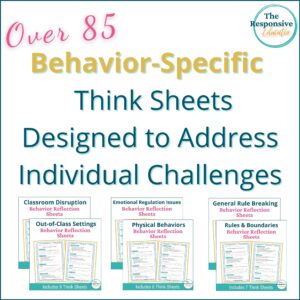
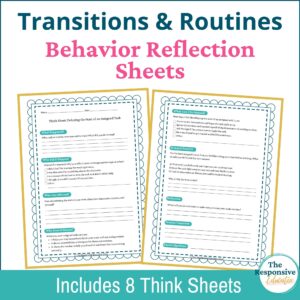
This individual think sheet is also included in the Student Behavior Reflection Sheets and Think Sheets Bundle. The complete bundle includes more than 85 behavior-specific reflection tools covering classroom disruptions, following directions, off-task behavior, emotional regulation, peer conflicts, honesty, rules and boundaries, physical behavior, transitions, self-monitoring, and behavior in out-of-class settings.
Choose the complete bundle if you need a coordinated collection of targeted think sheets for a wide range of classroom behavior concerns.
Reviews
There are no reviews yet.