Description
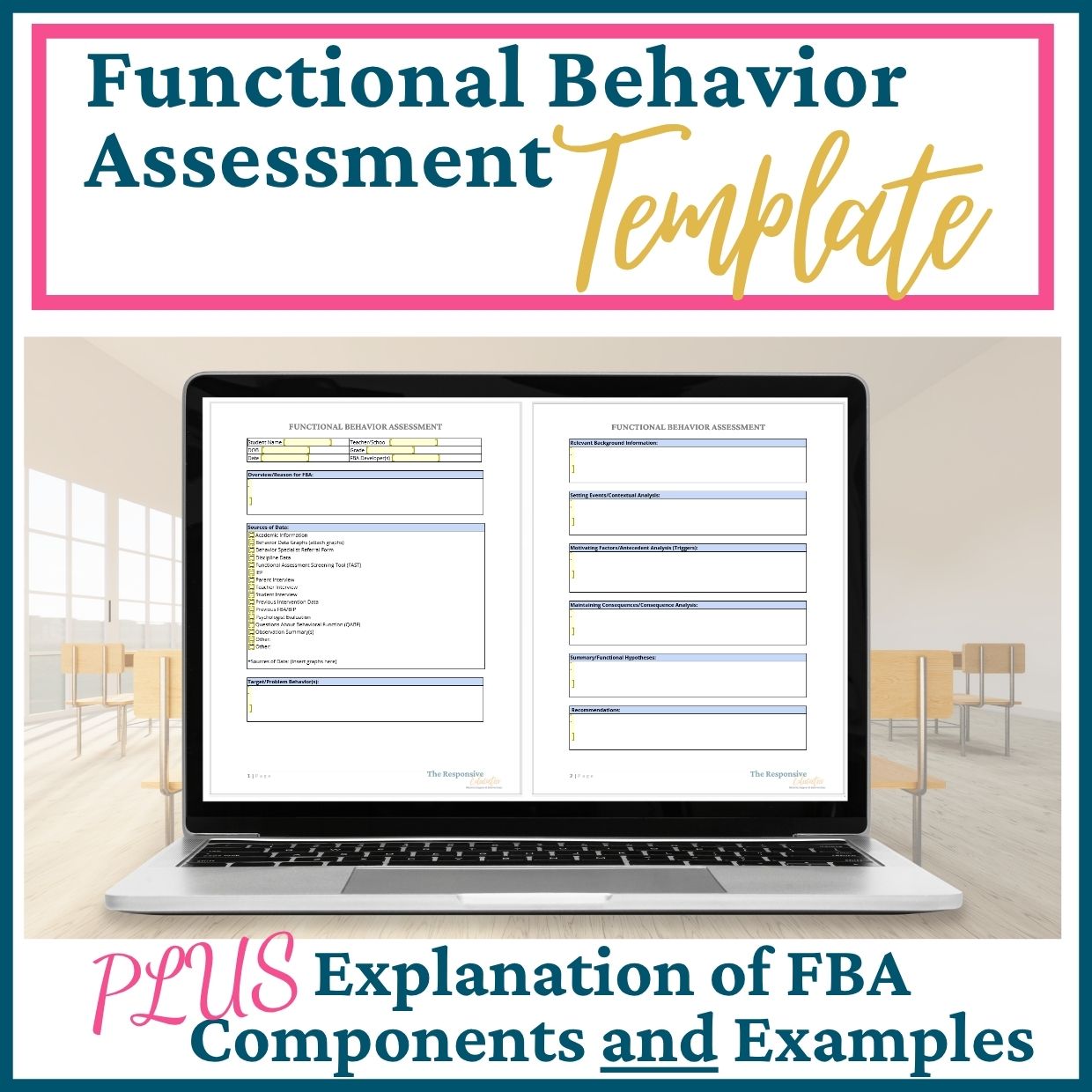
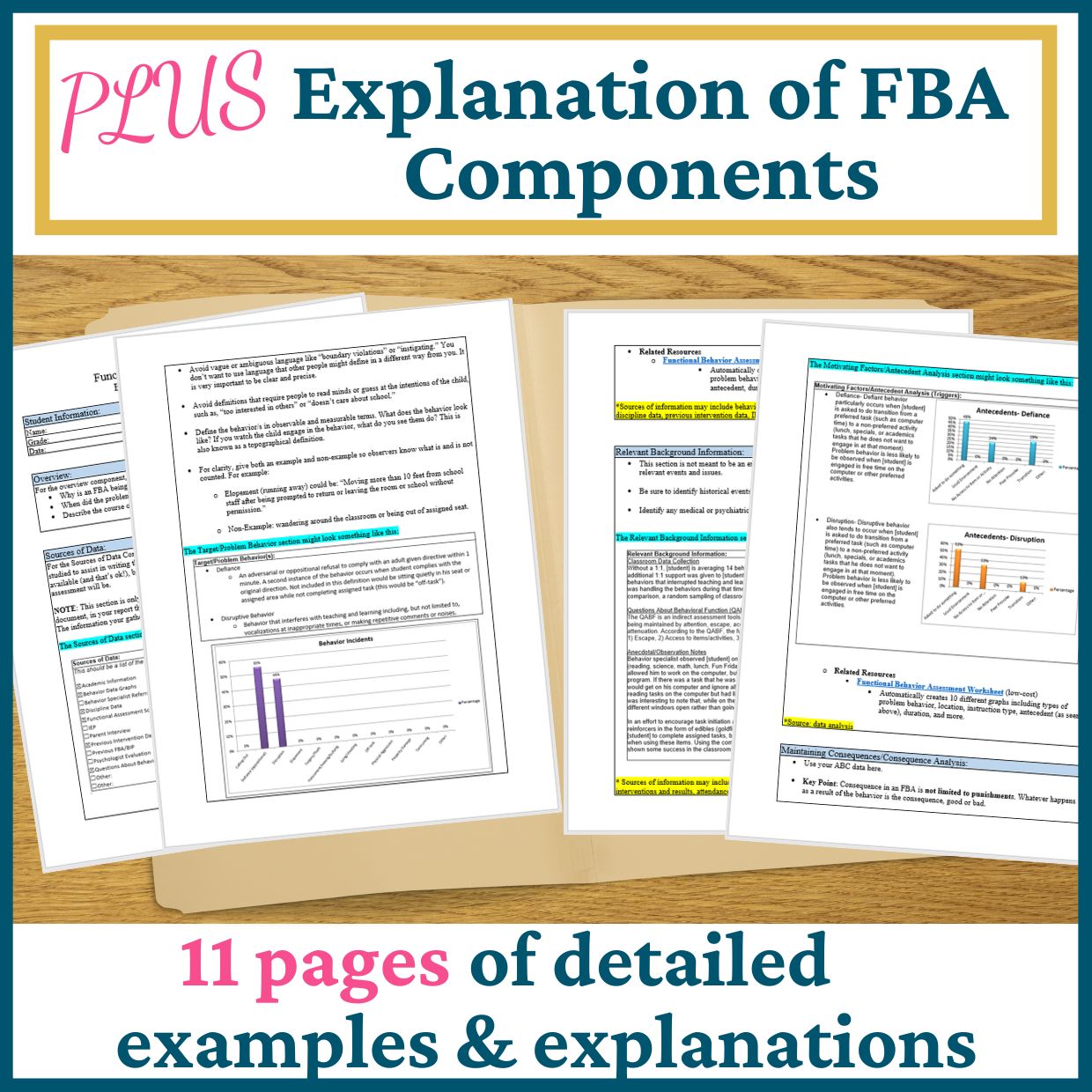
This functional behavior assessment template gives educators the structure and guidance needed to write a clearer, more complete FBA. The resource includes a 2-page editable Microsoft Word FBA form and a separate 11-page PDF guide that explains the major components of a functional behavior assessment using guiding questions, sample language, and section-specific examples.
Writing an FBA involves more than completing a form. Educators must define behaviors clearly, review information from multiple sources, identify meaningful patterns, distinguish setting events from immediate antecedents, examine maintaining consequences, and use the available evidence to develop a defensible functional hypothesis.
When educators receive limited practical training in writing FBAs, important information can be overlooked or documented too broadly to guide intervention planning. This resource explains what belongs in each section and helps you turn records, interviews, observations, and behavior data into a more useful assessment.
Editable Functional Behavior Assessment Template
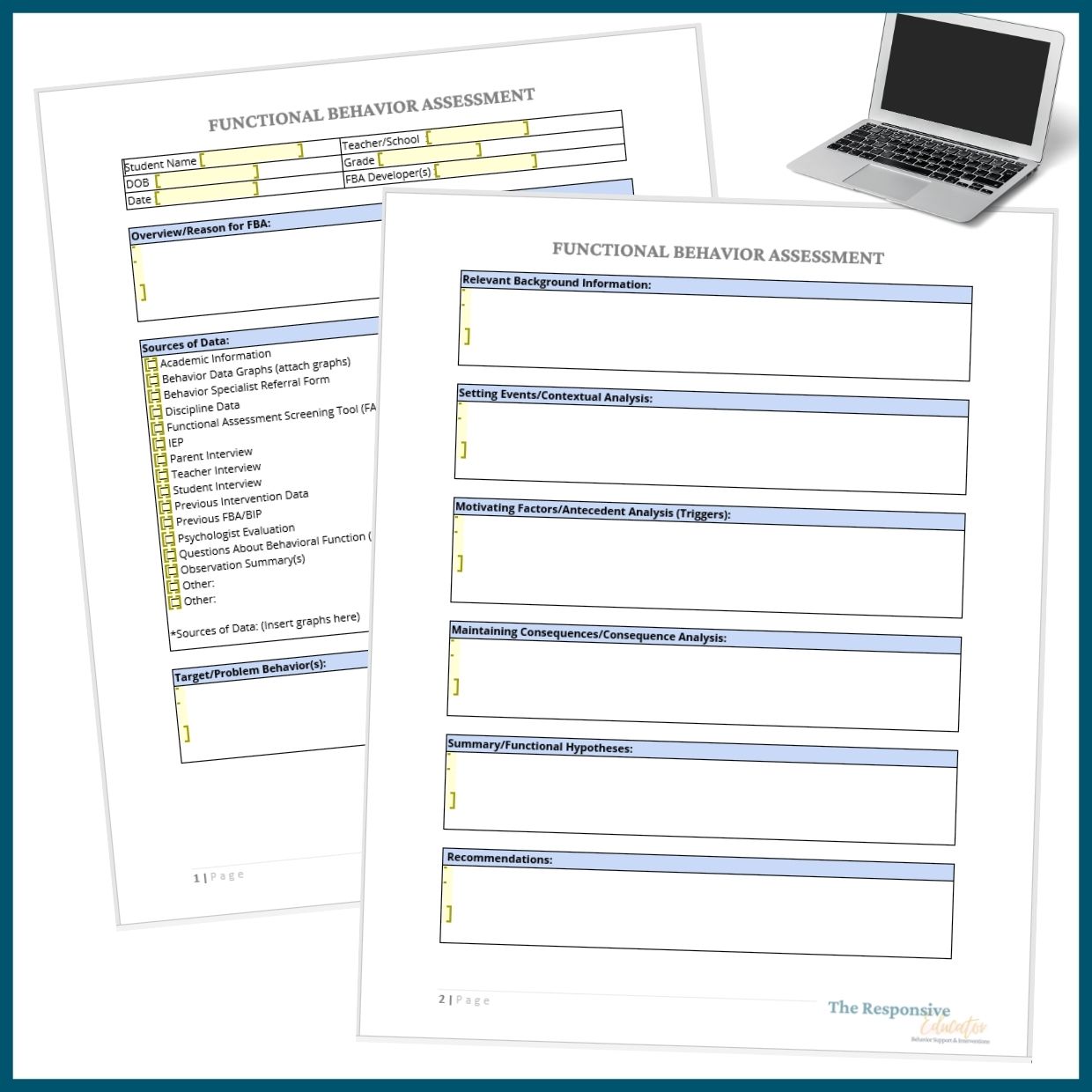
The editable FBA template is provided as a Microsoft Word document. It organizes the major components of the assessment into one consistent form so information can be reviewed and updated as the FBA develops.
The template includes sections for:
- Student information
- Overview and reason for the FBA
- Sources of data
- Target or problem behaviors
- Relevant background information
- Setting events and contextual analysis
- Motivating factors, antecedents, and triggers
- Maintaining consequences
- Summary and functional hypotheses
- Recommendations
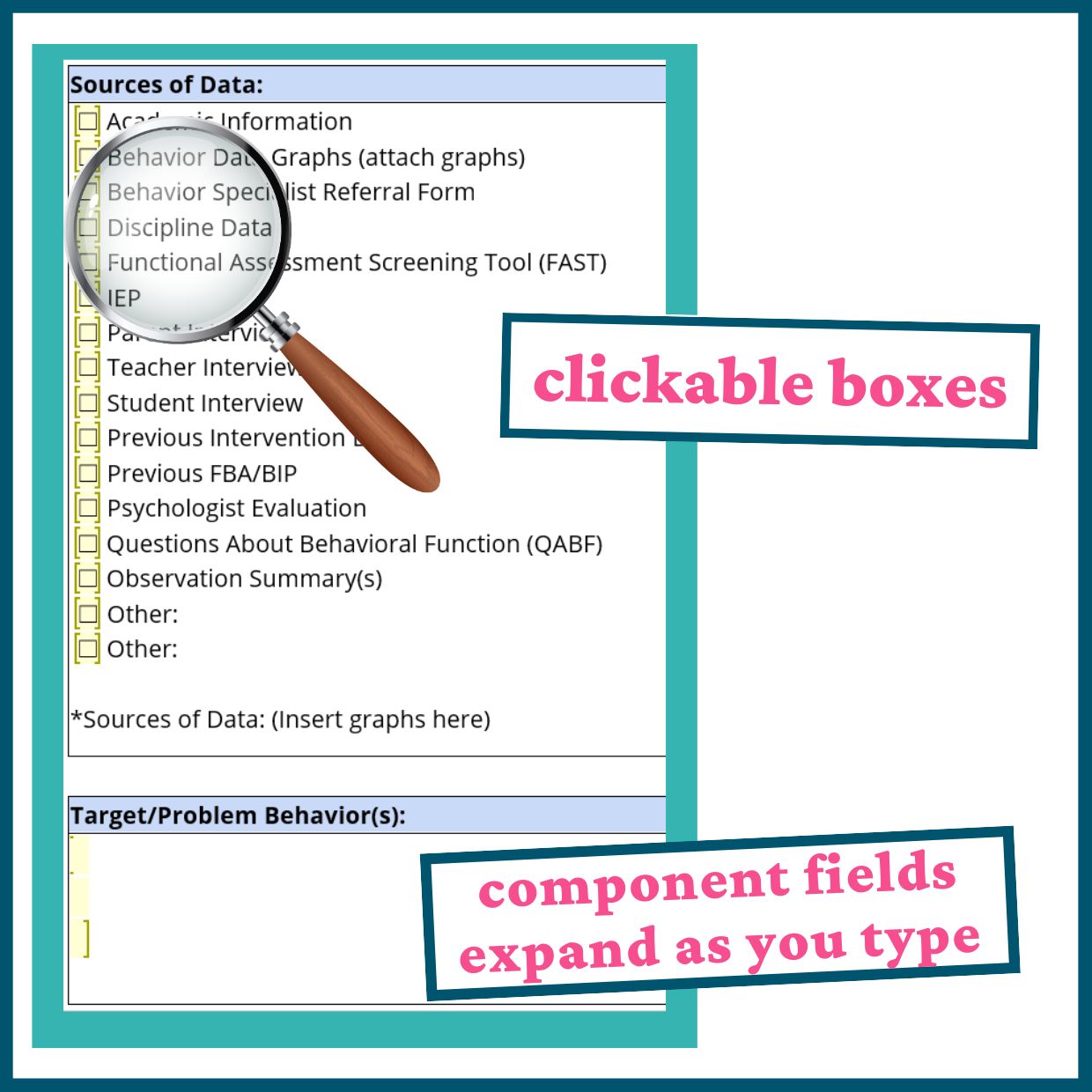
The Word document also includes clickable checkboxes for identifying sources of data. Open documentation areas provide room to enter the information gathered during the assessment process.
A Simple Functional Behavior Assessment Form With Detailed Guidance
If you need a simple functional behavior assessment form but also want more support than a blank template provides, this resource combines an organized form with a detailed explanation guide.
Use the editable Word template to:
- Type information directly into the FBA
- Select data sources using clickable checkboxes
- Add detailed information in open documentation areas
- Update the assessment as new information becomes available
- Maintain consistent documentation across cases
- Organize information for team review and decision-making
The form is straightforward to navigate, while the separate guide explains the analysis and professional judgment needed to complete each section effectively.
Functional Behavior Assessment Guide and Examples
The accompanying 11-page PDF explains the components of an FBA and provides guided functional behavior assessment examples throughout. Instead of only identifying which sections must be completed, the guide explains what to consider, what information belongs in each section, and what stronger documentation may look like.
Examples are organized by FBA component. This resource does not include one fully completed sample FBA for a fictional student.
Sources of Data
Learn how to identify and document relevant sources of information, including:
- Academic information
- Behavior data and graphs
- Discipline records
- Screening tools
- IEP information
- Parent, teacher, and student interviews
- Previous intervention data
- Previous FBAs or BIPs
- Psychological evaluations
- Direct observations
The guide explains why teams should consider information from multiple sources rather than relying on one interview, observation, or data collection method.
Target and Problem Behaviors
Develop target behavior definitions that are observable and measurable. The guide explains how to avoid vague labels, opinion-based descriptions, and definitions that require others to guess what a student is thinking or intending.
It also addresses how to prioritize one to three meaningful target behaviors when several concerns are present.
Relevant Background Information
Determine which medical, academic, attendance, developmental, and contextual factors may be relevant to the student’s behavior. The guide helps you summarize useful background information without turning the FBA into an exhaustive student history.
Setting Events and Context
Examine the settings and situations in which the behavior is most and least likely to occur. The guide explains how setting events differ from the immediate antecedents that occur directly before a behavior.
Understanding this difference helps teams identify the broader conditions that may increase or reduce the likelihood of the target behavior.
Antecedents and Triggers
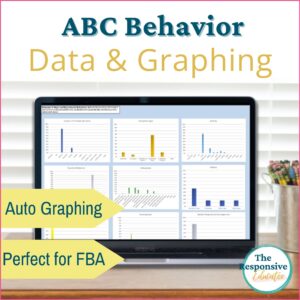
Use ABC data and other information to identify patterns that occur before the behavior. The guide explains how to connect specific antecedents to specific target behaviors and use quantitative information when it is available.
Maintaining Consequences
Examine what usually happens after the behavior, including:
- Adult responses
- Peer reactions
- Changes in academic demands
- Access to attention, activities, or items
- Delays or removal of tasks
- Natural environmental outcomes
The guide clarifies that a consequence is anything that follows a behavior—not only a punishment or deliberate adult response.
Summary and Functional Hypothesis
Bring the collected information together to develop a clear, data-based functional hypothesis. The guide explains how to connect relevant setting events, antecedents, target behaviors, and maintaining consequences without jumping to unsupported conclusions.
It also notes that a behavior may serve more than one function.
What’s Included
- 2-page editable Microsoft Word FBA template
- Clickable checkboxes for documenting sources of data
- Open areas for entering and updating information
- 11-page PDF explanation and examples guide
- Guiding questions for major FBA components
- Sample language and section-specific examples
- Guidance for writing observable and measurable behavior definitions
- Support for identifying antecedent and consequence patterns
- Functional hypothesis guidance
- 13 total pages across two files
File Formats
- Editable FBA template: Microsoft Word document
- Explanation and examples guide: PDF
- The PDF guide is not editable
- The template is not a fillable PDF
Who Is This Resource For?
This resource can support:
- Special education teachers
- Behavior specialists
- School psychologists
- Interventionists
- Case managers
- Student support teams
- Educators learning how to complete FBAs
- Experienced professionals who want a consistent FBA structure
Use this functional behavior assessment form when you need more than a blank template and want practical guidance for turning observations, interviews, records, and behavior data into a clearer explanation of what may be contributing to a student’s behavior.


Reviews
There are no reviews yet.