

Description
These honesty & responsibility behavior reflection sheets help students examine choices involving lying, cheating, blaming others, broken agreements, and avoiding responsibility for mistakes. The resource includes seven targeted behavior think sheets that guide students through what happened, how their choices affected others, and what they can do to begin repairing the situation.
Telling a student to “be honest” or “take responsibility” does not necessarily teach what those skills look like after a mistake. A student may deny a behavior because they fear the consequence, feel embarrassed, want to protect a friendship, or do not yet know how to admit a mistake and move forward.
I designed these sheets to support accountability without turning reflection into shame. Students are guided to examine the situation, recognize its effect on trust and relationships, and develop a more responsible response for next time.
Teaching Honesty and Responsibility After a Mistake
Honesty and responsibility are related, but they are not identical. A student may tell the truth but still blame someone else for their choice. Another student may admit what happened without understanding how to repair the harm.
Each student behavior reflection sheet addresses a specific concern so the conversation can focus on the skill the student actually needs.
Students are guided to consider:
- What happened
- Why it happened
- Who was affected
- Why the behavior mattered
- What they could do instead
- How they might respond in a related situation
- What their plan is for next time
This offers a more meaningful alternative to assigning a behavior essay to copy, demanding an immediate apology, or asking a student to promise that the behavior will never happen again.
What’s Included in the Honesty & Responsibility Behavior Reflection Sheets
This resource includes seven targeted think sheets:
- Cheating on Assignments or Tests
- Lying to Avoid Consequences
- Blaming Others for My Actions
- Refusing to Take Responsibility for Mistakes
- Breaking Promises or Agreements
- Lying or Telling Stories That Are Not True
- Refusing to Admit When I Broke a Rule
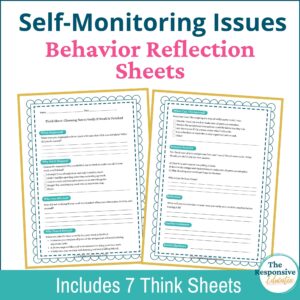
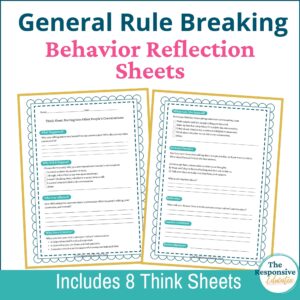
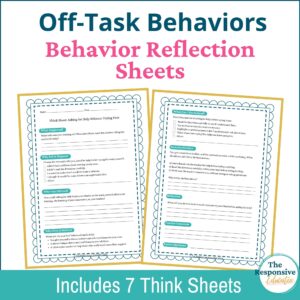
Each topic includes a two-page guided reflection process.
Two-Page Behavior Think Sheet Format
The first page helps students examine the incident by identifying what happened, why it happened, who was affected, and why the behavior created a concern.
The second page moves toward problem-solving and repair. Students identify what they can do instead, apply their thinking to a related scenario, and develop a plan for handling a similar situation more responsibly.
Space is also included for:
- Scenario-based practice
- Student reflection and planning
- Teacher comments
- An optional parent or guardian signature
The behavior-specific format helps students move beyond broad statements such as “I will be honest” and identify an action they can realistically take.
Skills Students Practice
These behavior reflection worksheets support students in:
- Recognizing when a choice was dishonest
- Understanding why honesty affects trust
- Separating their own actions from another person’s choices
- Taking responsibility for mistakes
- Recognizing the effect of blaming others
- Understanding the importance of promises and agreements
- Considering choices and consequences
- Identifying an appropriate way to repair harm
- Planning how to respond more honestly in the future
- Making responsible choices even when the truth is uncomfortable
The purpose is not to label a student as dishonest or irresponsible. It is to teach honesty, accountability, and repair as skills students can practice and strengthen.
Ways to Use These Behavior Reflection Sheets
Use the sheets during:
- Individual behavior reflection
- Restorative conversations
- Conflict resolution
- SEL or character-education lessons
- Classroom problem-solving
- Behavior intervention planning
- MTSS or student-support meetings
- Parent-teacher conferences
- Home-school communication
- Reentry conversations after an incident
- Informal documentation of recurring behavior patterns
Completed sheets may help teachers notice whether dishonesty is connected to avoiding consequences, academic difficulty, peer pressure, embarrassment, impulsivity, or another concern requiring additional support.
Reflection Should Not Become a Forced Confession
These sheets work best after adults have enough information to understand the situation and the student is calm enough to reflect. They should not be used to pressure a student into agreeing with an adult’s version of an event or writing an admission simply to end the conversation.
If facts are still unclear, the adult can use neutral questions and gather additional information first. Meaningful accountability depends on understanding what happened—not forcing a predetermined response.
Students may also need direct instruction and support with:
- Admitting a mistake
- Asking for help before cheating
- Managing fear of consequences
- Correcting inaccurate information
- Offering a meaningful apology
- Repairing damaged trust
- Disagreeing respectfully about what happened
- Accepting a reasonable consequence
- Making amends after a choice affects someone else
The reflection sheet can organize this conversation, but it does not replace instruction, relationship repair, environmental support, or an individualized assessment when one is needed.
Build Accountability Without Shame
Students need to understand that mistakes have consequences and may affect trust. They also need to know that acknowledging a mistake gives them an opportunity to repair harm, learn a different response, and make a more responsible choice.
These honesty and responsibility behavior reflection sheets and behavior think sheets provide a structured way to teach that process while keeping the focus on growth, accountability, and better choices.
Need Think Sheets for Other Student Behaviors?
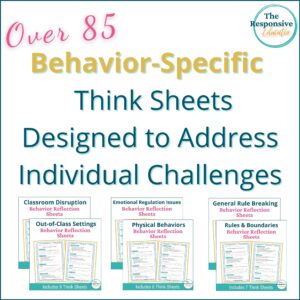
This individual think sheet is also included in the Student Behavior Reflection Sheets and Think Sheets Bundle. The complete bundle includes more than 85 behavior-specific reflection tools covering classroom disruptions, following directions, off-task behavior, emotional regulation, peer conflicts, honesty, rules and boundaries, physical behavior, transitions, self-monitoring, and behavior in out-of-class settings.
Choose the complete bundle if you need a coordinated collection of targeted think sheets for a wide range of classroom behavior concerns.
Reviews
There are no reviews yet.