Description
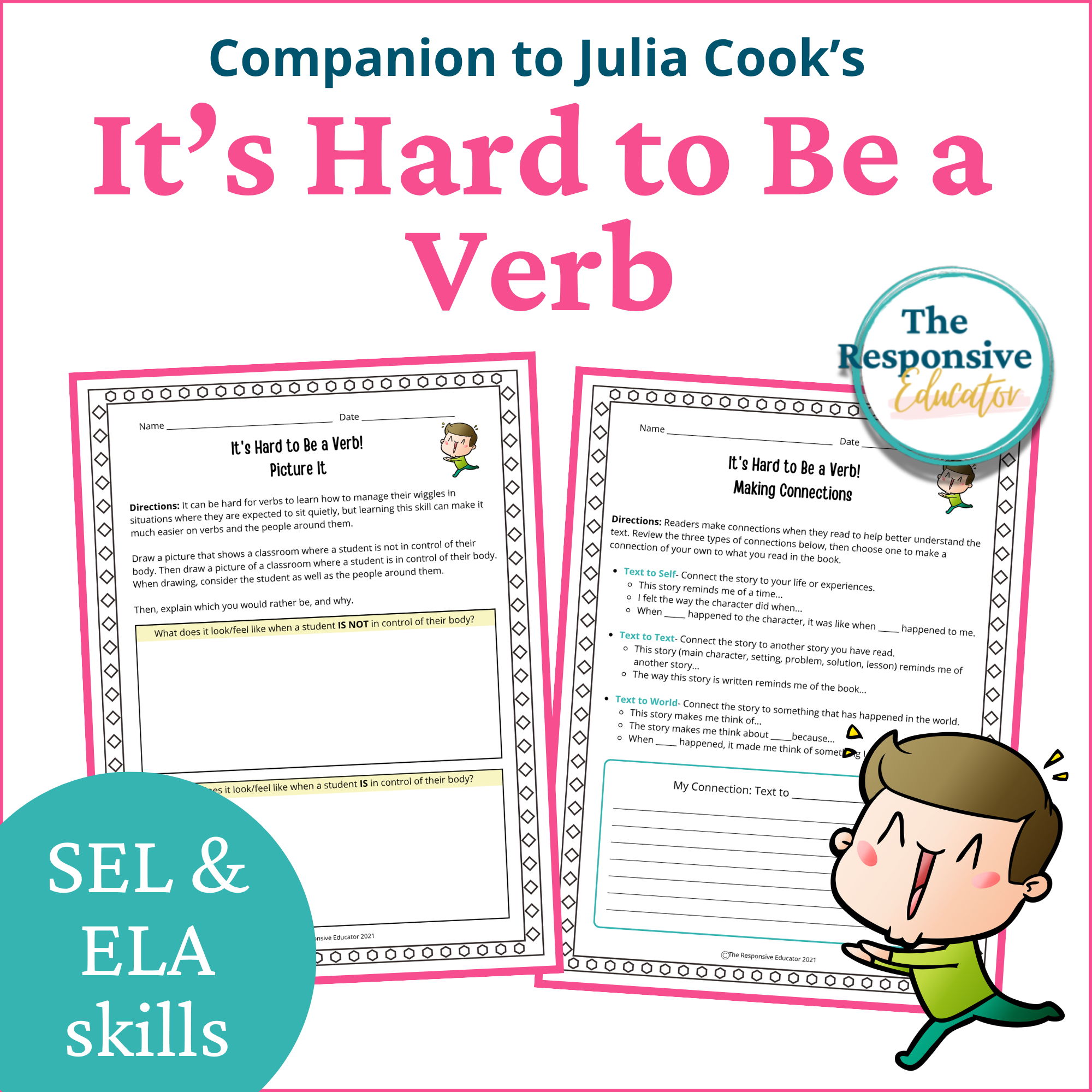
Impulse control worksheets and activities help students recognize their impulses, practice pausing before acting, and choose strategies for managing attention and movement. This companion for Julia Cook’s It’s Hard to Be a Verb! includes 96 pages with more than 40 differentiated SEL and literacy activities, designed for students in 2nd–5th grade.
An interactive read-aloud lesson plan and follow-up activities connect the story to everyday classroom experiences. Students explore self-control, staying on task, and asking for support while practicing reading comprehension, discussion, and writing.
Teach the Skills Behind Impulsive Behavior
A student may know the expectation and still struggle to wait, stop an action, or return attention to a task. Interrupting, touching materials, rushing through work, or leaving a seat can signal a need for instruction and support with impulse control and self-regulation.
Repeated reminders can help in the moment, but students also need opportunities to recognize what is happening and practice what to do next. This companion gives you a structured way to discuss those challenges through a relatable character before connecting the lesson to students’ own experiences.
Students practice:
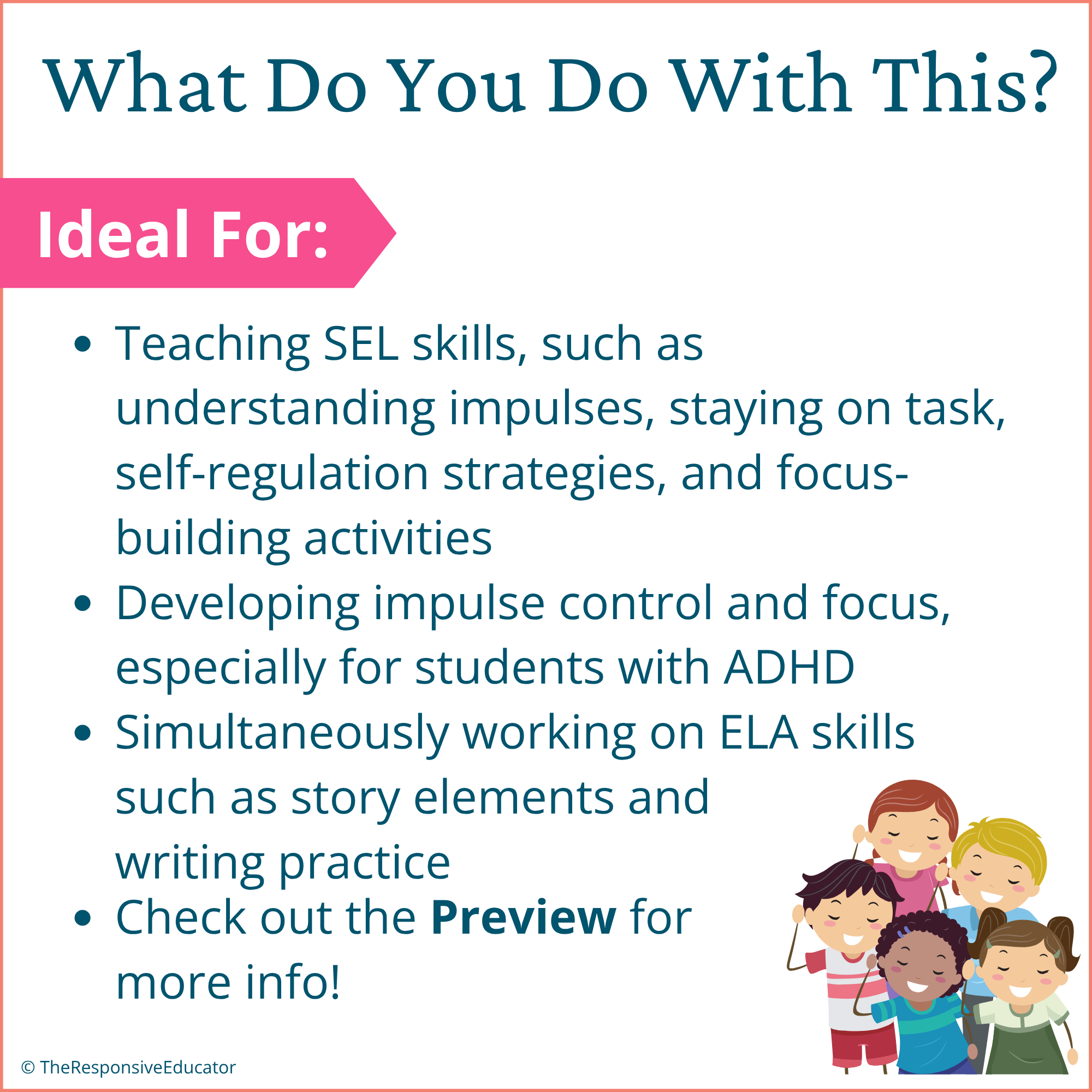
- Understanding impulses and recognizing when they act before thinking
- Noticing body signals and situations that make self-control difficult
- Pausing before acting or speaking
- Considering possible outcomes and alternative responses
- Identifying strategies for movement, attention, and self-regulation
- Asking appropriately for support
- Reflecting on choices and taking responsibility
Impulse Control Worksheets With Practical Reflection
The impulse control worksheets help students examine the connection between an urge, an action, and what happens afterward. Through scenarios, discussion, and reflection, students consider what the character wanted to do, how the response affected others, and what another choice might have looked like.
Stop-and-think practice gives students opportunities to consider a response before acting. Written reflection pages also allow students to apply the concepts individually without being expected to discuss personal situations with the whole class.
These activities help you teach a process students can practice: notice the impulse, pause, consider a strategy, and reflect on whether it helped.
Support Self-Control, Movement, and Staying on Task
Students need different supports for managing attention and movement. A strategy that helps during independent work may not be the right choice during a group discussion or while waiting for a turn.
The self-control worksheets and self-regulation activities encourage students to consider what makes participation easier or harder for them. Discussion can help students identify useful supports, such as movement, visual reminders, self-talk, smaller work steps, or asking for help.
The purpose is to support successful participation while respecting students’ needs. Students with ADHD or other executive-functioning differences may benefit from this instruction, as can classmates who are developing greater awareness of their own attention and impulses.
Connect SEL With Literacy Instruction
The interactive read-aloud lesson plan includes questions for before, during, and after reading. These prompts guide conversations about Louis’s experiences, the strategies he learns, and how students might respond in similar situations.
Follow-up ELA activities include predictions, summarizing, character analysis, comparing and contrasting, cause and effect, text-to-self connections, and writing. You can address impulse control and self-regulation alongside literacy objectives, then revisit the skills through different types of practice.
What’s Included
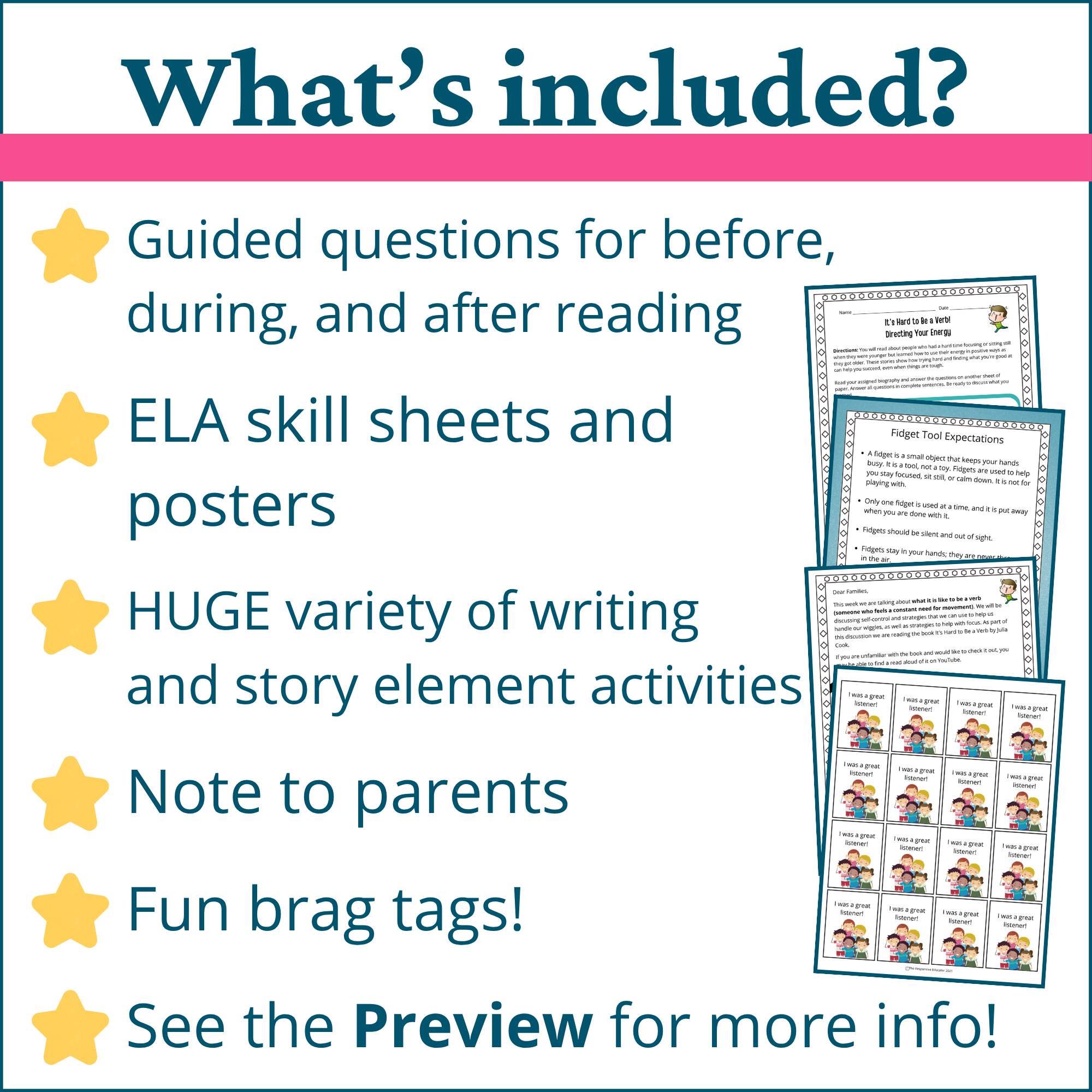
- 96 pages with more than 40 differentiated activities
- Interactive read-aloud lesson plan with before-, during-, and after-reading questions
- Impulse control worksheets and activities
- Self-control and self-regulation practice
- Staying on task and focus-building activities
- Choices and consequences activities
- Reflection and writing pages
- ELA activities for comprehension, character analysis, and writing
- ELA posters and visual supports
- Real photographs to support understanding and engagement
- Family connection notes for supporting attention and self-regulation at home
Flexible Ways to Use This Companion
Use the materials during whole-class interactive read-alouds, small-group SEL or executive-functioning instruction, counseling groups, literacy centers, or individual reteaching.
You do not need to complete every page. Select activities that match your students’ readiness, needs, and instructional goals. The variety allows you to return to impulse control, attention, and responsibility over several days or weeks without repeating the same assignment.
In self-contained settings, the companion can support repeated instruction and guided practice. Pair the activities with opportunities to use the strategies during daily routines so students can begin applying what they learn beyond the lesson.
File Format and License
- Digital download with printable PDF materials
- Files available immediately after purchase
- Licensed for use by one educator
- Redistribution or sharing of the files is not permitted
- The picture book is not included. You will need access to Julia Cook’s It’s Hard to Be a Verb! to use the read-aloud lesson.



Reviews
There are no reviews yet.