Description
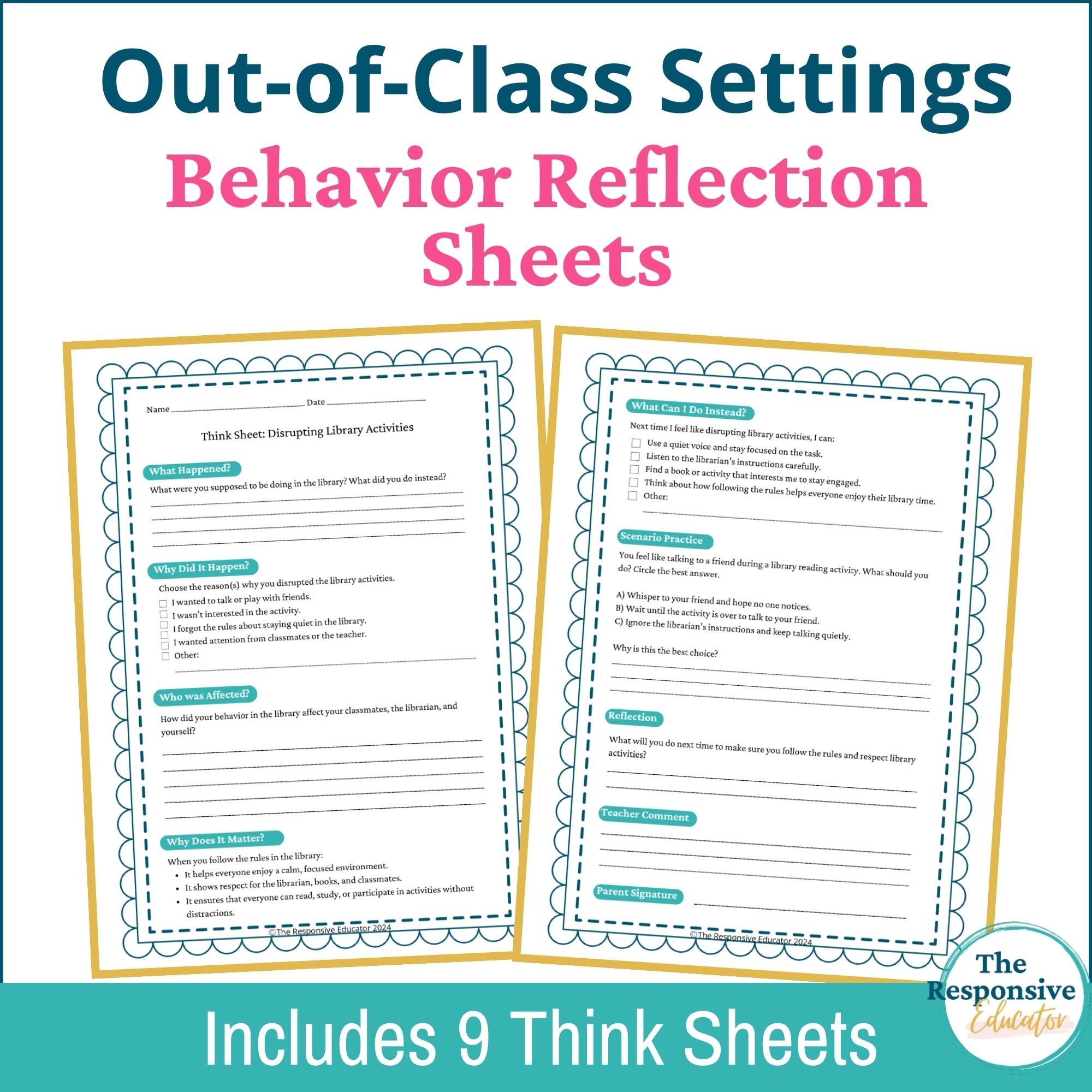
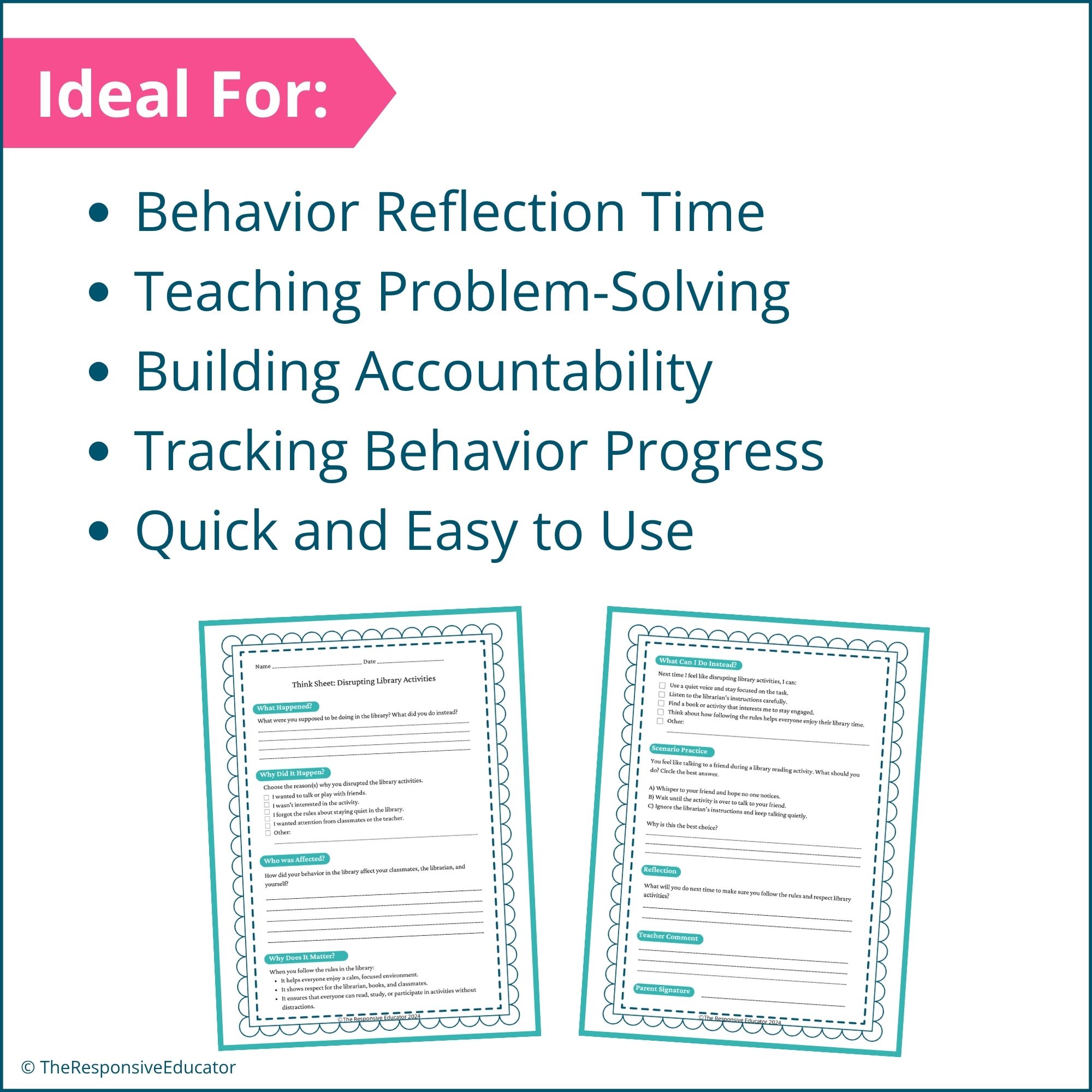
These out-of-class behavior reflection sheets help students examine choices made during lunch, recess, specials, transportation, assemblies, field trips, and other settings outside their regular classroom. The resource includes nine targeted behavior think sheets that guide students through what happened, how others were affected, and what they can do differently in a similar situation.
Some students follow expectations successfully in their regular classroom but struggle when the setting, supervising adult, schedule, or level of structure changes. Simply telling a student to “behave everywhere” does not necessarily help them recognize how expectations apply in the cafeteria, on the bus, during specials, or at a school event.
I designed these sheets to help students connect expectations across settings and develop a practical plan for handling similar situations more successfully.
Targeted Reflection for Different School Settings
Behavior outside the classroom can involve different routines, expectations, adults, and levels of independence. A student who struggles during a field trip may need a different conversation from a student who disrupts library activities or has difficulty during lunch.
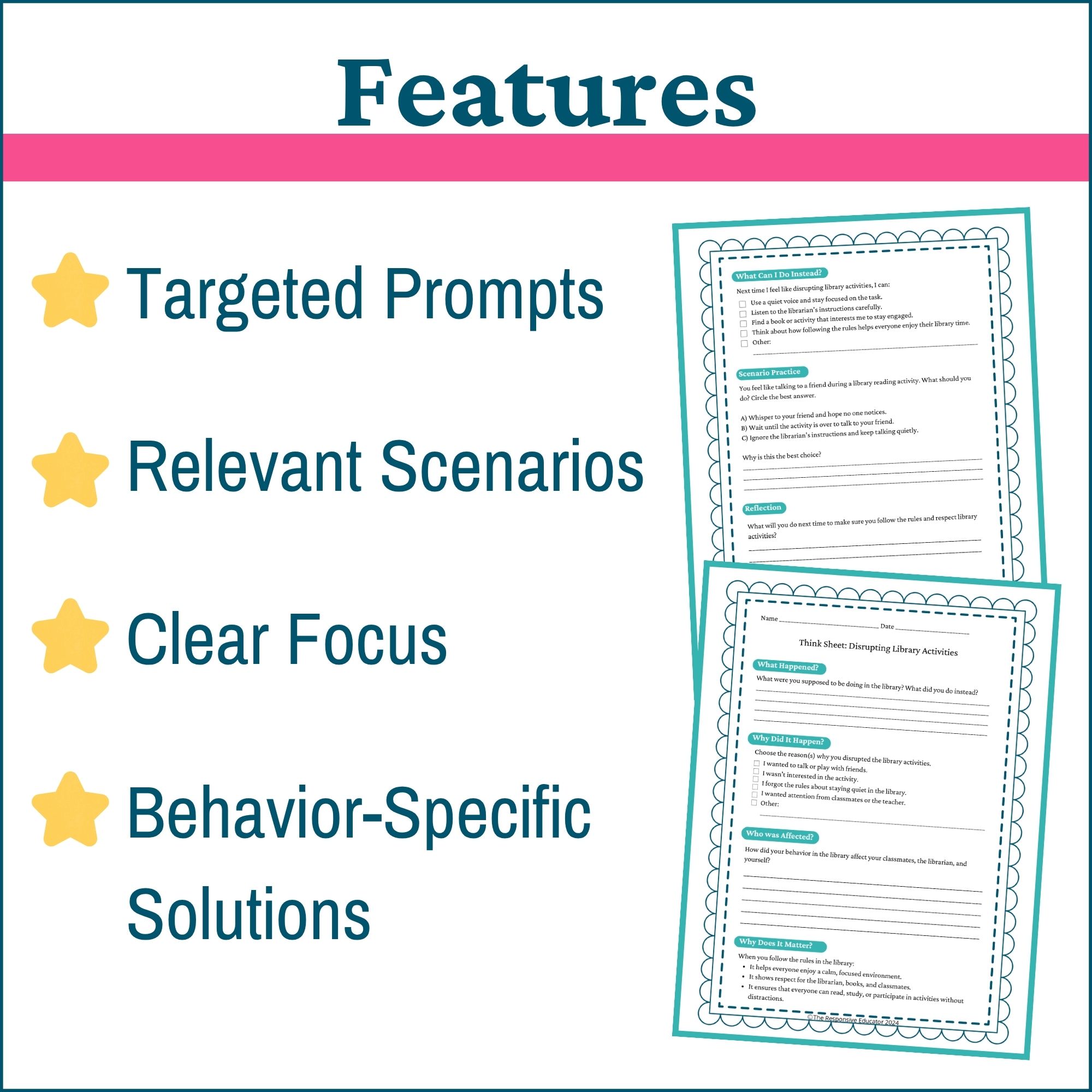
Each student behavior reflection sheet focuses on one setting so students can examine the specific situation rather than completing the same generic form after every incident.
Students are guided to consider:
- What happened
- Why it happened
- Who was affected
- Why the behavior mattered
- What they could do differently
- How they might respond in a related situation
- What their plan is for next time
This structure shifts the conversation from simply identifying a broken rule toward understanding, problem-solving, and applying appropriate behavior across environments.
What’s Included in the Out-of-Class Behavior Reflection Sheets
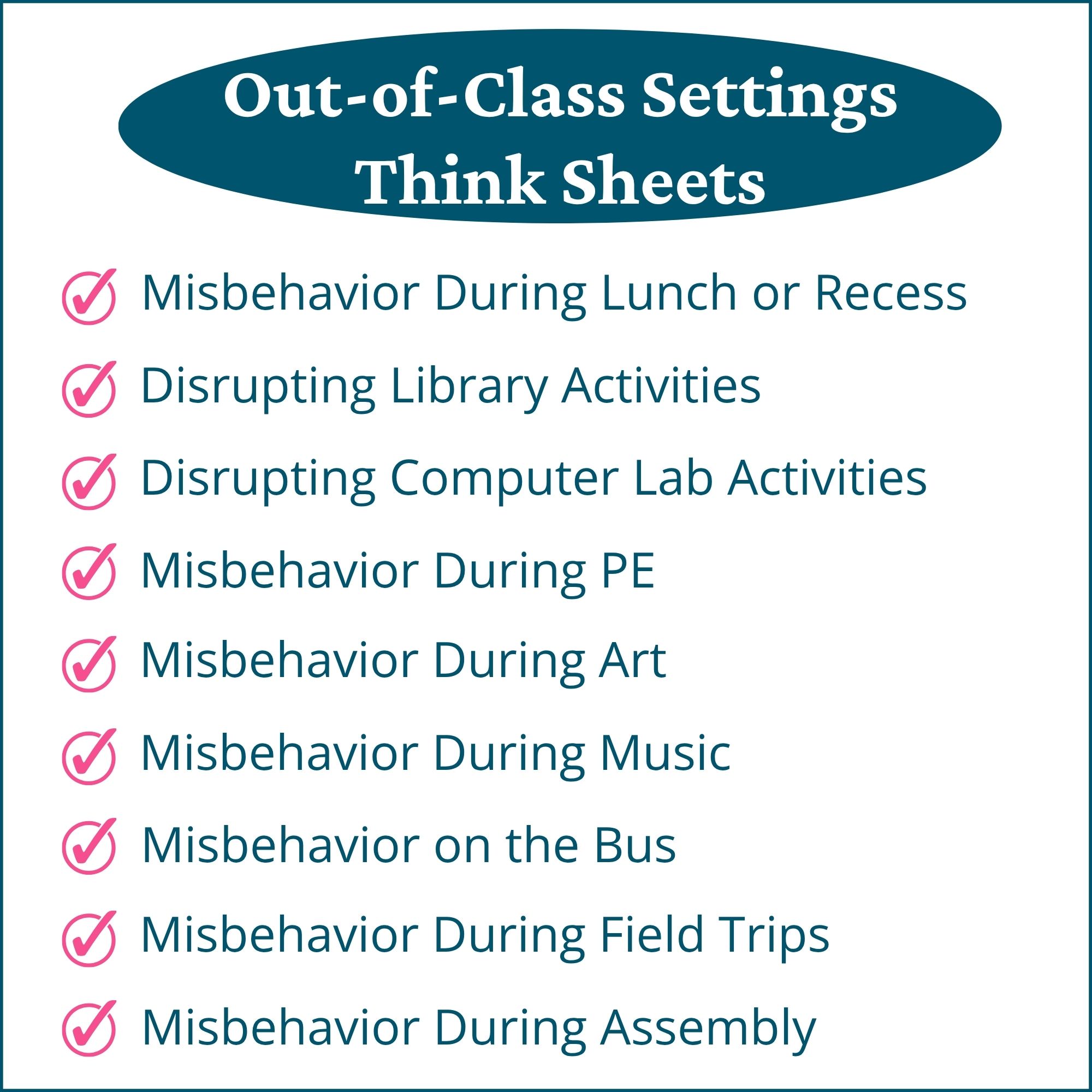
This resource includes nine targeted think sheets:
- Misbehavior During Lunch or Recess
- Disrupting Library Activities
- Disrupting Computer Lab Activities
- Misbehavior During Physical Education
- Misbehavior During Art
- Misbehavior During Music
- Misbehavior on the Bus
- Misbehavior During Field Trips
- Misbehavior During an Assembly
Each topic includes a two-page guided reflection process.
Two-Page Behavior Think Sheet Format
The first page helps students examine the incident by identifying what happened, why it happened, who was affected, and why the behavior was a concern.
The second page helps students move forward. Students identify an alternative response, apply their thinking to a related scenario, and create a plan for a future situation.
Space is also included for:
- Scenario-based practice
- Student reflection and planning
- Teacher comments
- An optional parent or guardian signature
This format provides a more meaningful alternative to assigning a behavior essay to copy or asking a student to complete a generic consequence without examining the specific setting.
Skills Students Practice
These behavior reflection worksheets help students practice:
- Recognizing expectations across different school settings
- Adjusting behavior for different activities and environments
- Following directions from teachers and other supervising adults
- Considering how behavior affects classmates, staff, and the larger group
- Participating safely during less-structured activities
- Taking responsibility for choices
- Identifying a more appropriate response
- Generalizing familiar skills beyond the regular classroom
- Developing a specific plan for next time
Students need to understand that expectations may look somewhat different in the cafeteria, gym, library, bus, or community while the underlying skills—safety, respect, responsibility, and awareness of others—remain important.
Ways to Use These Behavior Reflection Sheets
Use the sheets during:
- Individual behavior reflection
- Restorative conversations
- Reteaching after an incident
- Classroom or schoolwide problem-solving
- SEL and social-skills instruction
- Behavior intervention planning
- MTSS or student-support meetings
- Parent-teacher conferences
- Home-school communication
- Reentry conversations
- Informal documentation of recurring patterns across settings
Completed sheets may help teams identify whether a student struggles in one particular environment or has difficulty generalizing expectations across several settings.
Look Beyond the Location of the Behavior
A behavior occurring outside the classroom does not automatically mean the student is choosing to ignore expectations. The student may struggle because the environment is louder, less predictable, more stimulating, or supervised by an unfamiliar adult. The expectations may also have been taught in the classroom without being explicitly practiced in other settings.
The reflection sheet can help begin the conversation, but students may also need:
- Expectations taught within the actual setting
- Precorrection before entering the environment
- Visual reminders
- Practice with the routine
- Additional adult support
- A plan for managing noise, waiting, or unstructured time
- Reinforcement for using the expected skill independently
These sheets should be completed after the student is calm and able to reflect. They are not a replacement for direct instruction, accommodations, environmental changes, or an individualized assessment when those supports are needed.
Help Students Apply Expectations Across Settings
Students gradually become more independent when they can recognize what a new setting requires and use familiar skills without relying on the same adult prompts.
These out-of-class behavior reflection sheets and behavior think sheets give students a structured way to examine choices, understand their effect on others, and prepare for more successful participation throughout the school day.


Reviews
There are no reviews yet.