

Description
These unsafe physical behavior reflection sheets help students examine incidents involving aggression, throwing objects, unwanted touching, property damage, climbing, spitting, and other physical behaviors. The resource includes eight targeted behavior think sheets that guide students through what happened, how others were affected, and what they can do differently in a similar situation.
Telling a student to “keep your hands to yourself” or “make a safe choice” identifies the expectation, but it may not teach the student how to respond when frustrated, overwhelmed, impulsive, or trying to communicate a need.
I designed these sheets to be used after safety has been restored and the student is calm enough to reflect. Each sheet helps students examine the specific behavior, recognize its effect, and plan a safer response for next time.
Reflection After Unsafe Physical Behavior
Unsafe physical behavior requires immediate adult action to protect the student and other people. Reflection comes later. A student who is actively escalated is not ready to complete a worksheet, explain their behavior, or develop a meaningful plan.
Once the student is regulated, each targeted reflection sheet guides them to consider:
- What happened
- Why it happened
- Who was affected
- Why the behavior mattered
- What they could do instead
- How they might respond in a related situation
- What their plan is for next time
This provides a more meaningful alternative to assigning a behavior essay to copy or requiring an immediate written apology before the student understands what happened.
What’s Included in the Unsafe Physical Behavior Reflection Sheets and Think Sheets
This resource includes eight targeted think sheets:
- Pushing, Hitting, or Physical Aggression
- Throwing Objects
- Touching Others Without Permission
- Damaging Things That Belong to Others
- Climbing on Furniture
- Slamming or Banging Objects
- Snatching Things From Others
- Spitting at Others
Each topic includes a two-page guided reflection process.
Two-Page Behavior Think Sheet Format
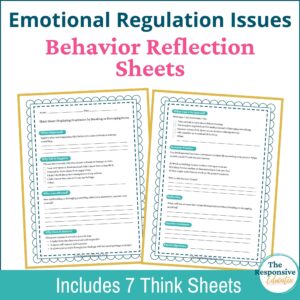
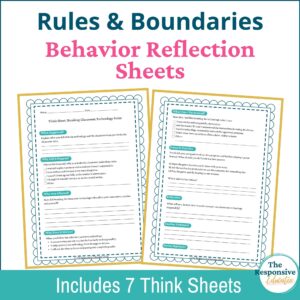
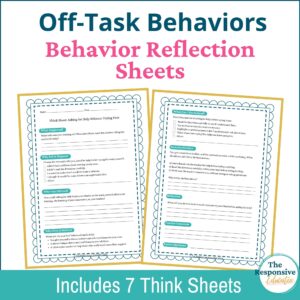
The first page helps students examine the incident by identifying what happened, why it happened, who was affected, and why the behavior created a safety or relationship concern.
The second page moves toward instruction and repair. Students identify what they can do instead, respond to a related scenario, and develop a plan for handling a similar situation more safely.
Space is also included for:
- Scenario-based practice
- Student reflection and planning
- Teacher comments
- An optional parent or guardian signature
The behavior-specific format helps students identify a realistic replacement response rather than writing a general statement such as “I will be safe next time.”
Skills Students Practice
These behavior reflection worksheets and think sheets can help students practice:
- Recognizing unsafe physical behavior
- Understanding how physical actions affect other people
- Respecting personal space and bodily boundaries
- Identifying what happened before the behavior
- Recognizing frustration, anger, or impulsive reactions
- Choosing a safer replacement behavior
- Asking for help or space appropriately
- Taking responsibility without shame or labels
- Considering how to repair harm
- Creating a specific safety plan for next time
The purpose is not to label a student as aggressive or unsafe. The behavior needs to be addressed clearly, but the student also needs instruction in the skill or response that should replace it.
Ways to Use These Behavior Reflection Sheets and Think Sheets
Use the sheets during:
- Individual behavior reflection
- Restorative conversations
- Reentry after a safety incident
- Behavior intervention planning
- SEL or self-regulation instruction
- School counseling or behavior-support sessions
- MTSS and student-support meetings
- Parent-teacher conferences
- Home-school communication
- Informal documentation of recurring patterns
- Follow-up practice after teaching replacement behaviors
Completed sheets may provide useful information about triggers, settings, peer interactions, difficult tasks, denied access, sensory needs, or situations in which the student needs additional support.
Safety Comes Before Reflection
These worksheets are not crisis-response tools. Adults should first address immediate safety, provide appropriate space and support, and follow the student’s individual crisis or safety plan when one exists.
The sheets should not be handed to a student during escalation or used to require an immediate explanation. Reflection is more useful when the student can think clearly and participate without the activity becoming another power struggle.
A student who uses unsafe physical behavior may need support with:
- Recognizing early signs of escalation
- Requesting help, space, or a break
- Communicating frustration
- Tolerating disappointment
- Managing impulses
- Responding to peer conflict
- Leaving a difficult situation safely
- Using an appropriate sensory or regulation strategy
- Repairing damage or restoring trust
- Practicing a replacement behavior with adult guidance
These sheets do not replace direct instruction, supervision, a safety plan, a behavior intervention plan, or a functional behavior assessment when one is needed.
Accountability Should Include Repair
Understanding the behavior is important, but it does not remove accountability. When appropriate, students may also need to repair or replace damaged property, check on someone who was affected, offer a meaningful apology, or practice the safer response they should use next time.
The type of repair should fit the situation and the student’s developmental level. It should help the student understand the effect of the behavior rather than simply adding punishment.
Teach a Safer Response for Next Time
Students need firm safety expectations, but reminders alone may not give them the tools to respond differently during a difficult moment. Lasting change requires identifying the skill underneath the behavior and teaching a safer way to communicate, regulate, or solve the problem.
These unsafe physical behavior reflection sheets and behavior think sheets provide a structured way to support reflection, accountability, repair, and planning after a physical behavior incident.
Need Think Sheets for Other Student Behaviors?
This individual think sheet is also included in the Student Behavior Reflection Sheets and Think Sheets Bundle. The complete bundle includes more than 85 behavior-specific reflection tools covering classroom disruptions, following directions, off-task behavior, emotional regulation, peer conflicts, honesty, rules and boundaries, physical behavior, transitions, self-monitoring, and behavior in out-of-class settings.
Choose the complete bundle if you need a coordinated collection of targeted think sheets for a wide range of classroom behavior concerns.
Reviews
There are no reviews yet.