Description
Accepting No Social Support Story for Emotional Regulation and Coping Skills
Some students hear “no” and immediately begin arguing, negotiating, crying, shutting down, or having a much bigger reaction than the situation seems to call for. What appears to be defiance may mean that the student does not yet have the frustration-tolerance, flexible-thinking, or emotional-regulation skills needed to handle disappointment.
This Accepting No Social Support Story breaks the process down in a clear, supportive, and visual way. Instead of simply telling students to “stay calm” or “make a better choice,” the story helps them understand why hearing “no” feels difficult, why adults sometimes set limits, and what they can do next.
Teach Students What to Do When the Answer Is No
Accepting “no” does not mean that students cannot feel disappointed. It means learning how to experience that disappointment without yelling, arguing, repeatedly asking, becoming aggressive, or disrupting the people around them.
The story helps students learn how to:
- Recognize their feelings when they hear “no”
- Understand that disappointment is uncomfortable but manageable
- Notice how their reactions affect other people
- Read facial expressions and body language
- Use calming strategies before responding
- Accept limits without repeated arguing or negotiation
- Choose a safer and more respectful response
- Repair the situation when their reaction has affected someone else
- Move forward even when they do not get what they want
Students do not have to like the answer. They do need to learn how to respond to it safely and appropriately.
Explain Why Adults Sometimes Say No
Some students interpret “no” as unfair, personal, or unnecessarily controlling. This story helps them understand that adults may set limits for many reasons, including:
- Safety
- Fairness
- Timing
- Responsibilities
- Rules and expectations
- The needs of other people
Students also learn that they may not always understand the reason in the moment. They can ask an appropriate question when the situation allows, but they still need to respect the limit and manage their response.
More Than a Reminder to Stay Calm
Many resources focus only on the expected behavior. This story also helps students understand the thoughts, feelings, and social information connected to the situation.
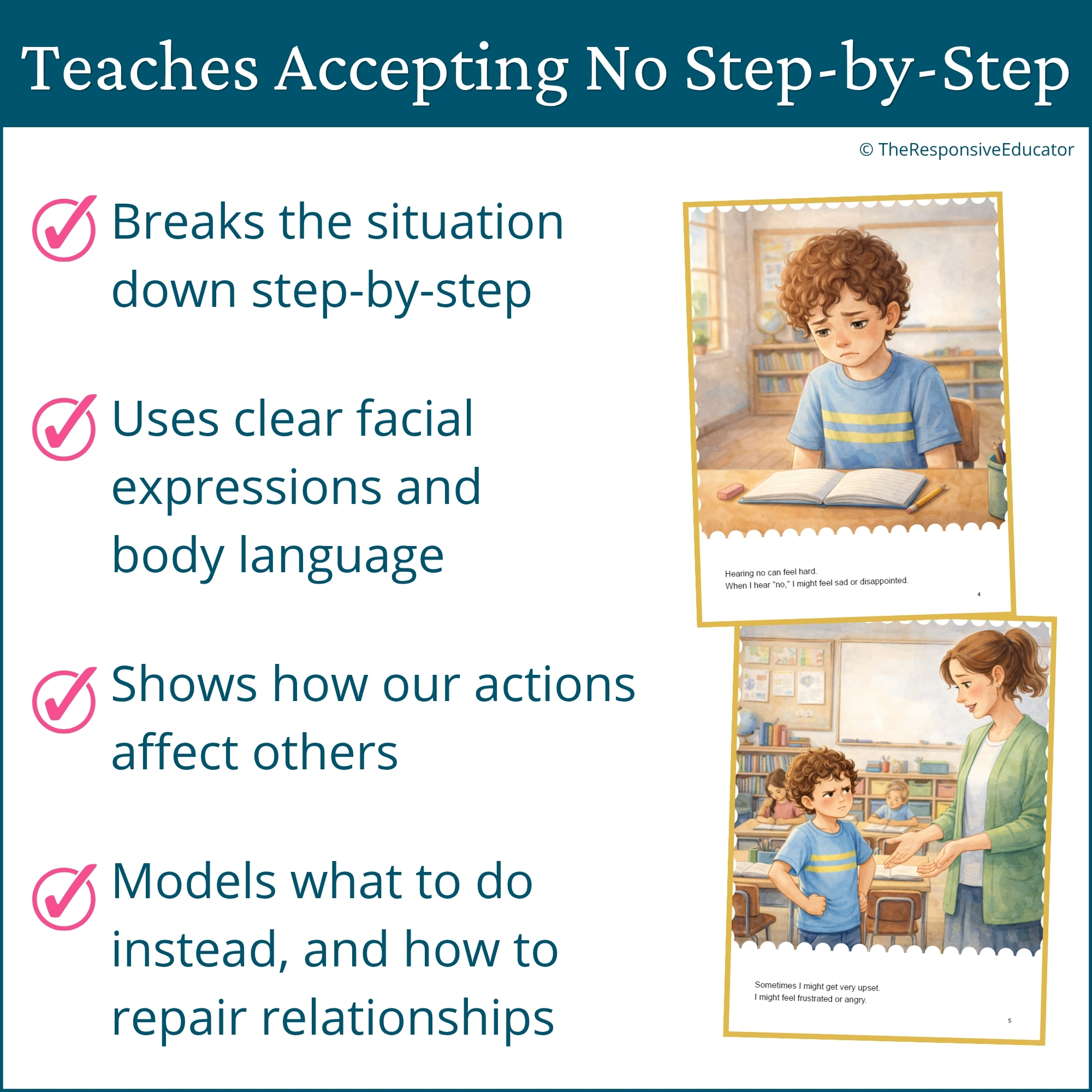
Clear illustrations show:
- Facial expressions
- Body language
- Emotional reactions
- How an outburst affects peers and adults
- What more appropriate choices look like
- How students can begin repairing the interaction afterward
This supports emotional regulation without removing accountability. Students are given tools for handling strong feelings while also learning that their behavior affects the people around them.
Skills Supported
This Accepting No Social Support Story supports:
- Emotional regulation
- Frustration tolerance
- Flexible thinking
- Handling disappointment
- Respecting limits and boundaries
- Self-management
- Perspective-taking
- Reading social cues
- Relationship repair
- Appropriate communication
Repeated exposure helps students become more familiar with the process so they can begin using the strategies with less adult prompting.
What’s Included
This digital resource includes:
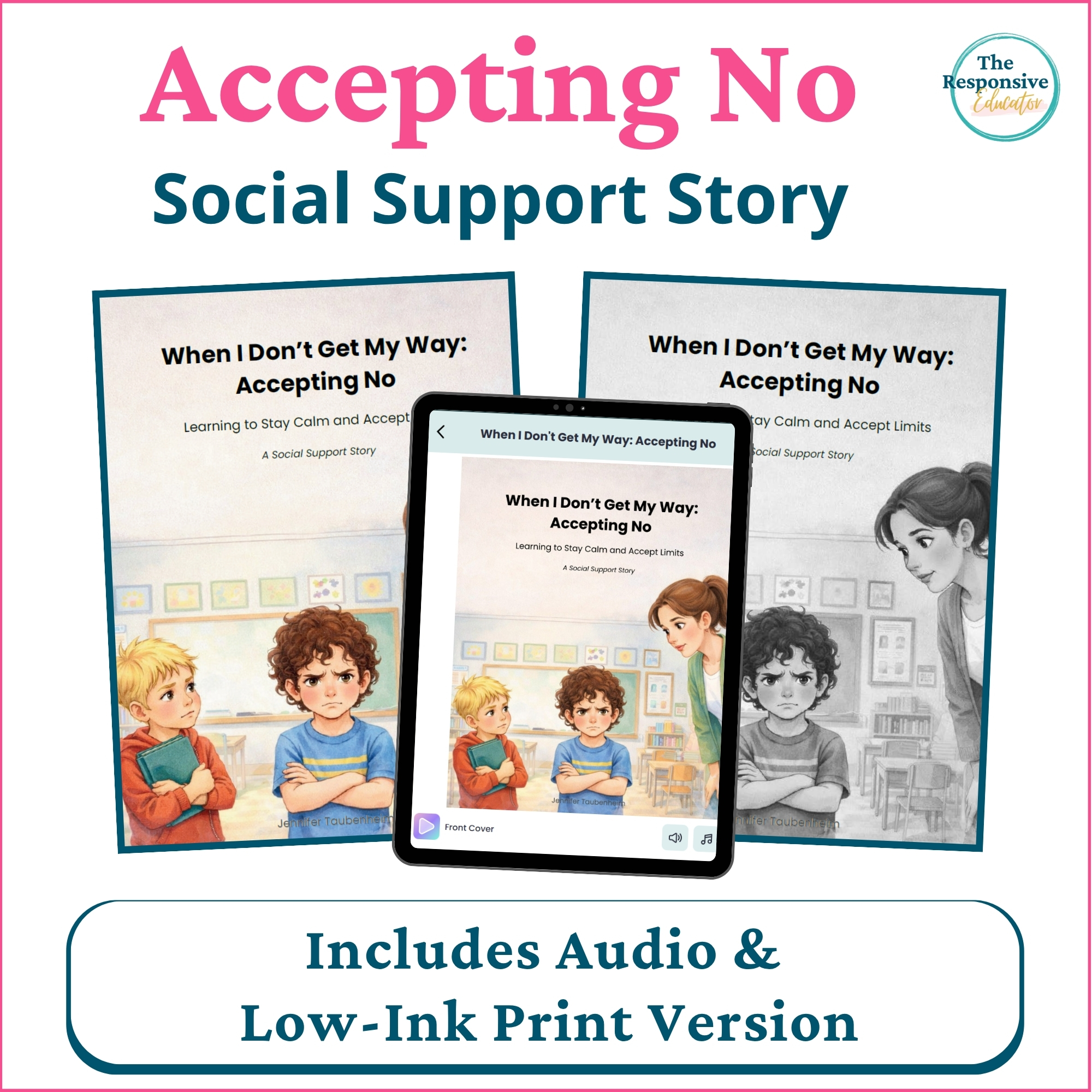
- Full-color Accepting No Social Support Story
- Black-and-white version for low-ink printing
- Digital bookshelf access
- Optional audio narration for independent listening
- Visual examples of facial expressions and body language
- Modeled coping strategies and appropriate responses
- Step-by-step guidance for handling disappointment
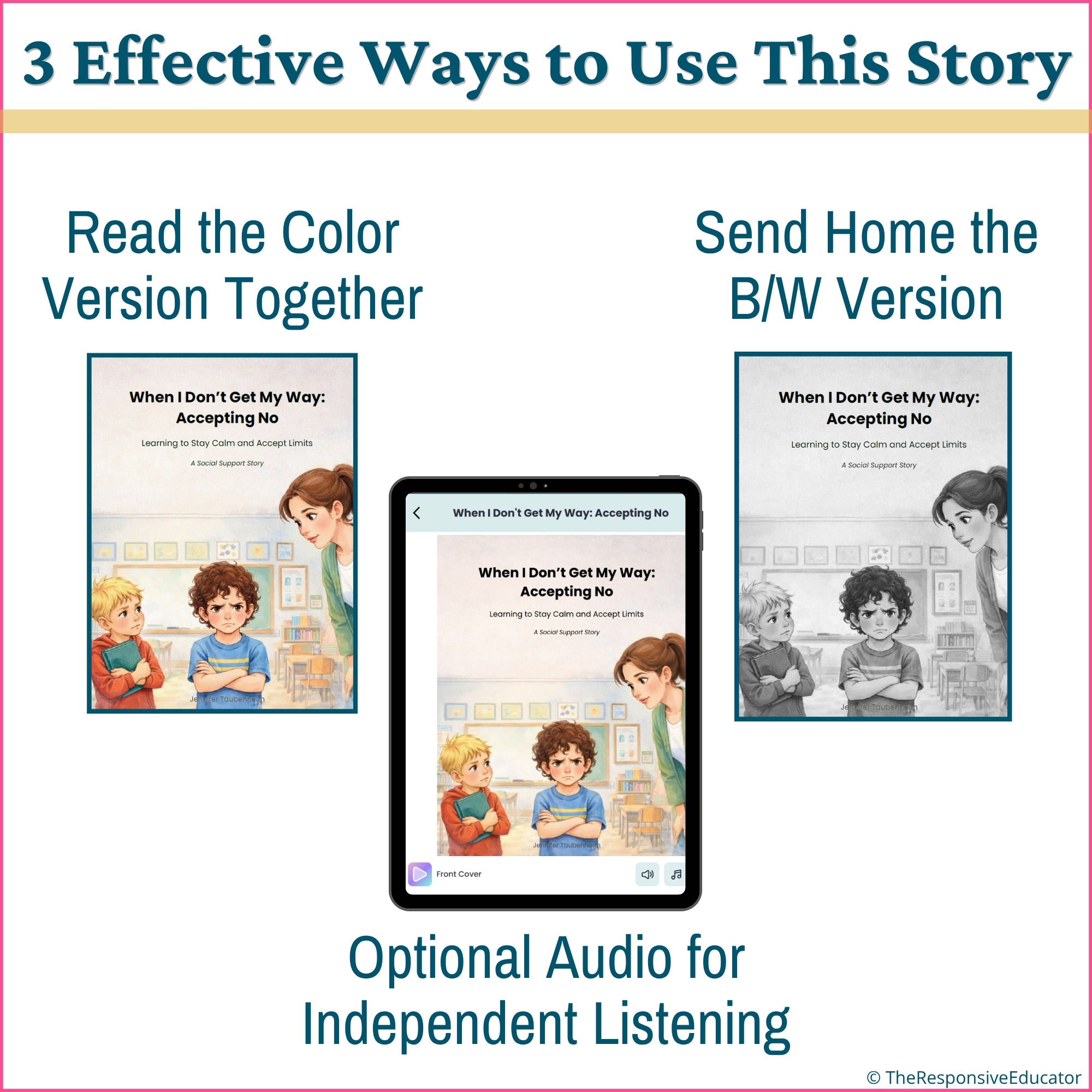
The black-and-white version can be used for home reinforcement or when a student benefits from having an individual copy to revisit.
Ways to Use This Accepting No Story
Use this resource for:
- Whole-class SEL instruction
- Social-emotional mini lessons
- Small-group social-skills instruction
- Individual behavior intervention
- Counseling or specialist sessions
- Read-to-self or listening centers
- Reteaching after a difficult situation
- Home reinforcement and family communication
- Preparing students for situations involving limits or changes
The audio option gives students another way to access the material and allows them to revisit the story independently. This can be particularly helpful for students who need repeated instruction before they can apply a skill during an emotionally difficult moment.
Who May Benefit From This Resource?
This story may be helpful for students who:
- Have big reactions when they are told “no”
- Argue or repeatedly ask after receiving an answer
- Struggle with disappointment
- Become emotionally overwhelmed when plans change
- Have difficulty with flexible thinking
- Need support respecting limits and boundaries
- Struggle to recognize how their reactions affect others
- Benefit from explicit visual instruction and repeated practice
Learning to accept “no” is not simply about compliance. It is connected to resilience, emotional regulation, social understanding, healthy boundaries, and the ability to manage disappointment throughout life.
Prefer a Printed Book?
This page includes the digital resource with both full-color and black-and-white versions. If you would rather have a professionally printed, full-color book, When I Don’t Get My Way: Accepting No is also available on Amazon.
Please note that the printed Amazon book does not include the black-and-white printable version included with this digital resource.


Reviews
There are no reviews yet.