Description
No Hitting Social Support Story for Safe Hands and Replacement Behaviors
Helping a student stop hitting usually takes more than repeated reminders to “keep your hands to yourself.” Some students react physically before they have time to process what is happening. Others do not yet recognize the body signals that come before hitting or know what they can do instead when anger and frustration begin to build.
This No Hitting Social Support Story explicitly teaches students how to recognize escalating emotions, pause before reacting, and choose a safer response. Clear visuals and step-by-step instruction help students understand how hitting affects other people and how using safe hands supports trust, friendships, and emotional safety.
Teach Students What to Do Instead of Hitting
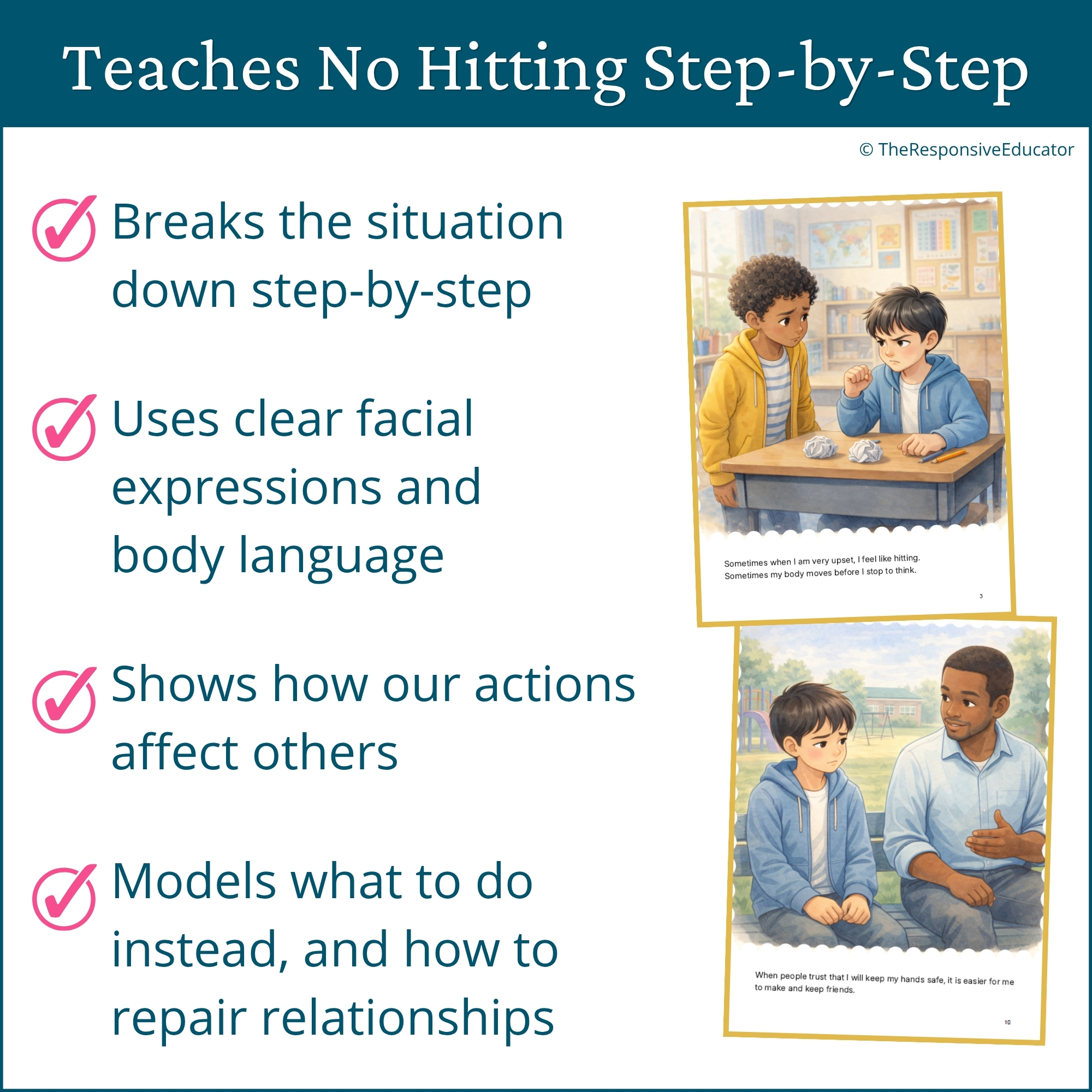
Students are often told to stop hitting, calm down, or use their words without being shown how to do those things during a difficult moment. This story breaks the process into concrete steps that students can learn and revisit while they are calm.
Students learn how to:
- Recognize early signs of anger or frustration
- Notice what is happening in their bodies
- Pause before reacting physically
- Understand how hitting affects other people
- Read facial expressions and body language
- Use calming and replacement strategies
- Ask an adult for help
- Make safer choices during conflicts
- Repair relationships after a mistake
The goal is not only to stop an unsafe behavior. It is to help students build safer responses they can eventually choose with less adult prompting.
Feelings Are Allowed—Hitting Is Not Safe
Students need to understand that feeling angry, frustrated, disappointed, or overwhelmed is not wrong. At the same time, strong emotions do not make it safe to hurt another person.
This story maintains both parts of that message. It validates the emotion while holding a clear boundary around physical safety. Students are shown practical alternatives they can use when they feel like hitting, including:
- Taking slow breaths
- Moving away from the situation
- Squeezing an appropriate object
- Asking for help
- Using words to communicate
- Calming their bodies before returning to the problem
These replacement behaviors give students something specific to practice instead of expecting them to stop an impulse without another response available.
Help Students Understand the Social Impact of Hitting
Some students do not automatically connect hitting with changes in peer relationships or classroom safety. They may focus on their own anger and miss the fear, discomfort, or hesitation shown by the people around them.
The visual examples help students notice:
- Hurt or worried facial expressions
- Defensive or uncomfortable body language
- Peers moving away
- Changes in trust and friendship
- How others may feel after an unsafe interaction
- Why repairing the relationship may take time
This supports accountability without defining the student by the behavior. Students learn that hitting is unsafe, that other people deserve to feel safe, and that they can practice making different choices.
Skills Supported
This No Hitting Social Support Story supports:
- Emotional regulation
- Impulse control
- Frustration tolerance
- Body awareness
- Safe hands and safe-body expectations
- Recognizing social cues
- Perspective-taking
- Conflict resolution
- Replacement behaviors
- Relationship repair
What’s Included
This digital resource includes:
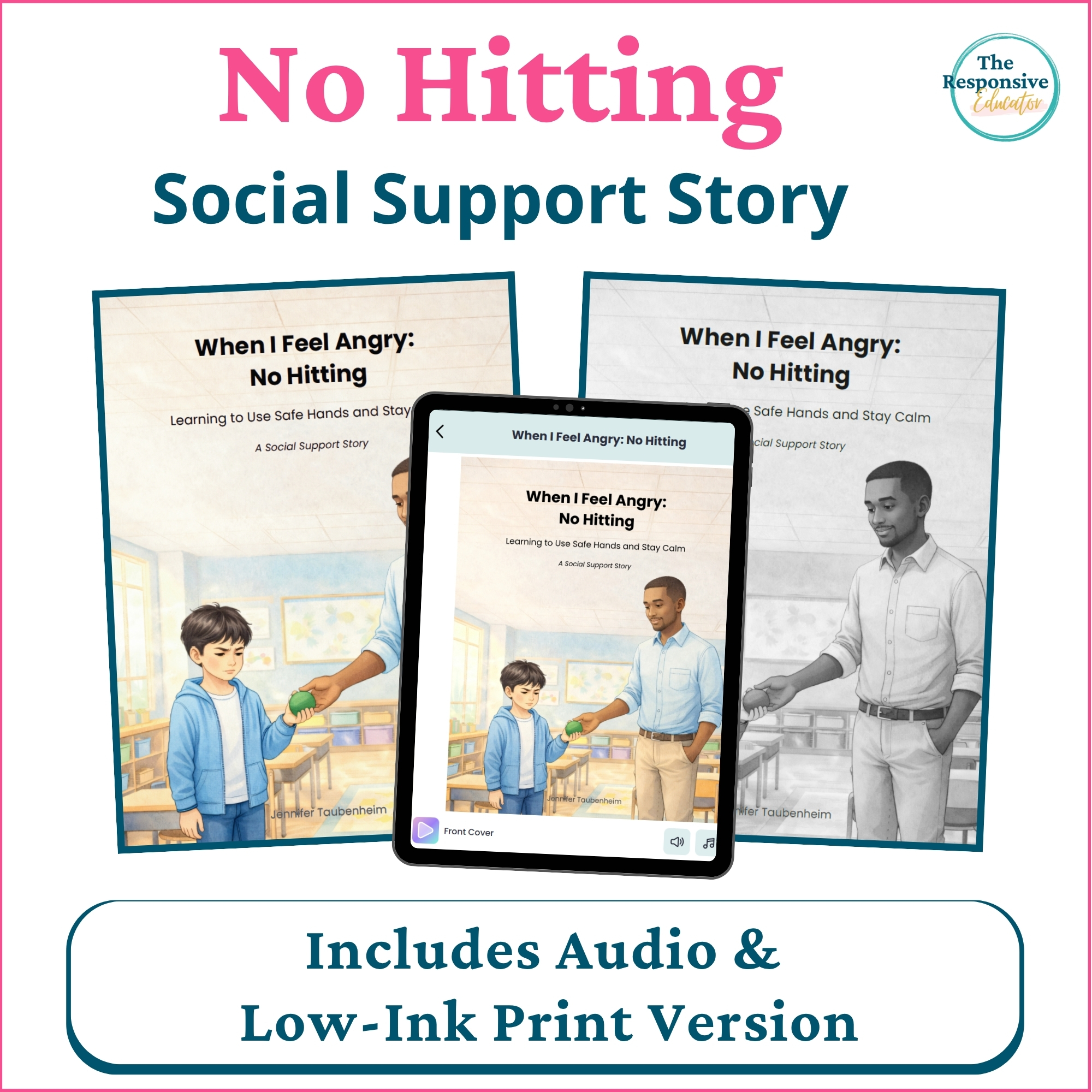
- Full-color No Hitting Social Support Story
- Black-and-white version for low-ink printing
- Optional audio narration
- Digital access for repeated instruction and review
- Visual examples of facial expressions and body language
- Modeled calming and replacement strategies
- Step-by-step guidance for making safer choices
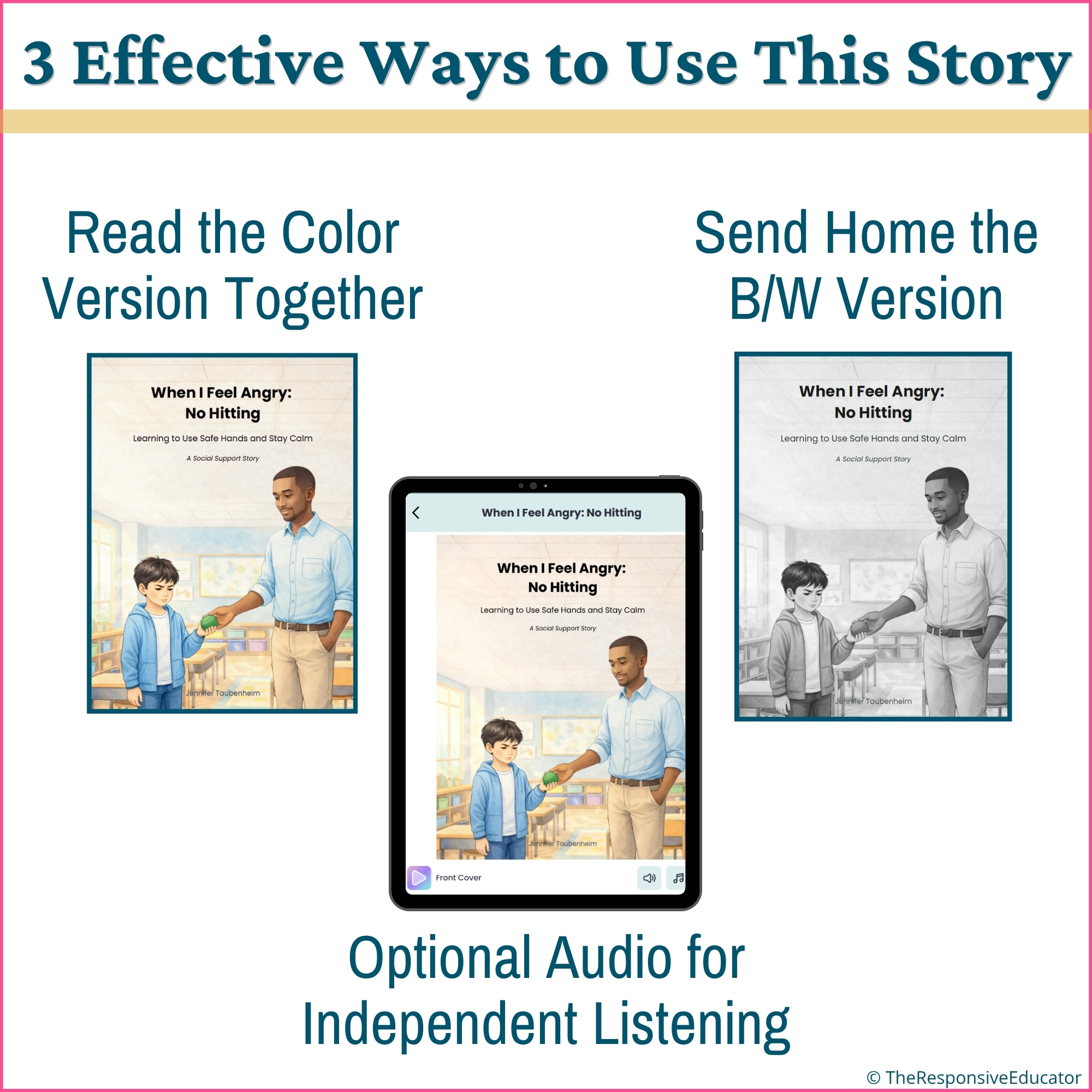
The black-and-white version can also be used for home reinforcement or when a student benefits from having an individual copy to revisit.
Ways to Use This No Hitting Story
Use this resource for:
- Whole-class SEL instruction
- Social-emotional mini lessons
- Small-group social-skills instruction
- Individual behavior intervention
- Special education behavior support
- Counseling or therapy sessions
- Read-to-self or listening centers
- Reteaching after a physical incident
- Behavior intervention plans
- Home reinforcement and family communication
The audio option allows students to revisit the story independently. Repeated review during calm moments can help students become more familiar with the strategies before they need to use them during frustration or conflict.
Who May Benefit From This Resource?
This story may be helpful for students who:
- Hit when angry, frustrated, or overwhelmed
- React physically during conflicts
- Have difficulty stopping their bodies before acting
- Struggle with emotional regulation or impulse control
- Need explicit instruction in replacement behaviors
- Have difficulty recognizing how their actions affect others
- Need support using safe hands and safe-body choices
- Benefit from visual modeling and repeated practice
Understanding the reason behind hitting does not mean overlooking unsafe behavior. It helps adults identify what the student still needs to learn so instruction, boundaries, and follow-through can work together.
Prefer a Printed Book?
This page includes the digital resource with both full-color and black-and-white versions. If you would rather have a professionally printed, full-color book, When I Feel Angry: No Hitting is also available on Amazon.
Please note that the printed Amazon book does not include the black-and-white printable version included with this digital resource.


Reviews
There are no reviews yet.