

Description
These Transitions & Routines Behavior Reflection Sheets help students examine choices that interfere with moving safely, promptly, and appropriately through the school day. The resource includes eight targeted behavior think sheets addressing morning routines, classroom transitions, cleanup, emergency procedures, dismissal, and beginning new activities.
Transitions require students to stop one activity, shift attention, manage materials, follow directions, and begin something new—often within a short amount of time. A student who struggles during transitions may need more than repeated reminders to “hurry up” or “follow the routine.”
I designed these sheets to help students slow down after a difficult situation, understand what happened, and make a practical plan for handling a similar transition more successfully.
Targeted Reflection for Transitions and Routines
Generic reflection forms may not help students recognize the specific skill involved in a transition problem. A student who socializes instead of transitioning needs a different plan from a student who disrupts a fire drill or plays around during dismissal.
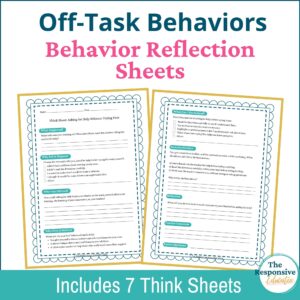
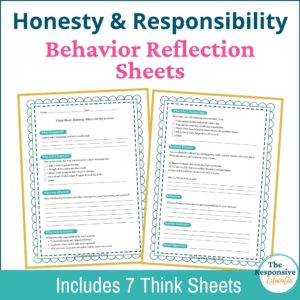
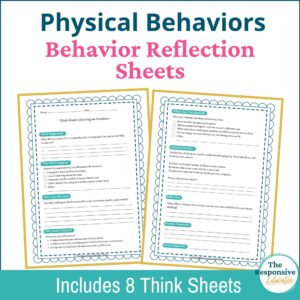
Each student behavior reflection sheet focuses on one specific situation. Guided prompts help students consider:
- What happened
- Why it happened
- Who was affected
- Why the behavior mattered
- What they could do differently
- How they might respond in a similar situation
- What their plan is for the next transition
The goal is not simply to have students admit that they broke a rule. It is to help them recognize the routine, understand why it matters, and identify a response they can use next time.
What’s Included in the Transitions & Routines Behavior Reflection Sheets
This resource includes eight targeted think sheets:
- Not Following the Morning Routine
- Misbehavior During Transitions
- Disrupting Fire Drills or Emergency Procedures
- Not Cleaning Up After Activities
- Interrupting Others During Transition Time
- Socializing Instead of Transitioning
- Delaying the Start of an Activity
- Playing Around During Dismissal
Each topic includes a two-page guided reflection process.
Two-Page Behavior Think Sheet Format
The first page helps students examine the incident by identifying what happened, why it happened, who was affected, and why the behavior created a concern.
The second page moves from reflection to instruction. Students identify what they can do instead, respond to a related scenario, and develop a plan for a future transition or routine.
Space is also included for:
- Student reflection and planning
- Scenario-based practice
- Teacher comments
- An optional parent or guardian signature
This structure provides a more meaningful alternative to assigning a behavior essay to copy or asking the student to write the same general apology after every incident.
Skills Students Practice
These behavior reflection worksheets help students practice:
- Following established classroom routines
- Ending one activity and beginning another
- Moving safely between locations
- Cleaning up materials
- Responding promptly to transition directions
- Managing socializing during transitions
- Understanding the importance of emergency procedures
- Recognizing how transition behavior affects classmates
- Creating a specific plan for next time
- Taking responsibility for choices without shame or labels
Students still need routines to be explicitly taught, modeled, practiced, and reinforced. These sheets provide a structure for reflection when a student understands the routine but has difficulty applying it consistently.
Ways to Use These Behavior Reflection Sheets
Use the sheets during:
- Individual behavior reflection
- Restorative conversations
- Classroom problem-solving
- Reteaching of routines and expectations
- SEL or social-skills instruction
- Behavior intervention planning
- MTSS or student-support meetings
- Parent-teacher conferences
- Home-school communication
- Reentry conversations following a transition-related incident
- Informal documentation of recurring behavior patterns
Completed sheets may help teachers notice whether a student struggles with one particular routine or experiences difficulty across several types of transitions.
Consider the Skill Underneath the Behavior
Reflection is most useful when it leads to instruction. A student who repeatedly delays a transition may have trouble ending a preferred activity, organizing materials, understanding the next step, or shifting attention. A student who plays during dismissal may need clearer responsibilities, fewer waiting periods, or a visual routine.
These sheets can help begin that conversation, but they should not replace direct teaching, environmental supports, accommodations, or individualized behavior assessment when those are needed.
Students should complete the reflection after they are calm and able to think clearly. Some students can work independently, while others will need an adult to read the questions, clarify the situation, or help create a realistic plan.
Help Students Navigate Transitions More Successfully
Successful transitions require more than compliance. Students need to understand the routine, recognize what the situation requires, manage their own behavior, and adjust when something does not go as planned.
These transitions and routines behavior reflection sheets and behavior think sheets give students a structured way to reflect, problem-solve, and prepare for a more successful next transition.
Need Think Sheets for Other Student Behaviors?
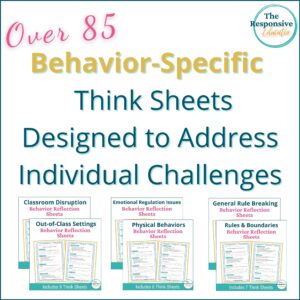
This individual think sheet is also included in the Student Behavior Reflection Sheets and Think Sheets Bundle. The complete bundle includes more than 85 behavior-specific reflection tools covering classroom disruptions, following directions, off-task behavior, emotional regulation, peer conflicts, honesty, rules and boundaries, physical behavior, transitions, self-monitoring, and behavior in out-of-class settings.
Choose the complete bundle if you need a coordinated collection of targeted think sheets for a wide range of classroom behavior concerns.
Reviews
There are no reviews yet.