

Description
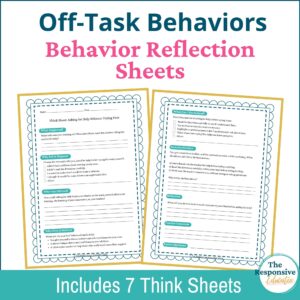
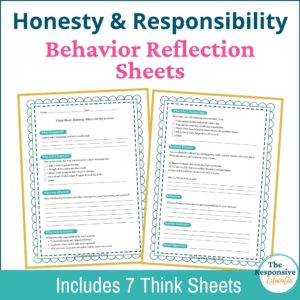
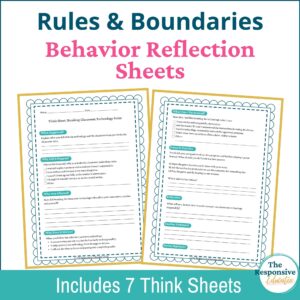
These following directions behavior reflection sheets help students examine situations involving ignored instructions, work refusal, arguing, leaving without permission, and other difficulties responding to adult directions. The resource includes seven targeted behavior think sheets that guide students through what happened, how the situation affected others, and what they can do differently next time.
“Not following directions” describes what adults observed, but it does not explain why the student struggled. A student may not understand the direction, may feel overwhelmed by the task, may be trying to avoid something difficult, or may not yet know how to disagree, ask for clarification, or request help appropriately.
I designed these sheets to support accountability while also helping teachers and students look beneath the behavior. The reflection process gives students a structured way to examine their choices and identify a more successful response.
Teaching Students to Follow Directions
Repeatedly telling a student to “listen” or “do what you were told” may not address the missing skill. Students need to understand what the direction required, why their response created a concern, and what options were available to them.
Each student behavior reflection sheet focuses on a specific situation. Guided prompts help students consider:
- What happened
- Why it happened
- Who was affected
- Why the behavior mattered
- What they could do instead
- How they might respond in a related situation
- What their plan is for next time
This provides a more meaningful alternative to assigning a behavior essay to copy or asking students to promise that they will follow every direction in the future.
What’s Included in the Following Directions Behavior Reflection Sheets
This resource includes seven targeted think sheets:
- Ignoring Teacher Instructions
- Arguing With the Teacher
- Refusing to Complete Work
- Purposely Doing the Opposite of What Was Asked
- Walking Out of Class Without Permission
- Ignoring Nonverbal Cues
- Deliberately Delaying Compliance
Each topic includes a two-page guided reflection process.
Two-Page Behavior Think Sheet Format
The first page helps students examine the incident by identifying what happened, why it happened, who was affected, and why the response created a concern.
The second page moves from reflection to instruction. Students identify what they can do instead, respond to a related scenario, and create a plan for handling a similar direction more successfully.
Space is also included for:
- Scenario-based practice
- Student reflection and planning
- Teacher comments
- An optional parent or guardian signature
The targeted format helps students move beyond a broad response such as “I will listen next time” and identify a specific action they can use.
Skills Students Practice
These behavior reflection worksheets can help students practice:
- Listening to and interpreting directions
- Recognizing verbal and nonverbal cues
- Beginning a requested activity
- Asking for clarification
- Requesting help appropriately
- Expressing disagreement respectfully
- Responding when a task feels difficult or undesirable
- Remaining in the assigned area
- Understanding how delays affect the class
- Taking responsibility for their response
- Creating a realistic plan for next time
Following directions should not mean that students are never allowed to ask questions, express concerns, or advocate for themselves. The goal is to help students learn how to respond safely and respectfully while communicating what they need.
Ways to Use These Behavior Reflection Sheets
Use the sheets during:
- Individual behavior reflection
- Restorative conversations
- Classroom problem-solving
- Reteaching following-directions skills
- SEL or social-skills instruction
- Behavior intervention planning
- MTSS or student-support meetings
- Parent-teacher conferences
- Home-school communication
- Reentry conversations after an incident
- Informal documentation of recurring behavior patterns
Completed sheets may help identify whether difficulty following directions is connected to a particular subject, task, adult, time of day, level of support, or type of instruction.
Look Beneath Work Refusal and Delayed Responses
A student who refuses work may not need another lecture about compliance. The work may be too difficult, the directions may be unclear, or the student may lack the skills needed to begin. A student who argues may need instruction in disagreeing respectfully or asking for an explanation.
Reflection should lead to problem-solving. Depending on what the student identifies, additional support might include:
- Shorter or more clearly stated directions
- Visual directions or checklists
- Having the student repeat the direction
- Breaking a task into smaller steps
- A clear method for requesting help
- Appropriate choices within the task
- Precorrection before a difficult activity
- Instruction in respectful disagreement
- Support with transitions or task initiation
- Reinforcement for beginning or following through
These sheets should be completed after the student is calm and able to think clearly. They are not a replacement for accommodations, direct instruction, environmental changes, or a functional behavior assessment when one is needed.
Build Accountability and Self-Advocacy
Students need to understand that directions often support safety, learning, and classroom routines. They also need appropriate ways to ask questions, seek help, express concerns, and communicate when something is difficult.
These following directions behavior reflection sheets and behavior think sheets provide a structured way to teach both sides of that process: responding responsibly to expectations while learning how to communicate needs more successfully.
Need Think Sheets for Other Student Behaviors?
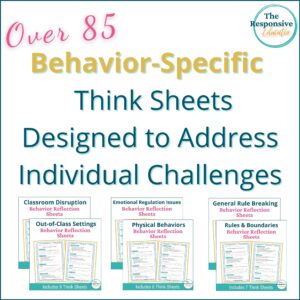
This individual think sheet is also included in the Student Behavior Reflection Sheets and Think Sheets Bundle. The complete bundle includes more than 85 behavior-specific reflection tools covering classroom disruptions, following directions, off-task behavior, emotional regulation, peer conflicts, honesty, rules and boundaries, physical behavior, transitions, self-monitoring, and behavior in out-of-class settings.
Choose the complete bundle if you need a coordinated collection of targeted think sheets for a wide range of classroom behavior concerns.
Reviews
There are no reviews yet.